
International Money Transfers for Business in India
Table of Contents

Author: Artiom Pucinskij
Table of Contents
For an Indian business paying overseas suppliers, ICICI's Trade Online is my starting point if several people prepare, approve and track your payments.
HDFC is a stronger fit when you also need full-value invoice payments or a forward contract for a future currency bill.
IDFC FIRST's World Business Account can reduce recurring transaction charges if your balances or monthly trade qualify, while DBS offers a document-based online payment workflow.
EximPe provides another route for importers who want a digital interface connected to an authorised dealer bank.
The best service needs to handle your actual commercial payment, including the invoice, currency conversion and import or service documentation.
Search Now & Save On Your Transfer
Instantly view live exchange rates, fees & features.
At a glance
ICICI Trade Online: Repeat payments with several people involved
HDFC Bank: Full-value payments and future invoice currency cover
IDFC FIRST World Business: Lower transaction charges through a qualifying trade account
DBS India: Online payment instructions with supporting documents
EximPe: A digital interface for bank-executed import payments
Compare international business payment services in India
The choices below handle outward commercial payments, with different approaches to account costs, document submission and the bank executing the transfer.
An account for receiving foreign client payments may have no facility to send your company's money abroad, so my suggestion is to consider those two needs separately.
Business payment services, features and costs
ICICI Trade Online for repeat payments and internal approvals
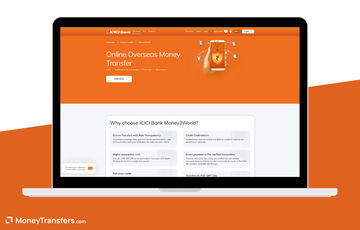
I'd say consider ICICI when your finance team needs a repeatable payment process, with one person preparing the request and others reviewing it.
Trade Online provides customised multiuser workflows, repeat requests, beneficiary uploads, payment tracking and copies of the payment advice or SWIFT message.
That can reduce the work around regular overseas invoices, particularly when the same suppliers are paid each month.
You can initiate business remittances through Corporate Internet Banking, InstaBIZ or a branch, uploading the documents associated with your payment purpose.
Business feature | ICICI business trade payments |
|---|---|
Business access | Indian business banking customers, with account and payment checks |
Funding | Business bank account and agreed currency dealing |
Payout | Overseas bank payments in at least 38 currencies |
Payment purposes | Imports, overseas services and other permitted business remittances |
Documents | Online invoices, contracts, orders and trade-document submission |
Approvals and repeat payments | Custom multiuser workflows, pre-filled requests and scheduling |
Tracking and reconciliation | Status, payment advice and SWIFT copies |
Integrations | Separate digital trade connections to business-management software |
Local entity | ICICI Bank Limited |
The trade tariff effective from 1 April 2026 uses a percentage commission with a minimum and maximum charge, rather than one flat payment price.
Cost | ICICI corporate trade tariff |
|---|---|
Account costs | Depend on the business current account and agreed facilities |
FX conversion | Customer exchange rate, with no fixed public markup |
Outward remittance or advance/direct import payment | 0.12%, minimum ₹1,000, maximum ₹10,000 |
Sender-paid correspondent charge (OUR) | USD30 equivalent |
Full-value credit | OUR charge plus USD36 to the US, USD39 to China, USD42 to Hong Kong/Singapore/India, USD43 elsewhere |
Corporate/wholesale inward remittance | 0.12%, minimum ₹2,000, maximum ₹10,000 |
Inward processing | ₹500 for current accounts opened from 1 August 2025 |
Returned overseas funds | ₹1,500 |
Taxes and negotiated facilities | Applicable taxes and your sanctioned arrangement can change the total |
For an Indian wholesaler paying a Chinese manufacturer, the full-value charge can be useful when the contract requires the supplier to receive the complete invoice amount.
I like ICICI mainly for its repeat-payment workflow, but suggest pricing the currency deal and recipient-charge option for each invoice.
HDFC Bank for full-value invoices and future currency cover
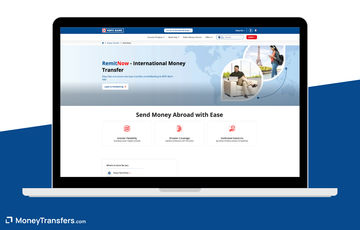
HDFC combines trade remittances with a full-value payment option and business forward contracts, making it useful when the invoice amount or future rupee budget needs closer control.
Full Value Trade Remittance covers USD, EUR and GBP payments, helping prevent deductions by foreign intermediaries while leaving the beneficiary's own account charges outside the facility.
For an importer with a large EUR invoice due later, a separately approved forward facility can fix the exchange rate ahead of settlement.
Business feature | HDFC business trade services |
|---|---|
Business access | Indian business trade customers, subject to account and transaction approval |
Funding | Business account and agreed FX booking |
Payout | Trade remittances in 22 currencies |
Full-value payments | USD, EUR and GBP, with beneficiary account charges excluded |
Trade support | Import/export remittances and documentary trade services |
Currency tools | Spot dealing and approved forward contracts |
Forward access | Financial assessment, signed facility documents and agreed security |
Other business products | Separately contracted merchant payment gateway and cards |
Local entity | HDFC Bank Limited |
The payment category changes the commission, so a software-service bill and a direct goods-import payment should not automatically be priced using the same tariff row.
Cost | HDFC published trade pricing |
|---|---|
Account costs | Depend on your current-account product and balance requirements |
FX conversion | Agreed customer rate, including a markup |
Direct or advance import payment | 0.125%, minimum ₹1,250, plus ₹500 SWIFT |
Non-import telegraphic payment | 0.20%, minimum ₹1,000, plus ₹500 SWIFT |
Import bills for collection | 0.25%, minimum ₹2,000, plus ₹1,000 SWIFT |
Full Value Trade Remittance | Current facility charge quoted, the published waiver ended 30 September 2026 |
Forward booking | Standard ₹500 plus GST per contract, subject to business segmentation |
Forward cancellation | Standard ₹250 plus GST, with market settlement gains/losses separate |
Forward funding | Margin, collateral or mark-to-market security agreed after assessment |
Additional costs | Applicable taxes, foreign-bank costs and other document/facility charges |
I like HDFC for its combination of invoice-payment and currency-cover services, without assuming the full-value option makes every payment cost-free.
A forward must still be settled or closed out, and a cancelled purchase can leave you with a currency contract requiring a separate payment.
IDFC FIRST World Business for a qualifying trade account
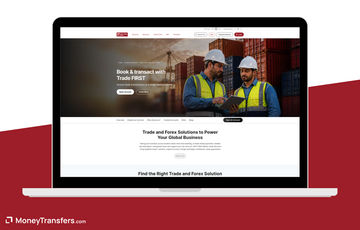
World Business is attractive if regular import or export activity justifies maintaining the account, because qualifying Platinum payments have no outward-remittance or SWIFT processing charge.
Gold has a lower balance or trade requirement, with separate flat charges for the payment and SWIFT message.
Before moving supplier payments, I'd say compare those account conditions with your normal cash balance, since tying up additional money has a cost of its own.
Business feature | IDFC FIRST World Business Account |
|---|---|
Business access | Sole proprietors, partnerships, LLPs and companies among eligible structures |
Funding | Business current account and booked currency deal |
Payout | Overseas trade remittances |
Digital workflow | Online trade platform, FX booking and document handling |
Receiving | Inward payments, foreign-remittance certificates and export reporting |
Currency tools | Trade hedging facilities, with separately agreed terms |
Other payment tools | Domestic bulk payments, payment/collection software connections (APIs) and gateway facilities |
Account variants reviewed | WBA Gold and WBA Platinum |
Local entity | IDFC FIRST Bank Limited |
Cost | WBA Gold | WBA Platinum |
|---|---|---|
Average monthly balance or trade requirement | ₹50,000 or USD25,000 monthly trade | ₹2 lakh or USD50,000 monthly trade |
Missed qualification | ₹1,000 plus standard charges | ₹1,000 at ₹50,000–₹2 lakh balance, below ₹50,000 also standard charges |
Outward remittance | ₹250 | Free |
SWIFT charge | ₹250 | Free |
Inward remittance, foreign inward remittance certificate (FIRC) and electronic bank realisation certificate (eBRC) | Free | Free |
Import bill collection | ₹250 | Free |
Commission in lieu of exchange | 0.50% | 0.10% |
FX conversion | Agreed customer exchange rate | Agreed customer exchange rate |
Card issuance and annual cost | Standard Visa Platinum free | Standard Visa Signature free |
Other costs | Foreign-bank costs, taxes and separately agreed facilities | Foreign-bank costs, taxes and separately agreed facilities |
The commission in lieu of exchange is a separate tariff item, which should not be read as the ordinary FX markup or automatically added to every converted payment.
World Business is also separate from IDFC FIRST's Zero Forex Markup accounts, which have different balance requirements, charges and currency-deal conditions.
For a trading company that already maintains the qualifying balance, Platinum's waived processing charges offer a clear reason to use the account for repeat payments.
DBS India for online payment instructions and documents
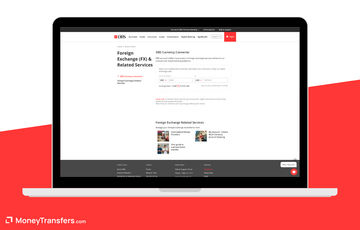
DBS's DigiDocs service lets you attach supporting documents to inward or outward payment instructions within IDEAL, its business banking platform.
I think it is worth considering if your team wants the payment request and its paperwork in the same workflow, with SWIFT tracking for the overseas transfer.
The published outward payment time is one to four days, so I suggest allowing for the recipient's deadline rather than planning around an instant arrival.
Business feature | DBS Bank India SME payments |
|---|---|
Business access | Indian SME/business banking customers |
Funding | INR or foreign-currency account funding |
Payout | Overseas telegraphic transfers through the bank network |
Online workflow | IDEAL payment instructions with DigiDocs attachments |
Tracking | SWIFT gpi payment tracking |
Receiving | Inward telegraphic transfers with regulatory validation |
Trade facilities | Documentary trade services priced separately |
Local entity | DBS Bank India Limited |
The account plan affects the base payment charge, while correspondent-bank costs remain separate even where the online payment fee is waived.
Cost | DBS India SME tariff |
|---|---|
Account costs | Chosen business account's balance and service conditions |
FX conversion | Agreed customer rate, no fixed public markup |
INR-funded outward payment through IDEAL | ₹400–₹750 or free, depending on plan |
Example account plans | eBusiness Lite ₹750, Entrepreneurs ₹500, Business Edge ₹400 |
Foreign-currency-funded outward payment through IDEAL | ₹400 |
Branch payment | INR-funded ₹100–₹1,000 by plan, foreign-currency-funded ₹1,000 |
SWIFT | Included in the base outward-payment fee |
Additional correspondent costs | ₹1,600 for USD payments, ₹2,100 for EUR, ₹2,600 for GBP, other currencies differ |
Trade requests outside IDEAL | Additional ₹1,000 where the request is available online |
Taxes and documentary services | GST additional, documentary trade tariffs separate |
For a business using export receipts to pay a foreign supplier, the foreign-currency-funded tariff is more relevant than the INR-funded account-plan price.
I like DBS for the integrated document workflow, with the chosen account plan deciding whether its payment charges suit your volume.
EximPe for a digital interface to an import-payment bank account
EximPe's AD1 Trade Accounts service helps Indian importers access a trade account with a partner Category I authorised dealer bank, approved for foreign-exchange business, using a digital interface for documents and instructions.
The bank opens and maintains the account, deals the currency and settles the payment, while EximPe supplies the technology and platform support.
I like this option for an importer who wants online trade administration, without assuming a technology platform can replace the executing bank's approval.
Business feature | EximPe AD1 Trade Accounts |
|---|---|
Business access | Indian sole proprietors, partnerships, LLPs and private limited companies with a valid Importer Exporter Code (IEC) |
Account and funding | Partner-bank trade account, under that bank's funding terms |
Payout | Import payments in more than 25 currencies, including USD, CNY, EUR, AED and SGD |
Documents | Online trade-document submission and payment instructions |
Currency pricing | Indicative bank FX rates displayed through the platform |
Execution | Partner authorised dealer bank, with DBS and YES BANK identified on the product page |
Platform role | Technology service provider for this account product |
Legal entity | Les Amis Private Limited, trading as EximPe |
Other regulated activity | RBI payment-aggregator authorisation, separate from the bank-executed trade-account service |
A complete importer tariff needs a commercial quote covering the platform, bank and currency transaction, rather than the fees advertised for receiving export income.
Cost | EximPe importer trade-account pricing |
|---|---|
Setup and account maintenance | Agreed platform and partner-bank account terms |
FX conversion | Bank quote, confirm the margin and final INR debit |
Outward payment | Agreed trade-account payment tariff |
SWIFT and correspondent charges | Confirm charge option and any foreign-bank deductions |
Documents and reporting | Confirm included services and separately charged handling |
Taxes | Applicable taxes added under the quoted arrangement |
Currency facilities or credit | Only under a separately approved bank facility |
For a Pune wholesaler importing components, the benefit is managing the bank-account application and invoice documents online alongside the payment instructions.
My suggestion is to obtain the actual bank-account terms before onboarding, because the commercial agreement determines the cost and the bank determines account access.
What can you do with an international business payment service?
Pay overseas suppliers and close the import paperwork
An Indian importer paying a Chinese factory needs more than the supplier's account number, particularly where an advance payment precedes the shipment.
You can submit the invoice, payment purpose and relevant trade documents through a digital bank workflow, then retain the payment record against the purchase.
When the goods enter India, the Bill of Entry provides evidence of the import and helps the bank match the shipment to the payment.
ICICI's repeat-payment tools are useful for established suppliers, while EximPe's trade-account interface concentrates on online bank and document administration.
If the supplier requires an exact net amount, use a full-value payment facility or an agreed charge option rather than simply increasing the invoice payment yourself.
Pay overseas contractors and business software bills
A Bengaluru software company may need to pay an overseas contractor, a cloud provider and a specialist consultant in the same month.
Those invoices can have different service purposes and tax treatment, even when all the recipients request USD bank payments.
Keep the contract and invoice linked to each transfer, with the finance team confirming any withholding and remittance reporting before approval.
HDFC's non-import payment tariff illustrates why the category affects pricing, instead of treating every overseas business bill as a goods import.
Domestic bulk-payment tools should not be assumed to provide an international contractor batch, so establish the actual overseas workflow before building your payroll around it.
Collect foreign client and marketplace income
If your design studio invoices a UK client, local GBP receiving details can make paying you easier than asking the client to arrange a foreign bank transfer.
Wise Business offers receiving details for Indian businesses, but the funds are converted into INR and paid to your verified Indian bank account.
You cannot use that Indian business product to hold the currency or send supplier payments abroad, so it complements an outward payment service.
Its electronic foreign inward remittance certificate costs the equivalent of USD2, with conversion fees and applicable GST also included in the receiving cost.
For international business accounts, I suggest starting with where your customers pay and how you need the receipts documented, then deciding whether local receiving details solve that problem.
Accept international cards through your website
A Jaipur ecommerce seller or Indian travel company may want overseas customers to pay at checkout, instead of sending money to bank details.
HDFC SmartGATEWAY is a separate merchant payment product that supports international card acceptance and a multi-currency converter with more than 22 currencies.
That gives the customer a checkout method, while your merchant agreement determines acceptance costs, settlement and the handling of refunds or disputes.
An ordinary trade-remittance account does not provide those functions, and a collection product intended for foreign merchants selling into India is a different service again.
Compare international payment gateways when card acceptance is the job you need to solve, rather than choosing one from the supplier-transfer tariff.
Reuse export currency for permitted business payments
An Exchange Earners' Foreign Currency account, usually called an EEFC account, lets an eligible Indian exporter receive foreign-currency earnings without immediately converting all of them into rupees.
For an exporter that also buys overseas materials, using those receipts for permitted foreign payments can avoid converting into INR and buying the currency again.
This is subject to India's EEFC rules, with monthly accruals generally converted by the end of the following calendar month after approved use or forward commitments are allowed for.
It is not an indefinite currency-holding account, so your bank needs to know about the payments and commitments affecting the balance.
I suggest considering business multi-currency accounts alongside the actual Indian account rules, rather than importing the holding features of an overseas fintech product.
Plan a future invoice with a forward contract
A Mumbai importer ordering machinery for delivery in three months may want to know the rupee cost before committing to the purchase.
A forward contract fixes the exchange rate for a future settlement, helping you budget that invoice while giving up the benefit of a later favourable currency move.
HDFC assesses the business and facility individually, with margin, collateral or further security agreed before the currency commitment is established.
The booking and cancellation commissions are only part of the cost, because early use, cancellation or an extension can create a separate market settlement amount.
If the machinery order changes, speak to the bank about the currency contract at the same time rather than assuming it disappears with the supplier invoice.
Connect payment records with approvals and accounting
When several people handle a payment, a saved invoice, approval record and payment advice help the accounts team see what was authorised and what was sent.
ICICI's customised multiuser workflows and repeat requests can support that process, while DBS DigiDocs attaches documents to instructions inside business banking.
Trade APIs, which connect software systems, and business-management integrations can help at larger volumes, but need to cover your bank account and transaction type.
An integration should reduce repeated data entry and improve reconciliation, with permissions and rejected-payment handling agreed before it becomes part of your routine.
Manage business travel spending separately from supplier invoices
If employees travel abroad, a business card can cover everyday spending without creating a trade-remittance request for each hotel or taxi payment.
World Business includes a debit card, but a card purchase and an invoice bank transfer use different payment methods and can have different charges.
Match the product to the employee's spending needs, including limits, receipts and who approves an expense, rather than assuming every trade account includes a full expense-management platform.
For international business cards, the useful comparison is the actual card tariff and control features available to your Indian company.
What do international business transfers from India cost?
I'd say compare the final rupee debit for the same supplier amount, separating the exchange rate from bank commission, SWIFT, correspondent charges and tax.
Cost to check | Why it changes the total |
|---|---|
Current account | Balance requirements, non-maintenance charges and account facilities |
FX rate | Currency margin, negotiated rate and any booked forward pricing |
Payment commission | Fixed fee or percentage with a minimum/maximum |
SWIFT | Included in some tariffs, separate in others |
Foreign-bank charges | Charge option and the amount arriving with your supplier |
Documents or trade facilities | Bill handling, certificates, credit and reporting services |
Tax | Applicable bank/service GST and the payment's separate withholding treatment |
Contract changes | Tracing, returns and any currency-contract settlement |
As an illustration, HDFC's standard commission on a ₹5 lakh direct-import payment is the ₹1,250 minimum, plus ₹500 SWIFT before other applicable costs.
For a ₹5 lakh non-import telegraphic payment, the published minimum commission is ₹1,000, again with ₹500 SWIFT before the remaining costs.
Those are tariff calculations, not live currency quotes, and neither tells you the exchange-rate margin or guarantees the supplier's net receipt.
With OUR, you pay the foreign-bank charges, while SHA shares charges and BEN allocates them to the beneficiary under the payment arrangement.
At higher payment volumes, a lower processing fee can help, but I suggest counting the cash required to qualify for the account and any negotiated currency terms.
How to make international business payments from India
Match the service to your business and payment
Confirm the Indian legal entity, payment purpose and executing bank, then choose the trade account or remittance product that can handle the invoice.
Prepare the invoice and tax requirements
Provide the invoice or contract, beneficiary details and purpose documents, with your accounts team resolving any withholding and applicable reporting before the payment is approved.
For remittances from 1 April 2026, Forms 145 and 146 replace Forms 15CA and 15CB, with the required filing depending on taxability, thresholds and exemptions.
Approve the full currency and payment cost
Check the final INR debit, supplier receipt, charge option and payment date, including any facility funding or currency-contract obligation before you authorise it.
Keep the payment and trade records together
Save the payment advice and invoice reference, then complete any required shipment-document matching so the bank can close the relevant trade record.
For your next overseas invoice, compare how much the recipient receives before deciding which business payment service to use.
Compare business transfer costs from India
Enter your destination and payment amount to compare the available rates for your business transfer from India.Questions about international B2B payments from India
Does the USD250,000 personal remittance limit apply to a company?
The Liberalised Remittance Scheme is for resident individuals and is not available to companies, partnerships, Hindu undivided families or trusts as a corporate payment allowance.
Your business payment follows the rules for its transaction and legal structure, so I suggest using the bank's commercial process rather than a personal remittance app.
Can I use an international payroll or bulk-payment feature?
Only if the Indian business product actually supports your overseas recipients and payment purposes, with the required documents and approvals built into that workflow.
A bank's domestic bulk salary feature does not by itself establish international payroll access, even where both functions appear on the same business website.
Can the supplier receive the full invoice amount?
A full-value facility or agreed foreign-bank charge option can help, but the scope needs to match the currency and the recipient's account.
HDFC's full-value service excludes the beneficiary's own account charges, so I'd say confirm any remaining receiving charge when agreeing the payment with the supplier.
Is a payment platform the same as an authorised dealer bank?
No, and the distinction affects who holds the account, books the currency transaction and executes your company's international bank payment.
EximPe's AD1 Trade Accounts interface transmits instructions to its partner bank, with that bank maintaining the account and executing the FX and settlement.
Our methodology & why trust us
We assessed Indian outward business products, their account access, executing bank, document workflow, material charges and currency facilities using official business sources.
We kept personal remittance products and receiving-only accounts outside the outward shortlist, and compared current trade tariffs rather than importing overseas bank prices.
We have not opened these accounts or tested business payments, and the list is not a measured cheapest ranking.
Our review process explains how we assess services and use the evidence behind our comparisons.
Sources
Receiving money from abroad
Decide whether you need spendable rupees, cash without a bank deposit, or an account that can accept the original currency.
Best money transfer apps
I'd say choose around the payment you need to make, rather than assume a familiar domestic UPI app can send to any foreign bank.
Instant money transfers
Move money between your own linked overseas accounts
Best multi-currency business accounts
An EEFC account allows an eligible Indian resident business to receive foreign earnings and use retained currency for permitted payments without first converting everything into rupees.
Cheapest ways to send money abroad from India
Compare the same INR amount, purpose, funding method and bank payout, then check every fee and possible overseas deduction.
Contributors

Please share your experience with …