
The Best Multi-Currency Business Accounts in India in 2026
Table of Contents

Author: Artiom Pucinskij
Table of Contents
ICICI is my leading option for Indian exporters needing several foreign currencies, while DBS Bank India combines an INR account with nine foreign-currency EEFC subaccounts.
HDFC, Axis and IDFC FIRST also let eligible resident businesses retain foreign earnings, usually through Exchange Earners’ Foreign Currency accounts known as EEFC accounts.
Your decision depends on the currencies you earn, the permitted bills you can pay from them and how the bank handles mandatory conversion.
Search Now & Save On Your Transfer
Instantly view live exchange rates, fees & features.
At a glance
Account | Where it fits |
|---|---|
ICICI EEFC | Broad currency selection and export collection services |
HDFC EEFC | Several foreign currencies within an existing trade relationship |
Axis EEFC | Currency retention without an EEFC minimum balance |
DBS Bank India Multi-Currency Account | INR and nine foreign-currency subaccounts in one structure |
IDFC FIRST EEFC | Foreign earnings alongside a trade account package |
EEFC accounts have a monthly conversion rule, so you should plan retained balances around permitted expenses rather than treating them as indefinite currency savings.
What does a business multi-currency account do in India?
An EEFC account allows an eligible Indian resident business to receive foreign earnings and use retained currency for permitted payments without first converting everything into rupees.
For example, dollar export revenue can cover an approved dollar supplier invoice, reducing the need to sell dollars and buy them again.
The RBI permits eligible earnings to enter EEFC, but monthly accruals normally need conversion by the end of the following calendar month after permitted adjustments.
Some banks open separate accounts for different currencies, while DBS combines an INR account with foreign-currency EEFC subaccounts beneath it.
You will benefit from one if… | Find alternatives if… |
|---|---|
Foreign earnings can cover permitted expenses in the same currency | You receive foreign payments but spend almost everything in INR |
You need short-term flexibility before converting export receipts | You want to hold currency indefinitely as an investment |
Your business can document export receipts and overseas expenses | You only need a personal travel card |
Currency balances need separate records and payment approvals | An occasional transfer from your INR account covers your needs |
If your immediate task is sending rupees to an overseas supplier, compare international business money transfers against the total conversion and payment cost at your bank.
Five bank accounts for Indian businesses
These banks offer foreign-currency account facilities to eligible Indian businesses, but the number of holding currencies does not establish overseas local receiving details.
Bank and account | Currency setup | Main account consideration | Cost to examine |
|---|---|---|---|
ICICI EEFC | EEFC available in 24 currencies | Export documentation and bank relationship | Trade commissions, collection pricing and retained-currency payment charges |
HDFC EEFC | EEFC available in 21 currencies | Zero initial pay-in, separate currency accounts | Transfer commission, SWIFT and export processing |
Axis EEFC | EEFC in multiple currencies | Nil EEFC minimum balance | Incoming fee and additional commission when paying without conversion |
DBS India Multi-Currency Account | INR plus nine EEFC foreign-currency subaccounts | ₹10 lakh minimum average quarterly balance | Channel-specific payments and correspondent charges |
IDFC FIRST EEFC | Several foreign currencies | Separately priced companion trade/current account | World Business package qualifications and commission in lieu of exchange |


ICICI combines a broad EEFC range with export collections
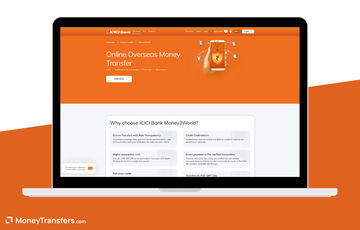
ICICI’s 24-currency EEFC offering suits an exporter whose invoice currencies extend beyond dollars, euros and pounds, provided the business meets its resident-earner requirements.
Its Global Business Collections service adds virtual collection details in the US, Europe, UK and Canada for eligible goods and services exporters.
Funds collected through that service can be withdrawn into an ICICI current or EEFC account on the next working day, preserving a route into foreign-currency banking.
ICICI EEFC features
Feature | What you get |
|---|---|
Eligibility | Resident foreign exchange earners, including companies operating in India |
Holding | EEFC in 24 currencies, subject to monthly conversion requirements |
Overseas collections | Separate Global Business Collections service for eligible exporters |
Collection currencies | USD, EUR, GBP and CAD through corresponding overseas virtual details |
Payments | Permitted foreign-currency expenses through bank trade/remittance services |
Users | Corporate banking and digital trade workflows with supported approvals |
Accounting | Statements and export documentation through the bank relationship |
Operator | ICICI Bank Limited, Indian bank |
Cost | ICICI standard trade tariff |
|---|---|
Account/collection package | Agreed account and collection-service pricing |
Outward/direct-import commission | 0.12%, minimum ₹1,000, maximum ₹10,000 |
Wholesale inward remittance commission | 0.12%, minimum ₹2,000, maximum ₹10,000 |
Additional inward processing | ₹500 for applicable current accounts opened from August 2025 |
Commission in lieu of exchange | 0.12%, minimum ₹2,000 where applicable |
Incoming export funds credited to EEFC | Exempt from commission in lieu of exchange |
FX conversion | Bank’s applicable exchange rate |
Other costs | Correspondents, cost option, documents and GST can add charges |
I'd say favour ICICI when you need its export collection routes, then compare the agreed collection fees with receiving a standard international bank transfer.
Its inward EEFC exemption does not make a later payment from retained currency free, so include the applicable outward commission when estimating your costs.
HDFC covers several currencies through a trade banking relationship
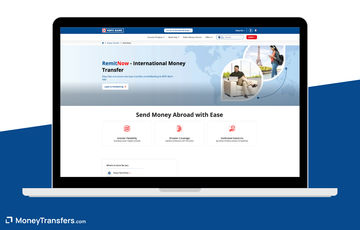
HDFC supports 21 EEFC currencies, including USD, EUR, GBP, AED and SGD, allowing a business with several export markets to separate its earnings.
It is a useful candidate if HDFC already handles your export documents, because receiving, permitted payments and conversion instructions can stay within that relationship.
HDFC requires no initial pay-in for EEFC opening, while the ongoing charges depend on the banking package and services you choose.
HDFC EEFC features
Feature | What you get |
|---|---|
Eligibility | Indian resident foreign exchange earners, including companies |
Holding | Accounts in 21 currencies |
Account type | Non-interest-bearing foreign-currency current account |
Receiving | Bank instructions for eligible foreign earnings |
Payments | Trade and remittance services for permitted expenses |
Conversion | Monthly mandatory conversion after permitted adjustments |
Records | Monthly statements and trade documentation |
Operator | HDFC Bank Limited, Indian bank |
Cost | HDFC published trade schedule |
|---|---|
Initial pay-in | Zero for EEFC opening |
Ongoing account package | Depends on the agreed business relationship |
Direct/advance import payment | 0.125%, minimum ₹1,250, plus ₹500 SWIFT |
Non-import telegraphic payment | 0.20%, minimum ₹1,000, plus ₹500 SWIFT |
Export bill regularisation | 0.0625%, minimum ₹1,500 |
BRC issuance | ₹150 per shipping bill |
Retained-currency/non-conversion charges | Applicable EEFC commission under your agreed tariff |
Conversion and extras | Bank exchange rate, GST and correspondent charges |
I suggest comparing HDFC’s complete trade bill when your receipts require export regularisation, since account opening costs reveal little about that continuing workload.
For a ₹5 lakh-equivalent direct import payment, its published commission floor produces ₹1,750 including SWIFT before applicable retained-currency charges, taxes or intermediaries.
Axis separates EEFC balance requirements from transaction charges
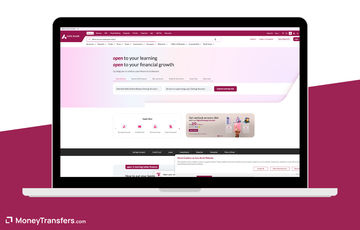
Axis does not require a minimum EEFC balance or charge for non-maintenance, which can suit a business whose foreign earnings arrive unevenly.
Its Online Inward Remittance facility supports splitting eligible receipts between a current account and EEFC, giving you a way to allocate working funds.
I'd say examine its additional commission on payments made without conversion, because matching an incoming currency to an expense does not remove that charge.
Axis EEFC features
Feature | What you get |
|---|---|
Eligibility | Resident foreign exchange earners and supported businesses |
Holding | Multiple-currency EEFC facilities, non-interest-bearing |
Receiving | Bank inward remittance instructions and digital receipt processing |
Allocation | Supported split between current account and EEFC |
Payments | Permitted trade and non-import remittances |
Users | Online inward workflow with authorised approval access |
Records | Electronic statements and uploaded supporting documents |
Operator | Axis Bank Limited, Indian bank |
Cost | Axis published schedules |
|---|---|
EEFC minimum balance | Nil |
EEFC non-maintenance charge | Nil |
Foreign incoming transfer | ₹300 under standard trade schedule |
Non-import outward payment | ₹1,000 plus ₹500 SWIFT |
Additional commission without conversion | 0.125%, including applicable EEFC outward payments |
Online inward workflow | No separate OIRM processing fee |
Conversion and extras | Bank’s FX rate, GST and correspondent charges |
The absence of an OIRM processing fee does not override the bank’s incoming transfer tariff, so separate the digital workflow from the underlying transaction.
Axis is attractive for irregular receipts if its complete payment charges remain competitive for the number and size of your supplier invoices.
DBS India combines INR and EEFC subaccounts
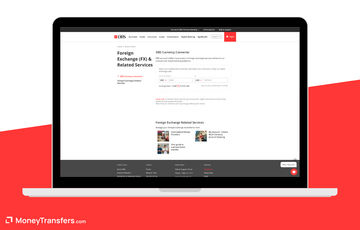
DBS Bank India’s Multi-Currency Account combines an INR account with EEFC subaccounts covering nine foreign currencies under the same business banking arrangement.
The listed currencies are AUD, CHF, GBP, JPY, USD, CAD, EUR, HKD and SGD, with subaccounts created when the first relevant inward payment arrives.
I think this structure is worth considering for a finance team consolidating domestic and foreign balances, provided the ₹10 lakh average quarterly balance requirement fits its cash position.
DBS Bank India Multi-Currency Account features
Feature | What you get |
|---|---|
Eligibility | Supported Indian business structures under local application and KYC |
Holding | INR account with nine foreign-currency EEFC subaccounts |
Receiving | Currency-specific incoming instructions, subaccounts established on first inward |
Payments | Foreign-currency remittances through DBS IDEAL or branch |
Users | Corporate online banking with authorised payment access |
Records | Digital statements, payment advice and standard bulk-upload tools |
Controls | Foreign balances remain subject to applicable EEFC requirements |
Operator | DBS Bank India Limited, Indian bank |
Cost | DBS India published MCA tariff |
|---|---|
Minimum average quarterly balance | ₹10 lakh, equivalent balances across currencies |
Opening balance waiver | Three months including the opening month |
Foreign-currency outgoing through IDEAL | ₹400, including SWIFT |
Foreign-currency outgoing through branch | ₹1,000, including SWIFT |
Incoming credit to foreign-currency account | ₹250 |
FIRC issuance | Free |
Online banking and standard bulk tools | Free under the published schedule |
Other costs | Correspondent charges, GST and FX when converting |
The online payment charge is lower than the branch charge, making the way your team approves and submits instructions part of the account comparison.
DBS also offers other current-account arrangements with EEFC facilities, but their balance requirements should not be substituted for this Multi-Currency Account’s tariff.
IDFC FIRST connects EEFC with a separately priced trade package
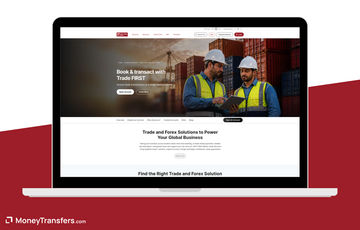
IDFC FIRST offers EEFC to resident foreign exchange earners, with examples including dollars, euros, pounds, yen and dirhams among its supported currency options.
Its World Business Account provides another part of the relationship for importers and exporters, with Gold and Platinum tiers carrying different qualifying balances or trade volumes.
I suggest assessing those package costs alongside EEFC when international collections and supplier payments form a regular part of your business banking activity.
IDFC FIRST EEFC features
Feature | What you get |
|---|---|
Eligibility | Resident earners, including companies and firms |
Holding | Multiple foreign currencies in EEFC |
Account type | Non-interest-bearing, subject to monthly conversion rule |
Receiving | Eligible earnings under the bank’s currency-specific instructions |
Payments | Permitted foreign expenses through business remittance services |
Companion banking | Separate World Business Gold or Platinum trade/current package |
Records | Banking statements and applicable trade certificates |
Operator | IDFC FIRST Bank Limited, Indian bank |
Cost | World Business companion-package tariff |
|---|---|
Gold qualification | ₹50,000 average monthly balance or USD25,000 monthly trade throughput |
Platinum qualification | ₹2 lakh average monthly balance or USD50,000 monthly trade throughput |
Incoming remittance/FIRC | Free under both WBA tiers |
Gold outgoing/SWIFT | ₹250 each |
Platinum outgoing/SWIFT | Free |
Commission in lieu of exchange | Gold 0.50%, Platinum 0.10% |
EEFC account charges | Confirmed under the agreed account relationship |
Extras | GST, correspondents and conversion where required |
These are World Business package prices, so I'd say establish that your EEFC payments qualify before using them to calculate your expected monthly banking costs.
The commission in lieu of exchange is particularly relevant when spending retained foreign currency, even where the separate outward and SWIFT charges are waived.
Plan around the EEFC conversion deadline
The monthly conversion rule means an EEFC account works best when your foreign earnings and permitted foreign expenses occur within a suitable accounting period.
If you receive dollars during October, the unadjusted October accrual normally needs conversion into INR by the end of November rather than remaining indefinitely.
Approved utilisation and forward commitments affect the calculation, while your bank will require the relevant instructions and documents before applying any permitted adjustment.
I suggest keeping a receipt-by-month record and discussing known foreign invoices with the bank early, especially where payment dates extend beyond the usual deadline.
Keeping dollars also exposes their INR value to exchange-rate movements, which affects Indian payroll, taxes and other obligations you must eventually fund in rupees.
Overseas receiving details do not always create retained balances
A local overseas collection account makes it easier for a customer to pay, but the next step determines whether your business actually retains the foreign currency.
ICICI’s Global Business Collections service can settle supported receipts into EEFC, while ordinary EEFC incoming instructions may involve an international transfer through correspondent banks.
Wise’s Indian business collection service automatically converts receipts into INR and pays your Indian bank account, so its overseas details do not provide a retained currency wallet.
Payoneer automatically withdraws receipts into your local Indian bank account or EEFC account, so eligible foreign funds remain with your bank.
I'd say choose the collection route and the holding account together, then ensure the export documents reflect the payment’s full journey into your business records.
Count charges even when there is no currency conversion
Using revenue to pay an invoice in the same currency can avoid conversion, but your bank can still charge transfer commission, SWIFT and commission in lieu of exchange.
That last charge compensates the bank where it does not earn an exchange margin, and its treatment differs across banks, transaction types and account packages.
An intermediary can also deduct money during an international payment, so establish whether the supplier requires the full invoice amount to reach its account.
For each bank, I suggest comparing an actual month of incoming receipts, permitted supplier payments, export processing and required INR conversion under the proposed tariff.
How are bank balances protected?
DICGC protects eligible deposits up to ₹5 lakh per depositor at a bank in the same right and capacity, including principal and interest together.
That limit applies across qualifying accounts and branches, so adding several currency accounts does not give your business a fresh ₹5 lakh allowance for each one.
For a larger operating balance, establish how the bank records the depositor and which balances qualify before relying on deposit insurance in your cash plan.
How to open and organise an EEFC account
Map the currencies and payment dates
List the currencies you earn and the permitted bills they can cover, including when each receipt and expense will enter your records.
Select the currencies you will actually use, then check how the bank applies the monthly conversion deadline to that pattern of receipts.
Prepare business and ownership documents
Prepare the company’s incorporation records, PAN, authorised-signatory information, ownership documents and the export or service evidence required for your activity and legal structure.
The bank may require trade registrations or additional transaction documents, so use its business account checklist for the proposed relationship rather than a personal account application.
Set up the right receiving instructions
Obtain the bank’s instructions for each currency and confirm whether receipts arrive directly into EEFC or pass through a separate collection service first.
Share the correct account instructions with customers and establish how payment references, invoices and export certificates connect to the resulting credit in your books.
Organise payments and monthly conversion
Allocate authorisation rights, track retained funds by receipt month and submit permitted supplier payments with the documentation required by your bank’s trade team.
Keep the conversion instructions and any approved adjustments alongside your statements, then reconcile the currency balances and INR receipts against the underlying invoices.
I suggest comparing the cost of moving your business funds before converting retained revenue for your next overseas payment.
Compare business transfer costs from India
Enter your destination and amount to compare the available rates for moving money from India.Frequently asked questions
Can an Indian business hold dollars without converting immediately?
An eligible resident foreign exchange earner can use EEFC to retain dollar receipts for permitted purposes, subject to the monthly conversion requirements and bank checks.
That gives short-term flexibility for matching foreign income and expenses, but it should not be treated as unrestricted long-term storage of dollar earnings.
Can freelancers and sole proprietors open EEFC accounts?
Eligible resident individuals earning foreign exchange can apply, although the bank will check their business activity, identity, registrations and supporting documents before opening the account.
Your legal structure also affects the application documents and account ownership, so a company should apply through its own authorised business relationship.
Do EEFC balances earn interest?
EEFC accounts are non-interest-bearing, so the reason to use them is managing eligible foreign earnings and payments rather than earning a return on cash.
Can a forex travel card replace a business currency account?
A travel card has a different purpose and funding arrangement, so it does not replace the account and documentation needed to receive business export earnings.
Likewise, a bank’s general debit-card offering does not establish that its card can spend directly from your company’s EEFC balance in every currency.
Is one bank cheapest for every currency and business?
The result depends on the currency, transaction size, payment purpose, account package and documents, including whether a retained-currency payment attracts commission in lieu of exchange.
I'd say compare the total cost for your own collection and spending pattern, using the agreed business tariff and applicable exchange rates together.
Our methodology & why trust us
I checked official Indian bank products, account applications, linked tariffs and regulatory guidance, focusing on resident business access, currency retention, receiving arrangements and permitted payments.
We assessed how each account supports export receipts and foreign payments under the EEFC rules that apply to businesses in India.
Our review methodology explains the wider approach used when assessing money transfer and account services for different business needs.
Sources
Receiving money from abroad
Decide whether you need spendable rupees, cash without a bank deposit, or an account that can accept the original currency.
Best money transfer apps
I'd say choose around the payment you need to make, rather than assume a familiar domestic UPI app can send to any foreign bank.
Business money transfers
The choices below handle outward commercial payments, with different approaches to account costs, document submission and the bank executing the transfer.
Instant money transfers
Move money between your own linked overseas accounts
Cheapest ways to send money abroad from India
Compare the same INR amount, purpose, funding method and bank payout, then check every fee and possible overseas deduction.
Contributors

Please share your experience with …