
The Best Multi-Currency Accounts in India in 2026
Table of Contents

Author: Artiom Pucinskij
Table of Contents
ICICI Bank RI Global Savings is my top pick for a resident holding permitted LRS funds across eight currencies in GIFT City.
RBL adds a JPY option without a minimum balance, while Wise and Axis solve overseas travel spending rather than foreign bank-account receiving.
HDFC RFC is a separate choice for returning residents retaining eligible foreign earnings after living abroad.
Spending abroad

Wise offers over 40 currencies for holding and spending during permitted overseas travel, with eligible UPI funding and no subscription.
The India Travel Card can hold INR funds, with funding restricted to your own personal UPI or Indian bank account (but you need to wait 10 days after top-up before you can use it).
Multi-currency options work differently in India
India residents do not have one universal account combining unrestricted INR funding, foreign salary receiving, many balances and overseas card spending.
GIFT City accounts hold purpose-bound LRS funds, travel products support spending abroad, and RFC facilities depend on residence history or the original money source.
At a glance
These are the best multi-currency account options right now:
Eight-currency resident GIFT account: ICICI Bank RI Global Savings
Holding JPY through GIFT City: RBL Global Advantage FCY Savings
Travel card with 40-plus currencies: Wise Travel Card
Bank-issued travel card without a savings account: Axis Multi-Currency Forex Card
Returning residents retaining foreign earnings: HDFC RFC Savings Account
Best multi-currency accounts and travel wallets in India

"Over 15 million customers use Wise, mostly for their excellent mobile app, transparent fee structure & use of mid-market rates. Now increasingly used for larger transfers."
ICICI Bank RI Global Savings
ICICI gives Indian residents eight foreign-currency options through its GIFT City account.
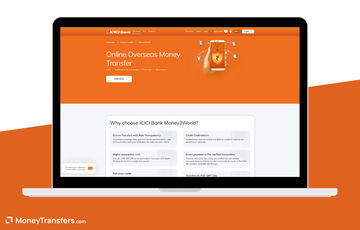
Key information | ICICI Bank RI Global Savings |
|---|---|
Type | GIFT City foreign-currency savings account |
Currencies | USD, EUR, GBP, CAD, AED, AUD, SGD and HKD |
Eligible user | Resident individual using permitted LRS funds |
Funding | INR remitted under LRS; overseas receipts restricted to earlier LRS funds or related investment income |
Use and receiving | Digital banking and international wires for permitted transactions |
Key costs | Outward remittance costs 10 currency units, with the billing currency confirmed when instructing payment, plus possible banking and FX costs |
Eight currencies make ICICI broader than RBL, although the account remains tied to permitted LRS purposes rather than domestic resident payments.
The USD250,000 annual LRS amount is an aggregate regulatory framework across permitted uses, rather than a separate allowance for this account.
Unused foreign exchange that is not reinvested must generally return through an Authorised Dealer bank within 180 days.
Foreign remittances into the account are limited to original LRS funds or income from their investments, subject to the required declaration.
I would use ICICI for a planned IFSC investment or permitted overseas transaction, rather than treating it as an unrestricted foreign-income account.
RBL Global Advantage FCY Savings
RBL's resident GIFT account holds JPY and five other currencies without a minimum balance.
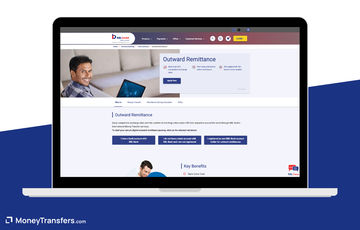
Key information | RBL Global Advantage FCY Savings |
|---|---|
Type | GIFT City foreign-currency savings account |
Currencies | USD, GBP, EUR, JPY, AED and AUD |
Eligible user | Resident individual using LRS |
Funding | Permitted LRS funding through the resident account process |
Use and receiving | Cross-border wires and permitted GIFT transactions |
Key costs | USD wires cost USD20 with OUR or USD5 with BEN/SHA, with other-bank costs considered separately |
RBL has no minimum balance, making it more practical than a high-threshold account for a smaller purpose-bound foreign-currency balance.
Choosing shared charges (SHA) means you pay RBL’s fee while intermediary charges can reduce what arrives.
With beneficiary charges (BEN), fees come out of the transfer, while sender-paid charges (OUR) move more costs to you.
Correspondent costs can still affect the payment, so an exact invoice needs the likely delivered amount checked before choosing fee allocation.
Resident fixed deposits are unavailable, and unused or unreinvested LRS funds remain subject to the 180-day return condition.
ICICI covers CAD, SGD and HKD, while RBL includes JPY, so the currency you need is more useful than the total count.
Wise Travel Card
Wise Travel Card covers spending in many currencies, within India's funding restrictions.
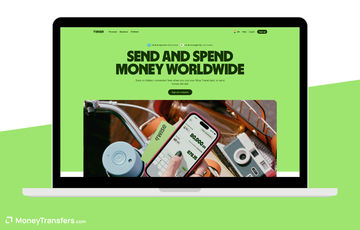
Key information | Wise Travel Card |
|---|---|
Type | Travel card and foreign-currency balances |
Currencies | More than 40 available for card use and holding abroad |
Eligible user | India resident using the product for permitted overseas travel purposes |
Funding | Eligible India UPI funding under current purpose and product checks |
Use and receiving | Overseas card spending, no personal receiving details for India residents |
Key costs | No subscription, ATM allowance to USD200 monthly, then USD1.40 plus 3.25% |
You can’t hold INR balances, and funding must follow the permitted travel process before you spend abroad.
Wise lets eligible residents hold money while travelling abroad, with conversion and card costs displayed for the selected action.
Personal receiving details are unavailable to India residents because the receiving feature is restricted to eligible business customers.
That limitation makes Wise useful for travel conversion and spending, while ICICI or RBL better fits permitted foreign-bank-account activity.
The digital card is free, and the account has no subscription, although funding eligibility and LRS purpose still need checking before travel.
Axis Multi-Currency Forex Card
Axis lets travellers preload 16 currency wallets without opening a savings account.
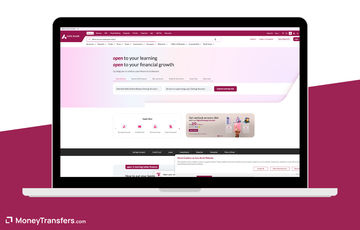
Key information | Axis Multi-Currency Forex Card |
|---|---|
Type | Prepaid travel card |
Currencies | 16 wallets, including USD, EUR, GBP, AED, JPY and SGD |
Eligible user | Eligible traveller buying the card over the counter |
Funding | Preloaded foreign currency before travel |
Use and receiving | Overseas merchant and ATM spending, no ordinary bank receiving function |
Key costs | ₹300 plus GST issue, ₹100 plus GST reload or encashment, 3.5% plus GST cross-currency use |
The separate wallets help you lock rates before travel, provided the transaction currency matches a funded balance.
If the correct wallet lacks funds, Axis follows its wallet order and cross-currency charges can apply to the fallback conversion.
A USD-wallet foreign ATM withdrawal costs USD2.25, while other wallet currencies have their own withdrawal charges.
Dynamic currency conversion and third-party ATM fees can add cost, so choose local currency at the terminal whenever possible.
I would choose Axis for arranging travel money through a bank branch, while Wise suits someone comfortable managing the process through an app.
HDFC RFC Savings Account
HDFC RFC lets eligible returning residents keep their foreign earnings.
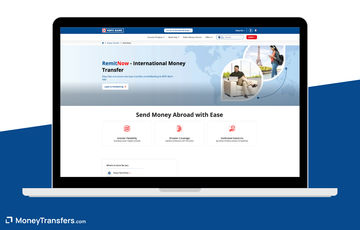
Key information | HDFC RFC Savings Account |
|---|---|
Type | Resident Foreign Currency savings account |
Currencies | Available in USD, GBP and EUR |
Eligible user | Qualifying returning resident settling permanently in India |
Funding | Eligible foreign earnings or assets under RFC rules |
Use and receiving | Retain foreign currency and transfer legitimate funds abroad |
Key costs | Confirm the current account and transfer schedule at the branch |
You can retain eligible USD, GBP or EUR instead of converting those savings into rupees immediately after returning.
HDFC requires qualifying customers to have returned permanently after at least one year of continuous overseas residence.
This account preserves eligible foreign money in its currency, while a fresh INR travel load belongs in a different product category.
Current maintenance, wire and exchange costs need confirmation through HDFC's branch schedule before choosing the account.
I would use RFC for returning-resident funds, while an ordinary resident funding new overseas activity should start with LRS eligibility instead.
Understand RFC, RFC(D) and EEFC boundaries
RFC can hold qualifying foreign assets or earnings for eligible returning residents and other permitted cases.
RFC(D) is a non-interest current account accepting specified foreign-currency receipts, including permitted unspent travel money.
EEFC is tied to eligible foreign-exchange earnings, making it relevant to qualifying earners or businesses rather than every resident consumer.
These RBI facilities are source-specific, so none should be treated as an unrestricted fresh-INR multi-currency wallet.
For detailed tax collection and transfer-purpose rules, use our guide to sending money abroad from India before funding the account.
Compare travel-wallet costs with bank-account costs
Axis's 3.5% cross-currency charge adds the equivalent of USD35 before GST to USD1,000 of spending requiring a wallet conversion.
Keeping enough money in the matching wallet avoids that charge, although the initial loading rate still affects your total cost.
For shorter trips, include the issue, reload and encashment fees when deciding how much foreign currency to preload.
With ICICI or RBL, compare the INR funding rate and the eventual outgoing wire cost before choosing where to hold the money.
A cheaper sending fee can be outweighed by conversion costs, especially if you later need to turn unused foreign money back into INR.
Our guide to the best international money transfer companies in India covers one-off outward payments instead of held foreign-currency accounts.
How to open and fund the right account in Kenya
Confirm your residence status
Check FEMA residence and any returning-resident history before choosing a GIFT, RFC or travel product.
Define the money source and purpose
Identify whether the funds come from LRS, qualifying foreign earnings, unspent travel money or a prepaid travel load.
Match the required function
Confirm whether you need bank wires, external receiving, foreign-currency holding or overseas card spending.
Compare complete costs
Add conversion, wire, correspondent, card, reload, ATM and GST costs that apply to your chosen action.
Prepare the documents
Provide PAN, Form A2, purpose and source evidence where required, then confirm the current bank or card tariff.
Use the form below when a one-off outward transfer fits your need better than maintaining a purpose-bound foreign-currency product.
Compare international transfers from India
Enter your destination and INR amount to compare the available rates for your international payment.Our methodology & why trust us
I compare eligibility, currency holding, INR or LRS funding, receiving function, card use and action-specific costs.
Account eligibility and the final cost depend on your purpose, supporting documents and the terms applying when you open or fund it.
We may earn commission from some companies, but commercial arrangements do not influence company positions or what I write.
Some services on the list are based on our research rather than internal testing.
You can read more about our process in our review methodology.
Sources
Cheapest ways to send money abroad from India
Compare the same INR amount, purpose, funding method and bank payout, then check every fee and possible overseas deduction.
Best international money transfer companies in India
The right choice depends heavily on your payment purpose, because an available destination does not automatically make every personal outward remittance permissible.
Contributors

Please share your experience with …