MoneyTransfers aims to help users find the best money transfer provider for their needs. To support our free service, we may earn a commission from some of the providers listed in our search results. The commission may also impact the ordering of the providers shown. Our reviews are independent from this and are based on our research and testing of dozens of remittance providers on the market.
Table of Contents
A multi currency account lets you hold, send, receive and spend money in different currencies from one account. No need to open a separate account in each country.
Most give you local account details in a few major currencies, so someone overseas can pay you like a local into your AUD, USD, EUR, GBP or other balance.
Many also come with a debit card for spending abroad, and convert at or close to the mid-market rate.
I suggest running a quick comparison using the form below and filtering the results to travel or business options.
Best option
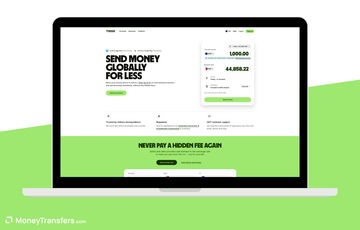
Wise offers the most local accounts, uses mid-market exchange rate, and has low fees.
Travel and spend
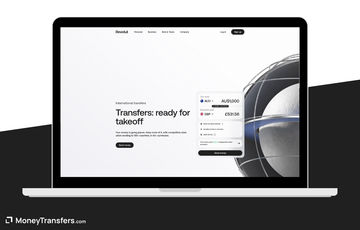
Revolut offers the most currencies, good exchange rates, and low fees. Depending on the plan, you also get additional travel perks.
If you already use it
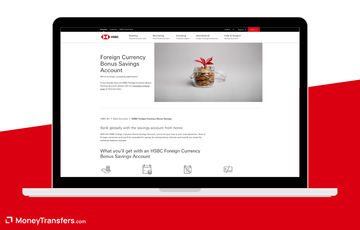
If you already bank with HSBC and only need a few supported currencies, HSBC might be a good alternative.
At a glance
Here are the best multi-currency accounts available in Australia:
Wise: the best all-rounder for holding money and getting paid in multiple currencies
Revolut: the best card for travel and everyday spending abroad, now a licensed Australian bank
HSBC Everyday Global: the best if you want one familiar bank account for home and abroad
If you’re unsure if you really need one, here’s a simple way to tell:
Use a multi currency account if…
You spend, hold or get paid in more than one currency
You often receive money from abroad in currencies other than AUD
You travel and want to spend on a card without your bank's FX fees
You'd rather choose when to convert currencies to AUD
You shop on overseas sites that charge in other currencies
Consider something else if…
You only use Australian dollars
You only need a one-off transfer abroad, where a dedicated transfer service is usually cheaper
You want a full bank account with a branch and cash handling
You need deposit protection on large balances, since foreign currency isn't covered by the FCS
On top of cost, you're looking at which currencies you can hold, whether you get local account details, and how good the card is.
I’ve factored in the above, and our comparison data to put this list below.
Holding & receiving money
9.2
Wise
Local Accounts
10
Currencies Supported
Exchange Rate
0%
"Over 15 million customers use Wise, mostly for their excellent mobile app, transparent fee structure & use of mid-market rates. Now increasingly used for larger transfers."
Travel & spending abroad
8.8
Revolut
Local Accounts
2
Currencies Supported
Exchange Rate
0.1% - 0.6%
"Revolut has 70+ million customers globally. You can hold up to 25+ currencies in the app and send money quickly in 25+ currencies to 140+ countries."
US Disclaimer: Revolut is not a bank. Banking services are provided by Lead Bank, Member FDIC. Fees may apply. See revolut.com/en-US/ for details.
Using home & abroad
5.9
HSBC
Local Accounts
1
Currencies Supported
Exchange Rate
3 - 5%
Best for holding and receiving money
Wise
Why Wise
Hold and convert 40+ currencies
Local account details in 9 currencies, including AUD, USD, EUR, GBP and NZD
A debit card to spend abroad and 400 AUD in ATM limits
Mid-market rate with a conversion fee from 0.63%
No monthly fee and free virtual card (physical costs 10 AUD)
Wise is the best all-rounder for holding money and getting paid across multiple currencies.
It comes with multiple local accounts which let you receive money like a local.
This means the payment will route through the local or internal network rather than using SWIFT.
This is great if you’re receiving payments from abroad.
Be it USD for work, GBP pension, rent from EU, etc. it will all come into one account with minimal fees.
Here are the local details you get:
Currency
Details you get
AUD
BSB and account number
USD
Account and routing number
EUR
IBAN
GBP
Sort code and account number
NZD
Account number
CAD
Account and institution numbers
SGD
Account number and bank code
HUF
Account number
Others
Fall back to SWIFT, slower and more expensive
Once you hold the balance in any given currency, you can convert it any time to AUD and withdraw (or hold).
There is no exchange rate markup, but instead, Wise charges a fee from 0.63% on all conversions.
If you’re loading money yourself, you can deposit money instantly and free with PayID or a bank transfer, and spend on the Wise card in 150+ countries.
If you're sending money abroad from the balance, most transfers will be delivered instantly but sometimes can take a few hours depending on the destination and the amount.
On the downside, Wise is not a bank so your money isn’t FCS protected, but it's regulated by ASIC (AFSL 513764) and your money is held separately.
I've used Wise for years, and in my opinion it is the simplest option to start with. It simply does a lot of things very well.
Show moreHide
Wise details:
Currencies to hold and convert
40+
Local account details
9 currencies
Exchange rate
Mid-market rate
Conversion fee
From 0.63%
Monthly fee
A$0
Debit card
Free virtual, 10 AUD for physical
ATM withdrawals
Free up to a 400 AUD/month, then 2.69% fee
Funding
PayID and bank transfer
Regulation
ASIC-regulated (AFSL 513764), funds held in trust, not FCS-protected
Best for travel and everyday spending
Revolut
Why Revolut
Hold, exchange and spend 25+ currencies
Interbank rate on weekdays (up to A$1,000/month)
Now a licensed Australian bank, so AUD is FCS-protected
Plans from free to paid, with bigger fee-free limits and travel perks
Spend in 150+ countries
I love my Revolut card and take it with me whenever I travel. So far I've had fewer issues with it abroad than my other cards.
I always have it as my main card abroad, because my physical card is a Visa which is more commonly accepted, if not, I just use it through Apple Pay, else I use my Wise card.
You get A$350 ATM withdrawal limit (slightly lower than Wise), but it scales up if you upgrade to one of the paid plans.
I personally never needed to upgrade, instead, I just combine Revolut and Wise for whenever I need to withdraw more than the limit.
But in case you’re interested, here are the prices:
Plan
Monthly fee
Fee-free FX per month
Weekend markup
Standard
A$0
A$2,000
1%
Plus
A$5.99
A$6,000
0.5%
Premium
A$11.99
A$20,000
No fee
Metal
A$28.99
Unlimited
No fee
Ultra
A$99.99
Unlimited
No fee
In terms of conversion fees, as long as you’re within your monthly allowance, and it's a weekday, most conversions will be done at the interbank rate and small fee (just like Wise).
Outside your allowance and on the weekends, the fees are a bit higher (covered in the table above).
Since 21 July 2026, Revolut is a licensed Australian bank, so eligible AUD deposits are FCS-protected up to A$250,000.
To be honest, the offering is very similar to Wise with a few nuances here and there like ATM withdrawals and available currencies.
The bigger difference is the local accounts you get, Wise offers 9 and Revolut only has a few (AUD and the rest is SWIFT).
If you compare standard Revolut and Wise, the costs are very similar (assuming no additional fees from above).
But, as soon as you upgrade to the Metal plan or above, Revolut is flat out cheaper, under any conditions.
AUD account (BSB and number), no separate local details per currency
Exchange rate
HSBC rate, around 2-3% above mid-market
Monthly fee
A$0, no minimum balance
Debit card
Free Visa debit
ATM and overseas fees
No HSBC fees, local ATM fees may apply
Cashback
2% on tap and pay under A$100 at home, up to A$50 a month, needs A$2,000 monthly deposit
Funding
PayID, bank transfer, from a linked account
Regulation
HSBC Bank Australia (AFSL 232595), protected on AUD up to A$250,000
What about the big four banks?
Banks like CommBank, Westpac, NAB or ANZ do offer foreign currency accounts, and you can open some online.
But they're a different product to the accounts above.
With the big four you open a separate account per currency, there's usually no card to spend from that balance, and they're built for holding money and sending telegraphic transfers rather than everyday spending.
Some also charge a maintenance fee and need a linked AUD account.
That's fine for a business or an investor parking one currency but not ideal if you want to hold a few currencies and tap a card while on holiday.
Multi currency accounts vs other options
A multi currency account isn't the only way to deal with foreign money.
Here's how it stacks up against the common alternatives.
Option
Good for
But…
Fee-free travel card (ING, Macquarie, Up)
Spending abroad on a card with no FX fee
You can't hold or receive foreign currency
Digital wallet (PayPal)
Quick online payments
Very expensive whenever it converts currency
Dedicated transfer service
One-off large transfers, like a property deposit
Not for holding or spending, just moving money once
Multi-currency account
Holding, receiving, and spending foreign currencies
Making large transfers or only using it for AUD holdings
If you only ever spend abroad and never hold currency, a fee-free travel card can be enough.
Once you want to hold, receive or convert, a multi currency account does more for less.
Using a multi currency account
I think a lot of people would find a multi-currency account useful but just don’t know why or how it can benefit them.
Travelling
This is the main reason to get one.
You hold the local currency and spend it on the card near the mid-market rate, instead of paying your bank's markup on every tap.
You get a small free ATM allowance, then it gets pricey, so it suits card spending more than pulling out lots of cash.
Sending money home
If you send money to family or cover bills abroad regularly, a multi currency account keeps the running cost down.
You convert at close to mid-market and send from the balance, rather than paying a markup each time.
Wise and Revolut tend to win the small regular transfers.
For the large one-off, a top money transfer company usually beats all of them, so it's worth a quick comparison before you send.
If you send money to Fiji, Tonga or Samoa, a multi currency account often isn't the right tool, since payout there is usually cash or mobile wallet and you can't hold those currencies most of the time.
A remittance service like Western Union or MoneyGram is usually cheaper and more available (fo you and for them).
Receiving money
This is where local account details matter most.
With local details you're paid over a local network, which is far cheaper and faster than SWIFT.
Provider
Local accounts
Wise
9 currencies
Revolut
AUD only
HSBC
AUD only
If getting paid from overseas is your main reason, Wise is the best option here since it has more local accounts.
Revolut and HSBC are better for spending than receiving.
If you're saving into USD or EUR for later, Wise and Revolut both let you set a rate to auto-convert at, so you can buy in when the rate looks good.
Fees and what they cost
These accounts make their money on currency conversion, not account charges, so the cost is usually a small percentage on top of the exchange (known as the markup).
Wise skip the markup and charge a clear fee instead, using the mid-market rate.
HSBC and the banks build their margin into the rate, which is much higher and usually hidden within the “receive amount”.
Transfer fees are usually low on multi-currency accounts, though it depends how you fund the transfer.
ATM fees are the ones that vary a lot by provider.
Usually there’s a small fee-free limit that you can use, beyond that you get charged additional fees which are higher than usual conversions.
Here’s how the accounts above compare in terms of raw conversion cost:
Last updated at 26/09/2026
AUD INR
Mid Market Rate$1 = ₹67.2921
Transfer Amount$1,000
1
Wise
2
Revolut
They get
Exchange rate
FX markup
Cheapest payment method
Transfer fee
₹66,931.02
67.2890
0.00%
Bank Transfer
$5.32
₹66,928.06
67.0286
0.39%
Bank Transfer
$1.50
AUD PHP
Mid Market Rate$1 = ₱43.9273
Transfer Amount$1,000
1
Wise
2
Revolut
They get
Exchange rate
FX markup
Cheapest payment method
Transfer fee
₱43,669.76
43.9285
0.00%
Bank Transfer
$5.89
₱43,655.93
43.7215
0.47%
Bank Transfer
$1.50
AUD JPY
Mid Market Rate$1 = ¥111.0604
Transfer Amount$1,000
1
Revolut
2
Wise
They get
Exchange rate
FX markup
Cheapest payment method
Transfer fee
¥110,519.00
110.7466
0.28%
Bank Transfer
$2.05
¥110,350.00
111.0540
0.01%
Bank Transfer
$6.34
AUD NGN
Mid Market Rate$1 = ₦935.7613
Transfer Amount$2,000
1
Wise
2
Revolut
They get
Exchange rate
FX markup
Cheapest payment method
Transfer fee
₦1,912,202.52
961.6790
-2.73%
Bank Transfer
$11.60
₦1,827,900.54
924.5830
1.20%
Bank Transfer
$23.00
AUD EUR
Mid Market Rate$1 = €0.6194
Transfer Amount$5,000
1
Wise
2
Revolut
They get
Exchange rate
FX markup
Cheapest payment method
Transfer fee
€3,072.75
0.6166
0.45%
Bank Transfer
$16.27
€3,030.98
0.6151
0.69%
Bank Transfer
$72.50
How to open a multi currency account
Opening an account usually takes a few minutes and will need a quick ID check.
Pick the one that fits your use
Receiving and holding, everyday spending, or a familiar bank account.
If you're not sure, start with Wise for its simplicity.
Download the app and sign up
Enter your name, date of birth, address, email and phone, or sign in with Apple or Google.
Verify your ID
Photograph your passport or Australian driver licence and take a selfie to match it. This is usually automatic and takes minutes.
Add money
Fund it with PayID or a bank transfer, which are free and near instant, or use a debit card. You can also do this later, just before you transfer.
Turn on the currencies you need
Switch on the balances you want, and pick up local account details where the provider offers them. That's what lets you receive like a local.
Order a card if you want one
Add a virtual card to spend straight away, or order the physical card for chip and PIN and ATMs.
As always, we suggest running a live comparison to get the best deal on AUD today.
For multi-currency accounts, run a search and switch to the “Travel” tab. This will show you the best accounts you can use today.
Find the best deal
Fill in the form below to get the best deals on money transfers from Australia.
A few more things
Who can open a multi-currency account?
You need to be 18 or over with an Australian address and ID, and approval is usually the same day.
Are multi-currency accounts safe and regulated?
Yes, all three are regulated in Australia, just in two different ways.
Revolut and HSBC are licensed banks, so eligible AUD deposits are covered by the Financial Claims Scheme up to A$250,000.
Wise is not a bank, so instead your money is held separately in trust and kept apart from company funds, protected if they fail.
The one thing to remember is that the FCS covers Australian dollars only.
Any foreign currency you hold, even at a bank, sits outside it.
Can I have more than one multi-currency account?
Yes, and I would say you should.
You can open a few, try the features, and settle on the one you like.
Having more than one also increases your ATM limits, which helps if you pull out more cash abroad with less fees.
Our methodology & why trust us
We looked at the multi currency accounts an Australian can actually open and use, then narrowed it to these that do the job best.
Our picks come from three things:
Live data from our comparison engine
Hands-on testing of the apps and cards
A close look at the features that matter
For each account we weighed:
The currencies you can hold
Whether you get local account details
The card, ATM access and everyday usability
The real cost, both fees and exchange rate
How your money is protected
Every account here is regulated in Australia.
Some providers pay us a commission, others are not commercial partner at all, it's here because it's genuinely one of the best.
Artiom is a marketing graduate from the University of Portsmouth and has been working across personal finance and remittance industries for several years. He optimises the organic experience on MoneyTransfers.com with the content team, manages and creates unique marketing tactics, and generally supports the overall growth of the website.
Money Transfer Comparison
Fill in the form and we’ll find you the best rates.











Please share your experience with …