
The Best Multi-Currency Accounts in Nigeria in 2026
Table of Contents

Author: Artiom Pucinskij
Table of Contents
Access Bank is my top pick for a low-maintenance domiciliary account holding USD, GBP, EUR or JPY.
UBA is stronger when you need both a matching-currency card and an online wire, while GTBank suits existing online-banking customers.
Raenest suits foreign-income payments, while Union Bank offers capped cash-withdrawal charges and FirstBank supports CFA.
Search Now & Save On Your Transfer
Instantly view live exchange rates, fees & features.
Nigerian multi-currency accounts are usually separate domiciliary accounts
A domiciliary account holds a named foreign currency already received or deposited, rather than pooling every balance behind one wallet.
Opening a USD account does not guarantee unrestricted foreign-currency allocation from NGN or automatic card access to that balance.
At a glance
Based on our analysis and comparisons, these are the best options:
Low-maintenance account with JPY: Access Bank Domiciliary Current
Matching-currency card and online wire: UBA Dom Advantage
Existing online-banking customers: GTBank Domiciliary Account
Foreign income and named account details: Raenest Personal Account
Occasional foreign-currency cash withdrawals: Union Bank Domiciliary Savings
Holding CFA alongside major currencies: FirstBank Domiciliary Account
Best multi-currency bank accounts for people in Nigeria
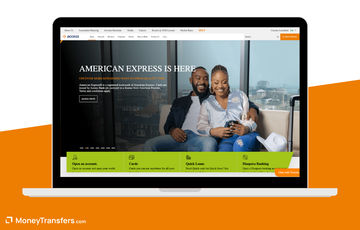
Access Bank Domiciliary Current
Access Bank holds four foreign currencies without monthly maintenance charges or an ongoing minimum balance.
Key information | Access Bank Domiciliary Current |
|---|---|
Type | Separate domiciliary current account |
Currencies | USD, GBP, EUR and JPY |
Entry requirements and ongoing costs | USD100, GBP100 or EUR100 opening, no monthly maintenance |
Funding and receiving | Foreign-currency receipts or permitted cash funding |
Card or online sending | Local and international transactions, route-dependent access |
Key cost | Cash handling, FX and wire charges depend on the selected payment route |
JPY distinguishes Access from the usual USD, GBP and EUR account set, making it useful for a specific invoice or income stream.
The opening deposit remains your money, and you can draw down the balance without maintaining an ongoing minimum.
Cash-handling charges depend on the bank's rate, so include funding costs when comparing it with another account.
Access's separate FX portal handles documented Form A allocation requests, which differs from sending currency already held in the domiciliary account.
I would use Access for low-cost holding, then obtain the complete wire and correspondent quote before paying an overseas beneficiary.
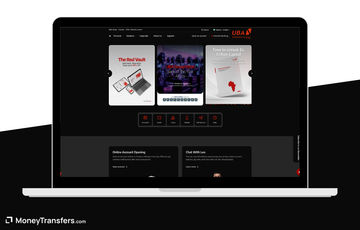
UBA Dom Advantage
UBA combines USD, GBP and EUR accounts with matching-currency card spending and online SWIFT payments.
Key information | UBA Dom Advantage |
|---|---|
Type | Separate domiciliary current or savings account |
Currencies | USD, GBP, EUR and other major currencies |
Entry requirements and ongoing costs | USD50, EUR50 or GBP50 equivalent opening |
Funding and receiving | Foreign-currency receipts and deposits |
Card or online sending | Gold Debit Mastercard and same-currency internet-banking wire |
Key cost | USD card issue USD15.05 and annual maintenance USD10.75, both VAT-inclusive |
The Gold Debit Mastercard is tied to the selected domiciliary currency, rather than automatically switching among every UBA foreign balance.
Issuing and keeping a USD card costs USD25.80 in the first year, before ATM or other transaction charges.
That fixed cost is easier to justify for regular travel or online purchases than one occasional transaction.
A foreign ATM withdrawal costs USD3.50 before VAT plus any acquirer charge, while overseas merchant purchases have no UBA transaction fee.
No bank transaction fee does not establish free cross-currency conversion, so spend from the matching balance whenever possible.
Internet Banking lets you choose sender or beneficiary correspondent charges, which changes either your upfront cost or the recipient amount.
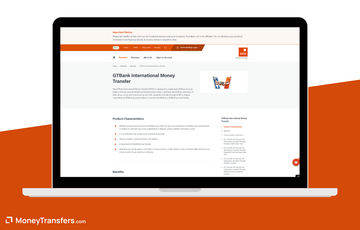
GTBank Domiciliary Account
GTBank gives existing customers online worldwide payments from foreign-currency balances they already hold.
Key information | GTBank Domiciliary Account |
|---|---|
Type | Separate domiciliary bank account |
Currencies | USD, GBP and EUR |
Entry requirements and ongoing costs | Confirm the current personal account tariff |
Funding and receiving | Foreign cash deposits and inbound foreign-currency transfers |
Card or online sending | Internet Banking wire with security token |
Key cost | Sender, correspondent and beneficiary charges confirmed before payment |
GTBank's online process reduces branch dependence for someone already using its account and security token.
The payment still requires beneficiary bank details, purpose information and enough of the same currency in the domiciliary account.
This route does not turn NGN into foreign currency automatically, so an allocation request remains a separate process.
I would use GTBank for the familiar online workflow, then confirm the complete debit and likely beneficiary deduction before authorising the wire.
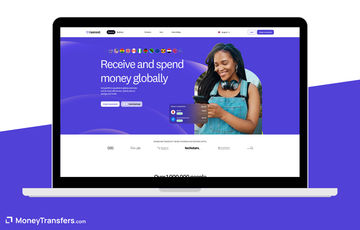
Raenest Personal Account
Raenest gives Nigerian freelancers named USD, GBP and EUR details for receiving foreign income.
Key information | Raenest Personal Account |
|---|---|
Type | Cross-border payment account |
Currencies | NGN, USD, GBP and EUR |
Entry requirements and ongoing costs | Nigerian resident aged 18+ with BVN and identity checks |
Funding and receiving | Named foreign account details and NGN account |
Card or online sending | Cross-border bank payouts from the app |
Key cost | USD ACH payout 0.35%, with USD5 minimum and USD10 maximum |
Raenest combines foreign receiving, holding, conversion and payout in one app, reducing the need to move your earnings between separate services.
A USD1,000 ACH payout hits the USD5 minimum, equal to 0.5%, while USD10,000 reaches the USD10 maximum before other costs.
Sending the same USD1,000 by SWIFT hits a USD50 payout-fee minimum, equal to 5%, before foreign-exchange or recipient costs.
UK and EUR bank payouts also cost 0.35% with their own currency-specific minimums and maximums.
Eligible deposits held with Regent Bank can qualify for pass-through FDIC cover up to USD250,000 when every programme condition is met.
That protection concerns Regent Bank's failure rather than Raenest's, and it should not be extended to every Raenest currency balance.
Union Bank Domiciliary Savings
Union Bank suits occasional branch cash withdrawals from USD, EUR or GBP savings.
Key information | Union Bank Domiciliary Savings |
|---|---|
Type | Separate domiciliary savings account |
Currencies | USD, EUR and GBP |
Entry requirements and ongoing costs | USD50 equivalent opening |
Funding and receiving | Foreign-currency savings and receipts |
Card or online sending | Savings product focused on holding and branch cash access |
Key cost | Cash withdrawal 0.05%, capped at USD10 |
The 0.05% cash-withdrawal charge costs USD2.50 on USD5,000 and reaches its USD10 ceiling at USD20,000.
That capped price gives Union a clear cash-access role, although receiving or depositing foreign currency can involve separate costs.
For overseas bank payments, Union offers a separate EUR or GBP current account with a 0.5% transfer charge plus a USD22-equivalent SWIFT fee.
I would choose the savings account for holding and occasional cash, then switch product if beneficiary wires become the main need.
FirstBank Domiciliary Account
I would choose FirstBank for CFA support or branch access to foreign-currency cash.
Key information | FirstBank Domiciliary Account |
|---|---|
Type | Separate domiciliary current or savings account |
Currencies | USD, GBP, EUR and CFA |
Entry requirements and ongoing costs | USD100, EUR100, GBP50 or CFA10,000 minimum |
Funding and receiving | Foreign-currency receipts and branch cash transactions |
Card or online sending | Interbank, intrabank and e-channel access |
Key cost | Confirm the selected-currency transfer and correspondent tariff |
CFA gives FirstBank a regional use case that the other shortlisted domiciliary accounts do not cover.
The minimum opening and operating balance stays in the account, but it can leave less money available for a small payment.
Branch withdrawals give you access to foreign cash, but I would confirm availability before travelling to collect a large amount.
I would use FirstBank for CFA or an existing branch relationship, then request the full overseas-payment charge before sending.
Separate foreign currency already held from NGN allocation
A domiciliary wire spends foreign currency already in the account, while a Form A route requests an allocation for a documented purpose.
Opening the account does not create unlimited access to foreign currency or remove the bank's purpose and source-of-funds checks.
When buying foreign currency, compare the allocation process and complete NGN debit separately from the later wire charge.
For money already received in USD, GBP or EUR, avoid an unnecessary conversion into NGN before paying another foreign-currency obligation.
Avoid paying twice to access your money
If your next bill is in GBP, receiving USD and converting it later adds an exchange cost that a GBP account could avoid.
The same applies to withdrawing foreign cash for a payment that the recipient could accept directly from your account.
For small payments, a minimum wire fee can outweigh any saving from an account with no monthly charge.
For an exact overseas invoice, select sender-paid correspondent charges where available and confirm whether the beneficiary bank can still deduct money.
If the recipient can accept a local-currency remittance instead, our best international money transfer companies in Nigeria guide covers those alternatives.
Understand deposit protection
Eligible deposits at Nigerian deposit money banks, including domiciliary balances, share NDIC cover up to ₦5,000,000 per depositor at each bank.
The ceiling applies across accounts held in the same right and capacity, rather than resetting for USD, GBP and EUR.
It does not protect against exchange-rate movement or guarantee payout in a particular foreign currency after a bank failure.
Raenest's conditional Regent Bank cover differs from NDIC protection and does not turn the platform into a Nigerian deposit money bank.
How to open and fund a domiciliary account in Nigeria
Choose the account currency
Match the account to the foreign income, savings or payment currency you expect to use.
Check the funding source
Confirm whether the bank accepts your inward transfer, permitted foreign cash or documented allocation route.
Choose the transaction function
Decide whether you need a card, branch cash withdrawal, local conversion or beneficiary wire.
Price the complete action
Add card, cash, FX, sender-bank, correspondent and beneficiary charges for the exact transaction.
Complete verification
Provide your BVN, NIN, identification, address evidence and any references or source documents required for the chosen account.
Use the form below when a one-off international payment fits your need better than maintaining a foreign-currency balance.
Compare international transfers from Nigeria
Enter your destination and NGN amount to compare the available rates for your international payment.Our methodology & why trust us
I compare currencies, opening costs, funding routes, receiving functions, card access, wire pricing and the protection attached to each balance.
Final eligibility, exchange rates and transaction charges remain subject to the bank or account's checks before you fund it.
We may earn commission from some companies, but commercial arrangements do not influence company positions or what we write.
Some services on the list are based on our research rather than internal testing.
You can read more about our process in our review methodology.
Sources
Cheapest ways to send money abroad from Nigeria
Funding currency comes first because an NGN wallet transfer, a Form A allocation and a pre-funded domiciliary wire have different costs.
Best international money transfer companies in Nigeria
Start with the payment purpose, because a family transfer app, tuition route and domiciliary-account wire solve different problems.
Contributors

Please share your experience with …