We only list companies that are trustworthy and appropriately licensed. Our aim is to give you a comprehensive view of the regulated money transfer marketplace.
|Disclosure
MoneyTransfers aims to help users find the best money transfer provider for their needs. To support our free service, we may earn a commission from some of the providers listed in our search results. The commission may also impact the ordering of the providers shown. Our reviews are independent from this and are based on our editorial policy, research and testing of dozens of remittance providers on the market.
Table of contents
Receiving money from abroad is easy, but avoiding high fees and keeping more of it is harder.
A multi-currency account lets you receive payments in different currencies.
And many will give you your own local account details in several currencies, for example:
A UK sort code and account number for pounds
ACH and routing number for US dollars
IBAN for euros
A sender pays you as though the transfer is domestic, in their own currency, and the money lands in that currency for you to hold and convert to pounds whenever you want.
Receiving is typically free, and you only pay when you convert the received currency into pounds.
Usually, this is done at slightly above interbank rate or with small fees (much smaller than your regular bank).
Here are a few examples of how much you can expect to receive with top companies offering multi-currency accounts in the UK from different countries:
Last updated at 26/09/2026
EUR GBP
Mid Market Rate€1 = £0.8596
Transfer Amount€1,200
1
Wise
2
Revolut
You get after fees
Transfer fee
Markup
Cheaper than avg. bank
£1,026.29
€6.71
-0.04%
£25.67
£1,014.51
€15.80
0.34%
£13.89
USD GBP
Mid Market Rate$1 = £0.7547
Transfer Amount$1,300
1
Wise
2
Revolut
You get after fees
Transfer fee
Markup
Cheaper than avg. bank
£972.95
$11.28
-0.04%
£21.29
£967.19
$16.45
0.16%
£15.53
AUD GBP
Mid Market Rate$1 = £0.5324
Transfer Amount$1,900
1
Wise
2
Revolut
You get after fees
Transfer fee
Markup
Cheaper than avg. bank
£1,003.53
$7.47
0.40%
£22.26
£993.94
$21.85
0.61%
£12.67
CAD GBP
Mid Market Rate$1 = £0.5334
Transfer Amount$1,900
1
Wise
You get after fees
Transfer fee
Markup
Cheaper than avg. bank
£1,008.47
$11.16
-0.10%
£25.47
AED GBP
Mid Market RateAED 1 = £0.2055
Transfer AmountAED 4,900
1
Wise
You get after fees
Transfer fee
Markup
Cheaper than avg. bank
£998.55
AED 41.98
0.00%
£21.82
NZD GBP
Mid Market Rate$1 = £0.4313
Transfer Amount$2,300
1
Wise
2
Revolut
You get after fees
Transfer fee
Markup
Cheaper than avg. bank
£980.16
$8.06
0.85%
£17.84
£969.47
$27.95
1.08%
£7.15
HKD GBP
Mid Market Rate$1 = £0.0962
Transfer Amount$10,600
1
Wise
You get after fees
Transfer fee
Markup
Cheaper than avg. bank
£1,015.07
$53.78
0.02%
£25.75
SGD GBP
Mid Market Rate$1 = £0.5906
Transfer Amount$1,700
1
Wise
2
Revolut
You get after fees
Transfer fee
Markup
Cheaper than avg. bank
£1,001.83
$4.72
-0.07%
£27.98
£993.03
$19.55
-0.06%
£19.18
*Rates and fees update weekly based on our live search comparisons.
Receiving limits are set by the provider rather than by law and are generally high, though they vary by company.
The one tradeoff is the FSCS protection. Most of these companies are FCA regulated, hold e-money license, and safeguard the funds in major banks (meaning it’s separate to operating costs).
Good if…
You get paid or receive international currencies
You want to avoid high fees from traditional banks
You want to be paid like a local using local account details
Find an alternative if…
You want FSCS deposit protection on the balance
You need physical cash rather than a digital balance
You're receiving once and don't want to open a new account
Can I receive USD into a UK account?
Yes, a standard UK current account will usually accept a dollar payment but convert it straight to pounds at the bank's own rate, which is much more expensive.
A multi-currency account instead gives you US account details of your own, letting you receive and hold the dollars and convert only when you choose.
Bank deposit
Receiving into your everyday UK bank account is the most popular option.
The sender will use your account details and the money will arrive directly into your bank account.
Most of the time this is the cheapest deposit method to receive money and is widely available everywhere.
However, the path money takes to reach the account is what affects the speed and the cost (this is also known as rails).
Local accounts
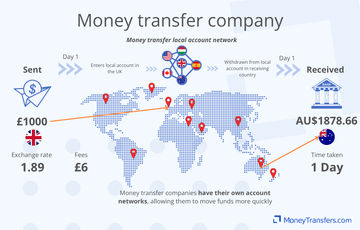
Money transfer companies like Wise, TapTap Send, Revolut, etc. will use their own network of bank accounts across the world.
The sender will deposit money into one account online, and the transfer company will transfer you money from the local account in your country, using local methods to your bank account.
This bypasses all the intermediaries (more on that below), which makes it much cheaper and faster compared to banks.
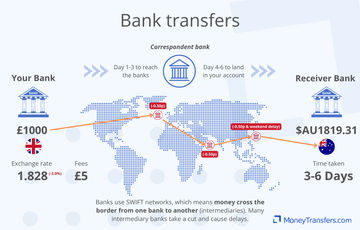
International bank wire (SWIFT)
This is the traditional bank way of sending money.
If the senders use their bank, money enters the SWIFT network, which then carries through a network of banks across the world.
Your money literally goes from one country's bank to another. These are known as the intermediaries.
Each intermediary bank will take a small fee for processing the transaction.
And, these are dependent on bank opening and closing times, meaning if the intermediary bank is closed, it won’t process the transaction.
This is why it’s slower, and more expensive to receive money via traditional bank wire.
Transfer limits
In terms of limits, there’s no legal cap on how much you can receive.
However, if you’re receiving an unusually large amount, your bank may freeze the transfer to run additional safety checks.
Some don't support inbound SWIFT directly, some route it through a partner, and a few can't receive foreign-currency payments at all, instead they convert to GBP automatically.
Sender is using international money transfer services
You want the money to land directly into your account
You don’t need foreign currency
Find an alternative if…
You want to receive and hold a foreign currency yourself
You need to receive cash
You don’t have a bank account
Cash pickup
With cash pickup the sender pays a provider like Western Union, MoneyGram or Ria, and you collect the money as physical cash from a nearby agent or branch.
You’ll need to bring the transfer reference number and valid photo ID, and in some cases proof of address.
It's built for speed and access rather than value.
Funds are often ready within minutes, and you don't need a bank account to collect, which makes it useful if you don't have a bank or live in an unbanked area.
However, it’s usually one of the most expensive receiving options, and requires a provider that can handle cash transfers.
Here are a few examples of how popular high-street agents compare when receiving money in the UK:
Last updated at 26/09/2026
EUR GBP
Mid Market Rate€1 = £0.8596
Transfer Amount€1,200
1
Western Union
2
MoneyGram
You get after fees
Transfer fee
Markup
Cheaper than avg. bank
£1,032.35
€0.00
-0.08%
£31.73
£1,011.72
€1.00
1.94%
£10.26
USD GBP
Mid Market Rate$1 = £0.7547
Transfer Amount$1,300
1
MoneyGram
You get after fees
Transfer fee
Markup
Cheaper than avg. bank
£976.82
$1.99
0.44%
£23.70
AUD GBP
Mid Market Rate$1 = £0.5324
Transfer Amount$1,900
1
Western Union
2
MoneyGram
You get after fees
Transfer fee
Markup
Cheaper than avg. bank
£1,006.90
$0.00
0.48%
£25.63
£995.60
$2.99
1.60%
£12.78
CAD GBP
Mid Market Rate$1 = £0.5334
Transfer Amount$1,900
1
MoneyGram
2
Western Union
You get after fees
Transfer fee
Markup
Cheaper than avg. bank
£994.08
$4.99
1.92%
£8.50
£987.65
$0.00
2.58%
£4.65
*Rates and fees update weekly based on our live search comparisons.
As a side note, the money you receive via cash is still recorded, it’s not anonymous, and there will be records that you have picked it up.
Good if…
You need the money urgently
You don't have a bank account
You're collecting a smaller amount
You prefer to handle money in person
Find an alternative if…
You're receiving a large sum
You’re looking for cheap money transfer option
You have a bank account
Cash delivery
Cash delivery takes the same idea a step further. Instead of collecting, you have the money delivered to your door.
Cash delivery is the most expensive option of all, and many companies will have small limits for this.
Cash delivery is becoming more popular now, offered by Xoom, MoneyGram, Western Union, Ria Money and many others.
Compare pay-in & pay-out methods
You can based on how much money you need to receive. And we’ll show you how much it's going to cost the sender.
We’re now also comparing all deposit and withdrawal options so you can find the best deal for your needs.
Cash delivery is a bit slower, since this is usually scheduled and you’ll need to show your ID before you can collect.
Good if…
You can't easily get to a bank or agent
You want cash without leaving home
You're receiving a smaller amount
Find an alternative if…
You need the cheapest option
You need international currencies
If you have a bank or multi-currency account
Digital wallet
A digital wallet like PayPal or similar lets you receive money into an in-app balance, which you then withdraw to your bank or spend directly.
The downside here, is that unlike multi-currency accounts, digital wallets are not made to handle conversions, they are used for online payments (usually domestic).
This means you will need to pay hefty fees for automatic conversion to GBP (often worse than with your bank).
This option is decent if you’re receiving small payments for services, because this is not a personal international money transfer any more, this becomes an international payment which comes with its own set of separate fees.
But even then, I would advise against using PayPal, unless you need absolute convenience and don’t mind losing out on fees.
It’s also good for payments between these apps, for example sending GBP from PayPal to PayPal is quick, cheap, and easy.
Good if…
You’re making domestic transfers
You’re receiving international business payments
You’re receiving GBP from abroad (sender has pre-converted already)
Find an alternative if…
You’re receiving international money transfers
You’re receiving large amounts from abroad
You have a challenger bank account like Monzo, Starling, or Revolut
You want to avoid high fees
Receive to card
Most money transfer companies can transfer funds directly to your debit card using the card number, through the Visa Direct or Mastercard Send networks, rather than to an account or for cash collection.
It's quick, often taking minutes, and simple for the sender, who needs only your card details.
But the transfer fees are usually a bit higher for the sender. This is because of the card processing fees involved, which can cost a few more pounds compared to bank transfer.
Good if…
You don’t have bank details on hand
You'd rather not share full bank details
You're receiving small to medium amounts
Find an alternative if…
You're receiving a large sum
You want the cheapest option
You'd rather not share card details
What about receiving stablecoins from abroad?
It's possible to receive a remittance as a stablecoin (a crypto token pegged to a currency, such as a US dollar stablecoin) and then off-ramp it, converting it to pounds through an exchange and withdrawing to your bank.
In practice this is far less common in the UK than elsewhere, because the methods above already cover most needs cheaply and quickly.
It tends to be more relevant for sending money out of countries where there are no other options.
Cheapest ways to receive money
The cheapest way to receive money from abroad is almost always a multi-currency account or a bank deposit.
Receiving is free, and because you're paid in the sender's currency and converted to pounds yourself, you only pay a small conversion cost, usually close to the mid-market rate with minimal fees.
Bank deposits are also cheap and good, but the money is forced to convert into GBP, meaning you lose a bit of control as a receiver.
But, this only holds true if the sender uses a money transfer company, not a traditional bank.
If they are, and you need pounds to arrive into your account, then it's a great option too.
The cheapest company heavily depends on where the money is coming from, and how much, but here are a few examples:
Last updated at 26/09/2026
EUR GBP
Mid Market Rate€1 = £0.8596
Transfer Amount€1,200
1
Western Union
2
Instarem
3
Wise
You get after fees
Transfer fee
Markup
Cheaper than avg. bank
£1,032.35
€0.00
-0.08%
£31.73
£1,030.20
€0.00
0.13%
£29.58
£1,026.29
€6.71
-0.04%
£25.67
USD GBP
Mid Market Rate$1 = £0.7547
Transfer Amount$1,300
1
Remitly
2
MoneyGram
3
Currencies Direct
You get after fees
Transfer fee
Markup
Cheaper than avg. bank
£979.68
$0.00
0.14%
£28.02
£976.82
$1.99
0.44%
£23.70
£976.17
$0.00
0.50%
£24.51
AUD GBP
Mid Market Rate$1 = £0.5324
Transfer Amount$1,900
1
Africhange
2
Western Union
3
Instarem
You get after fees
Transfer fee
Markup
Cheaper than avg. bank
£1,011.62
$6.60
0.01%
£26.94
£1,006.90
$0.00
0.48%
£25.63
£1,005.86
$0.00
0.57%
£24.59
CAD GBP
Mid Market Rate$1 = £0.5334
Transfer Amount$1,900
1
Africhange
2
Koho
3
Wise
You get after fees
Transfer fee
Markup
Cheaper than avg. bank
£1,010.36
$6.00
0.29%
£24.26
£1,010.17
$6.17
-0.01%
£27.17
£1,008.47
$11.16
-0.10%
£25.47
AED GBP
Mid Market RateAED 1 = £0.2055
Transfer AmountAED 4,900
1
Currencies Direct
2
OFX
3
Wise
You get after fees
Transfer fee
Markup
Cheaper than avg. bank
£1,000.58
AED 0.00
0.63%
£23.85
£1,000.39
AED 0.00
0.65%
£23.66
£998.55
AED 41.98
0.00%
£21.82
NZD GBP
Mid Market Rate$1 = £0.4313
Transfer Amount$2,300
1
OFX
2
Wise
3
Currencies Direct
You get after fees
Transfer fee
Markup
Cheaper than avg. bank
£985.64
$0.00
0.65%
£23.32
£980.16
$8.06
0.85%
£17.84
£976.35
$0.00
1.60%
£14.03
HKD GBP
Mid Market Rate$1 = £0.0962
Transfer Amount$10,600
1
Instarem
2
Wise
3
Currencies Direct
You get after fees
Transfer fee
Markup
Cheaper than avg. bank
£1,018.66
$0.00
0.12%
£29.34
£1,015.07
$53.78
0.02%
£25.75
£1,014.42
$0.00
0.54%
£25.10
SGD GBP
Mid Market Rate$1 = £0.5906
Transfer Amount$1,700
1
Wise
2
Currencies Direct
3
OFX
You get after fees
Transfer fee
Markup
Cheaper than avg. bank
£1,001.83
$4.72
-0.07%
£27.98
£997.56
$0.00
0.64%
£23.71
£997.44
$0.00
0.65%
£23.59
*Providers update automatically based on this weeks cheapest companies. Rates and fees update weekly based on our live search comparisons.
The fastest ways to receive money from abroad are cash pickup and payments straight to your debit card.
In both cases, money should arrive in a few minutes.
They're quick because there's no bank clearing in the way.
Cash pickup just needs the provider to confirm the money and release it at an agent counter, which is almost instant.
A card payment lands over the Visa or Mastercard network, which moves in near real time, the same rails a card refund uses.
If you ever dealt with card refunds you know this can take 3-5 days, but usually processed much faster. Same thing happens here, these can take a few days, but most of the time it is processed almost instantly.
The next fastest option are multi-currency accounts, and money paid in senders currency (for example euros).
Since you already have access to a EUR balance, they can just send it from their bank to your local EUR details, which will take a few minutes to arrive on average (but it can take 1-2 days since it uses the SEPA network).
The main downside here is that you’ll need to do the conversion later on to pounds.
Here are a few examples directly from our live comparisons for popular destinations from the UK:
From
Amount
Fastest way to send
Delivery time
Qatar
~400 GBP
Moneycorp
Minutes - 3 days
Canda
~500 GBP
Africhange
1-2 Hours
UAE
~1,500 GBP
Wise
Minutes
EU
~ 200 GBP
Wise
Minutes
*Based on our live comparisons. Speed and companies update weekly.
If you're looking for quick ways to send money from the UK, I've recently wrote a guide on instant money transfers.
Receiving large transfers
When receiving £50,000 or £100,000, the exchange rate is what increases the cost by a lot.
A markup of 1-2% is hundreds or thousands of pounds, far more than any fixed fee.
When it comes to these amounts, there are two things that matter to get the most for your money:
Limits: some accounts cap how much you can receive at once
Support: having someone to talk you through the process
Just like with the above, a high-street bank is the worst option here.
For example, HSBC adds around 3.06% on top of the exchange rate, that is a lot compared to someone like TorFX who takes 0.28%.
Speaking of currency brokers, for the largest transfers, a currency broker like Currencies Direct, TorFX or Halo Financial often fits best.
They handle big amounts as standard, give you an account manager to talk to, and can lock a rate so a moving market doesn't eat into the sum before it arrives.
Here's how much you can expect to receive in the UK for a big transfer from abroad via popular currency brokers:
Last updated at 26/09/2026
AED GBP
Mid Market RateAED 1 = £0.2055
Transfer AmountAED 1,000,000
1
Key Currency
2
Regency FX
3
TorFx
4
OFX
You get after fees
Transfer fee
Markup
Cheaper than avg. bank
£205,188.75
AED 0.00
0.15%
£5,856.66
£205,086.01
AED 0.00
0.20%
£5,753.92
£204,983.26
AED 0.00
0.25%
£5,651.17
£204,469.52
AED 0.00
0.50%
£5,137.43
CAD GBP
Mid Market Rate$1 = £0.5334
Transfer Amount$100,000
1
Key Currency
2
Regency FX
3
TorFx
4
OFX
You get after fees
Transfer fee
Markup
Cheaper than avg. bank
£53,230.03
$0.00
0.20%
£1,493.43
£53,203.36
$0.00
0.25%
£1,466.76
£53,187.36
$0.00
0.28%
£1,450.76
£53,070.02
$0.00
0.50%
£1,333.42
AUD GBP
Mid Market Rate$1 = £0.5324
Transfer Amount$100,000
1
Key Currency
2
Regency FX
3
TorFx
4
OFX
You get after fees
Transfer fee
Markup
Cheaper than avg. bank
£53,136.81
$0.00
0.20%
£1,490.81
£53,110.19
$0.00
0.25%
£1,464.19
£53,094.22
$0.00
0.28%
£1,448.22
£52,977.08
$0.00
0.50%
£1,331.08
*Providers update automatically based on this weeks cheapest companies. Rates and fees update weekly based on our live search comparisons.
One thing to keep in mind, large or unexpected payments can trigger source-of-funds checks from your bank.
Make sure to contact them in advance and let them know that you’re expecting to receive a large payment from abroad.
Best for account coverage (currencies and local accounts)
Coverage comes down to two things:
How many currencies you can be paid in
How many of those give you local account details
Local details mean your own account number in the sender's country.
So an overseas payer sends to you like a domestic payment, not an international one.
The best options for this in my opinion are Wise, Revolut, and Currencies Direct.
The more of these you hold, the more currencies you can receive cheaply and directly, without a bank converting anything for you.
Multi-currency accounts offer the most local account options, meaning you can receive more currencies as a local.
One important thing to remember:
Local details: you receive money like a local, in that currency over local networks (cheapest)
Hold and convert only: the payment still arrives from abroad in that currency, but it’s using either SEPA or SWIFT. You then need to convert it to pounds yourself.
Many companies will mix the two saying “50+ currencies” but it means nothing unless you actually get the local details with each.
Best for businesses and sole traders
Incoming business payments have a completely different set of needs compared to the personal, whether it's freelance fees, client invoices, or sales revenue.
You'll often be paid in the currency you priced in, frequently US dollars, even from non-US clients.
You may be paid regularly by the same clients, and the money has to reconcile cleanly against your invoices and accounting.
This is where you’d want to receive all different currencies like a local, but then convert them to GBP for payout.
This is where business multi-currency accounts come in (also known as FX platforms). These give you the same benefits of a multi-currency account but with additional business features like software integrations.
For larger or less frequent sums, a big one-off contract, equipment, property, etc. a broker with a business expertise can beat an app on rate and give you much better support.
There are a few good options out there:
If you’re just a small business, a Wise Business account is all you need.
If you're an established SME, consider a more advanced FX platform like Airwallex.
For one off large payment, a broker like TorFX or RegencyFX will give you the best support.
Fees for receiving money from abroad
When you're expecting money from abroad, it's natural to focus on the transfer, getting the funds from there to here.
When it comes to receiving international transfers, two things will impact how much you get:
The exchange rate markup: a percentage added on top of the interbank rate
The fee: a fixed or variable fee for the service provider
And to be clear, this only applies to getting international currency to GBP. This does not apply to the same currency transfers (since no conversion takes place).
If you’re expecting a small amount, fees will play a bigger role. For example receiving £250 and seeing £6 fee feels like a lot. So you want to use a provider with the lowest fees, such as Wise or Revolut.
For larger amounts, like £100,000, £6 doesn’t look like much. But this is where the markup can eat into it much more. A 3.06% markup from HSBC will cost you £3,060, which is a lot if you ask me.
This is where you want to use a currency broker, who can negotiate a better exchange rate with their suppliers.
Through MoneyTransfers.com you can get 0.2% markup with RegencyFX (£100k+ transfer), which is ~£200 in fees. That’s £2,860 more for you compared to using HSBC.
How the receiving methods affect the fees
Realistically, most people will be receiving small to medium sized transfers. This is where you want to keep the fees as low as possible.
One thing that impacts the fee is how you receive the money:
Method
Who controls the conversion
Cost
Foreign currency into a UK bank
The bank, automatically, on arrival
Very high FX markup and fees
Cash pickup or delivery
The money transfer company
Small FX markup but higher fee
Bank or debit card deposit
The money transfer company
Small FX markup and small fees
Multi-currency account
You, when you choose to convert
Small FX markup and minimal fees
Sending money to yourself?
Sending money between your own accounts in different countries is far simpler, because you control both ends.
You decide how it's sent, so you can route it through a provider that gives you the mid-market rate rather than letting a bank convert it, usually a money transfer specialist or your own multi-currency account.
And if you’re sending GBP to GBP, that’s as easy as it gets, just use your bank account.
How to receive money from abroad
Most of the work comes from the sender, but your job is to give them the right details to not hold things up at your end:
Agree on the provider and the method
Share the right details for that method
Wait, and ask for a reference to track it
Check it's actually landed into your account
You don’t need to have an account with a provider to receive money.
For example, if your sender is using Wise and the delivery method is bank deposit, you don’t need to have a Wise account for money to land into your bank.
However, if you’re receiving money into a multi-currency account, you will need to have one set up and verified before you can receive the money.
Receiving into a multi-currency account
The cheapest route is usually a multi-currency account, because you're paid in the sender's currency and convert to pounds yourself.
Open and verify
Open an account supporting the currency you'll be paid in, and finish ID checks before the payment is sent, unverified accounts are a common cause of holds.
Get your local details
In the app, open the relevant currency (e.g. EUR) to find your account details for that currency.
Share them with the sender
Give them those local details, plus your name exactly as it appears on the account, so they pay you as a domestic transfer in their own currency.
A name mismatch is a common reason payments bounce.
Receive in that currency
The money arrives in euros and sits unconverted.
Convert when you choose
Move it to pounds when the rate suits, at a cost close to mid-market, or hold it to spend or send later.
This is where multi-currency accounts make a difference, you don’t need to settle the conversion the moment you get the money (unless you choose to).
How long does it take to receive money from abroad
Anywhere from a few seconds to about five working days, and this largely depends on the method you choose:
Method
Typical time to arrive
Cash pickup
Minutes
To card
Minutes - few hours
Digital wallet
Minutes - few hours
Pounds over Faster Payments
Instant - Minutes
Euros over SEPA
1 - 2 days
Bank transfer over SWIFT
1 - 5 working days
As I’ve mentioned a few times already, the few things that impact the speed are:
The currency and network (rails)
Using local transfer rails is always fast, but as soon as it goes into SWIFT it can take a few days.
Verification checks
Receiving large amounts from abroad can trigger AML checks and additional verification checks.
Errors in your details
If the sender made a mistake, your payment can bounce and they’ll need to resend it again.
The best ways to avoid any delays is to:
Use a reliable and reputable money transfer company ()
Tell your bank about incoming transfer if its large
Use a multi-currency account, or bank account deposit as a receiving method
Ensure the details you give to the sender are correct and match your ID
How much can you receive?
There's no legal limit on how much money you can receive from abroad into a UK account.
However, some money transfer companies do have limits on how much money can be sent and received.
But to be honest, most companies on our top list will have limits in 10s of millions so it’s rarely an issue.
Also, there may be a few additional checks if you’re receiving exceptionally large transfers, for example anti-money-laundering (AML) checks.
Your bank or provider may ask where the money came from and why you're receiving it, and can pause the payment until you answer.
The rules are different if someone physically carries cash in rather than transferring it.
If you bring £10,000 or more in cash into the UK from abroad, you must declare it to customs.
This applies to physical cash carried across the border, not to money sent electronically.
Tax on money received from abroad in the UK
This is general information only, not tax advice
Whether you owe tax depends on your own circumstances and residency status. For anything significant, check with HMRC or a qualified tax adviser before relying on any of the below.
Whether money you receive from abroad is taxable has nothing to do with the transfer itself and everything to do with what the money is.
Gifts
A genuine gift from an individual abroad, say from a family member, is generally not taxed as income in the UK when you receive it.
There's usually nothing to declare simply for receiving it.
Tax can still arise later on what the gift then earns (interest, dividends, rental), and inheritance-tax rules can apply in specific cases.
Income
If the money is payment for something, it's likely taxable.
Earnings from employment or freelance work, profit from selling or renting out overseas property, or returns on investments are all income you may need to declare on a Self Assessment tax return and pay UK tax on.
Inheritance and the 7-year rule
Inheritance from abroad has its own treatment, and UK inheritance tax can come into play depending on the estate and the deceased's status.
Separately, a large gift can fall within scope if the person who gave it dies within seven years of giving it, known as the "7-year rule", under which the gift may be counted back towards their estate for inheritance tax.
The tax, where due, is generally assessed on the estate rather than on you as the recipient, but it's a reason to keep a record of large gifts.
Gift allowances
UK gift rules include specific allowances, for example annual gift limits and larger tax-free amounts for wedding or civil-partnership gifts (with different amounts depending on your relationship to the giver).
These sit within the inheritance-tax framework rather than being an income-tax matter.
Residency changes everything
How you're taxed on foreign income depends heavily on whether you're UK-resident and how your affairs are structured.
Non-residents and those eligible for particular reliefs are treated differently.
This is exactly something you should confirm with HMRC or tax specialist if you’re unsure.
Our methodology & why trust us
We've compared and analysed over 200 money transfer companies to work out the cheapest, fastest, and safest ways to receive money from abroad in the UK, including every deposit and withdrawal method they support.
Firstly, every provider mentioned on this page is regulated, legit, and safe to use.
With 6+ years of hands-on experience in international money transfer services, Artiom has tested and analyzed dozens of companies, services, and apps firsthand. He has worked on content and product at MoneyTransfers.com since 2019, with a focus on FX rates, transfer apps & companies, and comparison tools. His work has been featured in Forbes, Yahoo Finance, Decrypt, PoundSterling, and more.
Search Now & Save On Your Transfer
Instantly view live exchange rates, fees & features.






















.svg)






Please share your experience with …