We only list companies that are trustworthy and appropriately licensed. Our aim is to give you a comprehensive view of the regulated money transfer marketplace.
|Disclosure
MoneyTransfers aims to help users find the best money transfer provider for their needs. To support our free service, we may earn a commission from some of the providers listed in our search results. The commission may also impact the ordering of the providers shown. Our reviews are independent from this and are based on our editorial policy, research and testing of dozens of remittance providers on the market.
Table of Contents
The cheapest way to send money abroad from the UK is to use a specialist money transfer company like Wise, Revolut or TapTap Send rather than your bank.
Banks like Barclays typically add 2% to 5% on top of the exchange rate (plus a transfer fee) vs top money transfer services charging under >0.5% in total.
But the "cheapest" way changes with your destination, amount, and funding/payout methods.
This is why I always suggest comparing your options (using the form below).
Search Now & Save On Your Transfer
Instantly view live exchange rates, fees & features.
Cheapest ways to send GBP abroad right now
Before we go through the cheapest overall companies, I think it would be more useful to give you the cheapest options right now:
Last updated at 26/09/2026
GBP USD
Mid Market Rate£1 = $1.3218
Transfer Amount£1,000
1
Revolut
2
Western Union
3
Wise
They get
Delivery Time
Exchange rate
Markup
Cheapest payment method
Transfer fee
$1,317.90
Next day
1.3199
0.14%
Bank transfer
£1.50
$1,316.32
Minutes - 2 days
1.3163
0.42%
Debit card
£0.00
$1,315.67
Within minutes
1.3217
0.01%
Bank transfer
£4.60
GBP EUR
Mid Market Rate£1 = €1.162
Transfer Amount£1,000
1
TapTap Send
2
Revolut
3
Instarem
Opal Transfer
They get
Delivery Time
Exchange rate
Markup
Cheapest payment method
Transfer fee
€1,162.00
Minutes
1.1620
0.00%
Debit card
£0.00
€1,160.00
Within minutes
1.1600
0.18%
Bank transfer
£0.00
€1,157.50
Minutes - 24 hours
1.1575
0.39%
Debit card
£0.00
€1,139.66
Minutes - 24 hours
1.1400
1.91%
Bank transfer
£0.30
GBP PLN
Mid Market Rate£1 = zł 5.0852
Transfer Amount£1,000
1
Remitly
2
Wise
3
OFX
Opal Transfer
They get
Delivery Time
Exchange rate
Markup
Cheapest payment method
Transfer fee
zł 5,067.80
Minutes - 3 days
5.0678
0.34%
Bank transfer
£0.00
zł 5,059.32
Next day
5.0829
0.05%
Bank transfer
£4.64
zł 5,052.16
Minutes - 24 hours
5.0522
0.65%
Bank transfer
£0.00
zł 4,920.19
Minutes - 24 hours
4.9350
3.00%
Bank transfer
£3.00
GBP INR
Mid Market Rate£1 = ₹126.7619
Transfer Amount£1,000
1
TapTap Send
2
Western Union
3
MoneyGram
They get
Delivery Time
Exchange rate
Markup
Cheapest payment method
Transfer fee
₹127,000.00
Minutes
127.0000
-0.19%
Debit card
£0.99
₹126,737.00
Minutes - 2 days
126.7369
0.02%
Debit card
£0.00
₹126,712.90
Minutes - 24 hours
126.7129
0.04%
Bank transfer
£1.49
GBP NGN
Mid Market Rate£1 = ₦1,757.5203
Transfer Amount£1,000
1
MoneyGram
2
Remitly
3
WorldRemit
They get
Delivery Time
Exchange rate
Markup
Cheapest payment method
Transfer fee
₦1,810,958.40
Minutes - 24 hours
1810.9584
-3.00%
Debit card
£0.99
₦1,809,810.00
Minutes - 3 days
1809.8100
-2.93%
Bank transfer
£0.00
₦1,804,863.50
Minutes - 2 days
1806.6521
-2.76%
Debit card
£0.99
GBP RON
Mid Market Rate£1 = lei 6.1339
Transfer Amount£1,000
1
Wise
2
MoneyGram
3
Currencies Direct
Opal Transfer
They get
Delivery Time
Exchange rate
Markup
Cheapest payment method
Transfer fee
lei 6,103.33
Next day
6.1320
0.03%
Bank transfer
£4.68
lei 6,089.40
Minutes - 24 hours
6.0894
0.73%
Debit card
£0.00
lei 6,087.90
Minutes - 24 hours
6.0879
0.75%
Bank transfer
£0.00
lei 6,006.99
Minutes - 24 hours
6.0100
2.04%
Bank transfer
£0.50
GBP AED
Mid Market Rate£1 = AED 4.8663
Transfer Amount£1,000
1
Western Union
2
Instarem
3
Remitly
They get
Delivery Time
Exchange rate
Markup
Cheapest payment method
Transfer fee
AED 4,852.49
Minutes - 2 days
4.8525
0.28%
Debit card
£0.00
AED 4,850.00
Minutes - 24 hours
4.8500
0.33%
Bank transfer
£0.00
AED 4,846.20
Minutes - 3 days
4.8462
0.41%
Bank transfer
£0.00
GBP CAD
Mid Market Rate£1 = $1.8749
Transfer Amount£1,000
1
WorldRemit
2
Western Union
3
Wise
They get
Delivery Time
Exchange rate
Markup
Cheapest payment method
Transfer fee
$1,871.80
Minutes - 2 days
1.8737
0.06%
Debit card
£0.99
$1,866.10
Minutes - 2 days
1.8661
0.47%
Debit card
£0.00
$1,865.51
Next day
1.8730
0.10%
Bank transfer
£3.99
GBP AUD
Mid Market Rate£1 = $1.8782
Transfer Amount£1,000
1
Western Union
2
Wise
3
Currencies Direct
They get
Delivery Time
Exchange rate
Markup
Cheapest payment method
Transfer fee
$1,886.59
Minutes - 2 days
1.8866
-0.45%
Debit card
£0.00
$1,878.69
Within minutes
1.8859
-0.41%
Bank transfer
£3.81
$1,876.70
Minutes - 24 hours
1.8767
0.08%
Bank transfer
£0.00
GBP PHP
Mid Market Rate£1 = ₱82.6129
Transfer Amount£1,000
1
Sendwave
2
MoneyGram
3
Xe
They get
Delivery Time
Exchange rate
Markup
Cheapest payment method
Transfer fee
₱82,673.29
Minutes - 3 days
82.7552
-0.17%
Debit card
£0.99
₱82,511.00
Minutes - 24 hours
82.5110
0.12%
Debit card
£3.99
₱82,217.70
Minutes - 24 hours
82.2177
0.48%
Debit card
£0.00
GBP ZAR
Mid Market Rate£1 = R 21.5965
Transfer Amount£1,000
1
MoneyGram
2
OFX
3
Currencies Direct
They get
Delivery Time
Exchange rate
Markup
Cheapest payment method
Transfer fee
R 21,614.90
Minutes - 24 hours
21.6149
-0.09%
Debit card
£0.00
R 21,456.13
Minutes - 24 hours
21.4561
0.65%
Bank transfer
£0.00
R 21,453.90
Minutes - 24 hours
21.4539
0.66%
Bank transfer
£0.00
GBP THB
Mid Market Rate£1 = ฿44.1834
Transfer Amount£1,000
1
Instarem
2
TapTap Send
3
Revolut
They get
Delivery Time
Exchange rate
Markup
Cheapest payment method
Transfer fee
฿44,016.40
Minutes - 24 hours
44.0164
0.38%
Bank transfer
£0.00
฿44,000.00
Minutes
44.0000
0.42%
Debit card
£0.99
฿43,938.55
Within minutes
44.0046
0.41%
Bank transfer
£1.50
GBP PKR
Mid Market Rate£1 = Rs 366.1987
Transfer Amount£1,000
1
Western Union
2
WorldRemit
3
TapTap Send
They get
Delivery Time
Exchange rate
Markup
Cheapest payment method
Transfer fee
Rs 368,722.05
Minutes - 2 days
368.7221
-0.69%
Debit card
£0.00
Rs 368,539.34
Minutes - 2 days
368.9046
-0.74%
Debit card
£0.99
Rs 367,100.00
Minutes
367.1000
-0.25%
Debit card
£0.00
GBP MYR
Mid Market Rate£1 = RM 5.3984
Transfer Amount£1,000
1
Instarem
2
Wise
3
Remitly
They get
Delivery Time
Exchange rate
Markup
Cheapest payment method
Transfer fee
RM 5,385.10
Minutes - 24 hours
5.3851
0.25%
Bank transfer
£0.00
RM 5,372.95
Within minutes
5.3961
0.04%
Bank transfer
£4.29
RM 5,371.60
Minutes - 3 days
5.3716
0.50%
Bank transfer
£0.00
GBP KES
Mid Market Rate£1 = KES 171.7849
Transfer Amount£1,000
1
Instarem
2
Sendwave
3
WorldRemit
They get
Delivery Time
Exchange rate
Markup
Cheapest payment method
Transfer fee
KES 170,867.80
Minutes - 24 hours
170.8678
0.54%
Debit card
£0.00
KES 170,541.39
Minutes - 3 days
170.6250
0.68%
Debit card
£0.49
KES 170,524.61
Minutes - 2 days
170.6936
0.64%
Debit card
£0.99
GBP GHS
Mid Market Rate£1 = GH₵15.3198
Transfer Amount£1,000
1
Western Union
2
WorldRemit
3
Sendwave
They get
Delivery Time
Exchange rate
Markup
Cheapest payment method
Transfer fee
GH₵15,389.73
Minutes - 2 days
15.3897
-0.46%
Debit card
£0.00
GH₵15,389.70
Minutes - 2 days
15.3897
-0.46%
Debit card
£0.00
GH₵15,389.70
Minutes - 3 days
15.3897
-0.46%
Debit card
£0.00
GBP BDT
Mid Market Rate£1 = ৳162.9549
Transfer Amount£1,000
1
Western Union
2
MoneyGram
3
Remitly
They get
Delivery Time
Exchange rate
Markup
Cheapest payment method
Transfer fee
৳162,928.00
Minutes - 2 days
162.9274
0.02%
Debit card
£0.00
৳162,765.40
Minutes - 24 hours
162.7654
0.12%
Debit card
£1.99
৳162,720.00
Minutes - 3 days
162.7200
0.14%
Bank transfer
£0.00
GBP AFN
Mid Market Rate£1 = ؋84.8037
Transfer Amount£1,000
1
MoneyGram
2
Western Union
They get
Delivery Time
Exchange rate
Markup
Cheapest payment method
Transfer fee
؋83,899.10
Minutes - 24 hours
83.8991
1.07%
Debit card
£0.00
؋82,044.10
Minutes - 2 days
82.0441
3.31%
Debit card
£0.00
*Table updates weekly. All information comes directly from our comparisons, provider APIs, and manually collected rates.
Since rates change all the time, this table shows the cheapest options this week, while the list below covers companies that are generally competitive for different types of transfer.
The cheapest money transfer services from the UK
These are generally cheapest options available on in the UK for different use-cases.
Use the table above to see what is the cheapest this week, and below to better understand the services and why use them.
But to get the best quote right now for your actual amount and destination, I suggest to get the best deal right now.
Sending money home to Africa & Asia
8.5
TapTap Send
Fees
Exchange Rate Markup
Transfer Speed
Minutes
"Taptap Send faciliates money transfers to bank accounts & mobile money wallets on popular networks with competitive rates."
Sending money home to the EU
8.8
Revolut
Fees
0.3% - 1%
Exchange Rate Markup
0.1% - 0.6%
Transfer Speed
Minutes - 5 days
"Revolut has 70+ million customers globally. You can hold up to 25+ currencies in the app and send money quickly in 25+ currencies to 140+ countries."
US Disclaimer: Revolut is not a bank. Banking services are provided by Lead Bank, Member FDIC. Fees may apply. See revolut.com/en-US/ for details.
Travelling & spending abroad
9.2
Wise
Fees
0.1% - 2.6%
Exchange Rate Markup
0%
Transfer Speed
Minutes - 24 hours
"Over 15 million customers use Wise, mostly for their excellent mobile app, transparent fee structure & use of mid-market rates. Now increasingly used for larger transfers."
Buying property abroad
8.5
Regency FX
Fees
None
Exchange Rate Markup
0.2% - 1.5%
Transfer Speed
Minutes - 24 hours
Retiring abroad
8.6
Key Currency
Fees
None
Exchange Rate Markup
0.2% - 2%
Transfer Speed
Minutes - 3 days
"Key Currency offers a personal service with a dedicated account manager. There are no transfer limits or fees which is perfect for larger send amounts."
One-off transfers
9.0
TorFx
Fees
None
Exchange Rate Markup
0.4% - 1.5%
Transfer Speed
Minutes - 24 hours
"TorFX's 5-star service handles most currency needs, especially relating to overseas property, emigration & retirement. Friendly phone support, no-obligation conversations & no max transfer limit."
Urgent transfers
7.1
MoneyGram
Fees
1% - 3%
Exchange Rate Markup
2 - 4%
Transfer Speed
Minutes - 24 hours
"Moneygram is a well established service with over 80 years in the sector. They support over 200 countries worldwide and have over 440,000 retail locations."
Notable mention for businesses in the UK
For B2B payments
9.2
Wise
Transfer Fees
From 0.33%
Exchange Rate Markup
0%
Transfer Speed
1 - 3 days
"Wise Business is used by 300,000+ businesses each year. Easy integrations with Xero, QuickBooks, FreeAgent and more are available."
We use live rates and fees
We collect live quotes from most money transfer companies and analyse them in real-time. Where we don't have the live access, we manually collect the fees and rates.
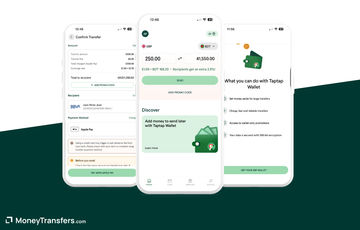
TapTap Send
Best for sending money home to Africa & Asia
TapTap Send charges no transfer fee for most destinations and takes only a small margin on the exchange rate.
Sending money to places like India, Pakistan, Ghana and Nigeria, is almost always cheaper through TapTap Send than any other company.
Here’s how much your recipient can expect to get with TapTap Send for different amounts and destinations:
*This table updates weekly with real exchange rates and fees. All data is collected via APIs in real-time or manually.
To receive money, recipients don't need a TapTap account, and you can pay out to a mobile wallet or cash pickup as well as a bank account.
However, as I mentioned before, cost depends on the amount and the destination.
For places like Gambia, Rwanda, and Europe, TapTap Send is a bit more expensive.
It's also app-only with an annual sending limit, so it isn't the best tool for one-off large transfers, where a broker like RegencyFX will work out cheaper.
TapTap Send is FCA authorised, with customer funds safeguarded rather than FSCS-protected.
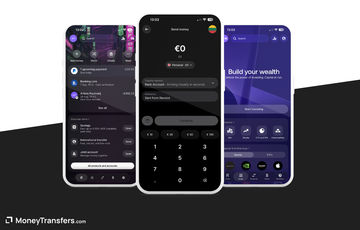
Revolut
Best for sending money home to the EU.
Revolut is great for small transfers to the EU.
With Revolut you can send GBP with very low fees and a small markup. However, this holds true up to £1,000 per month and on weekdays only.
If you’re sending on a weekend, that's an additional 1% fee, and if you go over £1,000 there’s another additional 1% fee.
Here’s how much your recipient can expect to get with Revolut for different amounts and destinations:
What you can do (and that’s what I do) to save on fees is pre-convert GBP to EUR or your currency in your account on a weekday and then send it or spend it however.
Since you’ve already converted the money, there are no fees involved afterwards. And since it’s now a bank, your money is FSCS protected (up to £120,000) so it’s safe to keep in your account.
You can schedule regular conversions, set them to trigger on your balance, or set a target exchange rate so Revolut converts automatically when it's hit or better.
Just make sure you don’t go over £1,000 / month or upgrade if you’re already using Revolut for banking features.
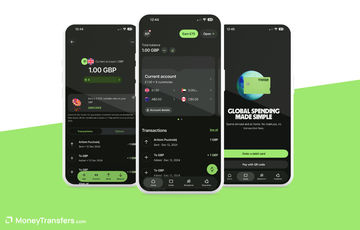
Wise
Travelling & spending abroad
If you're travelling or spending abroad, the hidden cost usually isn't a transfer fee, it's the exchange rate.
Most UK high-street cards like HSBC, Barclays, etc. add a non-sterling transaction fee of roughly 2.75% to 3% every time you pay in a foreign currency, and some add a flat charge on top.
On a £2,000 holiday that's around £55 to £60 gone before you've bought anything worth having.
That’s assuming you don’t have any special perks or travel accounts set up with your bank (which are usually expensive add-ons).
Wise avoids that, by giving you exact interbank exchange rate at the time of conversion, and instead adds a small fee from 0.33%.
You can either pre-convert currencies before you travel or spend, or can just use Apple Pay / Google Pay to pay from the GBP balance on your Wise card.
Here’s how much your recipient can expect to get with Wise for different amounts and destinations:
*This table updates weekly with real exchange rates and fees. All data is collected via APIs in real-time or manually.
The multi-currency account is what makes it so flexible and so good.
You can hold 40+ currencies at once, convert when the rate looks good, and keep leftover currency for next time rather than converting back and losing on the spread.
The issue is obvious here, if you need money outside of those 40+ currencies, you can’t pre-convert, but it doesn’t mean you can't spend.
Instead, Wise will automatically take money from your GBP balance and convert at mid-market rate at the time of conversion with the fee added on top.
You might ask why not just use Revolut, which works pretty much the same way.
The difference is in transparency. Wise gives you the mid-market rate every day of the week, while Revolut adds extra fees on weekends and when you go above your monthly limit.
Since you're most likely converting at weekends and on the move, Wise tends to be the safer bet for travel.
Wise isn't a bank, so the money you hold isn't FSCS-protected. It's safeguarded instead, which is covered further down.
For spending money on a trip that's rarely a concern, but it's worth knowing if you keep large balances sitting in the account.
Regency FX
Best for buying property abroad.
Buying abroad is where the exchange rate matters most, simply because the sums are so large.
On a £250,000 purchase, a small difference in the rate is thousands of pounds, far more than any transfer fee.
And because there's usually a gap of weeks or months between agreeing a price and completing, a move in the pound over that window can quietly add thousands to what you end up paying.
This is where brokers like RegencyFX come into play.
With a forward contract you can lock today's rate for up to 12 months, so the price you agree is the price you pay at completion, whatever the pound does in between.
You can also set a target rate with a limit order and have the transfer trigger automatically if the market reaches it.
Here’s how much your recipient can expect to get with Regency FX for different amounts and destinations:
*This table updates weekly with real exchange rates and fees. All data is collected via APIs in real-time or manually.
Regency FX charges no transfer fee and has no maximum limits, taking only a margin on the rate, which stays better on large sums.
A dedicated account manager handles the transfer and can guide you on timing and paperwork.
This is where currency brokers generally win, it’s the support rather than the costs.
Even on larger sums, Wise can be cheaper, but do you really want to handle £250,000 transfer yourself through an app?..
...Or would you rather have an experienced account manager help you through it?
I think the answer is pretty simple here.
One big benefit of RegencyFx over many other brokers is their coverage.
They can take your GBP and literally convert it to any currency there is, this is extremely rare, especially with online or app based providers.
If you’re unsure on the whole process, start simple. Make a small transfer of £1-2 to get the feel and go from there.
Regency FX is FCA regulated, with client funds held in segregated accounts rather than FSCS-protected.
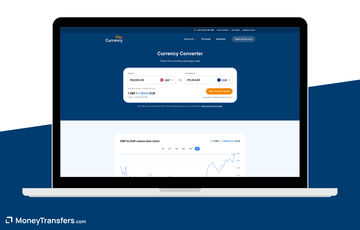
Key Currency
Best for receiving pension abroad (especially in Spain).
Retiring abroad isn't one big transfer, it's a small-medium one every month for years.
This changes the perspective a little, because now it’s more about the yearly savings vs one time saving.
Again, just like with one-off transfers, currency brokers like Key Currency are a good option because:
They charge no fees but charge a margin
For recurring transfers you can negotiate a better exchange rate (lower margin)
You get an account manager to contact should you need help
A bank charging a flat fee plus a 2% to 4% rate margin on each payment can quietly cost you close to £1,000 a year.
And because the rate moves daily, the money landing in your account swings month to month, which makes budgeting on a fixed income harder than it needs to be.
Key Currency specialises in regular overseas payments and holds the rate steady across them, so your pension or other income arrives as a predictable euro amount rather than one that drifts with the market.
There's no transfer fee and no minimum, so smaller monthly amounts still work and deal with the same person each time.
Here’s how much your recipient can expect to get with Key Currency for different amounts and destinations:
*This table updates weekly with real exchange rates and fees. All data is collected via APIs in real-time or manually.
You could do this with providers like Wise and Revolut, but you’ll need to keep doing it yourself every month, and it can be more expensive.
The reason I think Key Currency works best here, is it has representatives across the main expat regions, including the Costa del Sol, Costa Blanca, Murcia, Catalunya and Ibiza.
Which makes it perfect for British expats and retirees living in Spain, or close around.
To be clear, this is to help with the currency side of your pension income, moving it over cheaply and predictably, not pension or tax advice, which is a job for a regulated financial adviser.
Key Currency is FCA regulated as an Authorised Payment Institution, with client money held in safeguarded accounts rather than FSCS-protected.
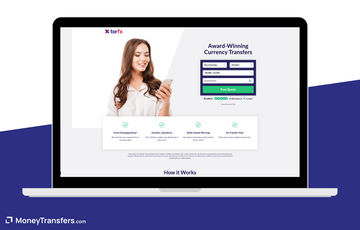
TorFX
Best for one-off large transfers.
For one-off large transfers, like an inheritance, proceeds from a sale, moving savings abroad, a one-time gift, etc. It’s best to use a broker with the best FX rates, like TorFX.
On a sum like that the exchange rate margin is where the real saving is, far more than any upfront fee, so a fraction of a percent difference on the rate can be worth hundreds or thousands of pounds.
TorFX is great for this, they charge no transfer fee and take their commission in the rate, and because it's geared to large transfers, that margin gets better the more you send.
There are no upper limits when you deal through an account manager, so a single large transfer isn't a problem the way it can be with online money transfer companies.
Here’s how much your recipient can expect to get with TorFX for different amounts and destinations:
*This table updates weekly with real exchange rates and fees. All data is collected via APIs in real-time or manually.
What sets TorFX apart on a one-off is the quality of service they offer.
I spoke with their account managers many times, and they all know their stuff. I’ve asked them various questions from timing the market to recent events affecting GBP, and they know it all.
And the same is apparent in their Trustpilot reviews.
The majority mention the service for the account managers they have and the quality of the service (rated 4.9 across more than 9,500 reviews).
You can also lock in a rate ahead of sending if you want certainty before you commit.
And the best part is that you can easily do a quick test transfer of 1-2 pounds to see how the service works.
TorFX is FCA regulated (as Tor Currency Exchange), with client money safeguarded in segregated accounts rather than FSCS-protected.
MoneyGram
Best for urgent transfers abroad from the UK.
If someone needs money in the next few minutes, or has no bank account to receive it, the cheapest app in the world is no help if it takes a day and pays into an account they don't have.
This is where MoneyGram comes as the cheapest option, its main strength is reach and speed.
They offer cash pickup, which is the fastest way to receive money abroad, but their costs are usually lower compared to Ria Money or Remitly.
They have a network of around 350,000+ agent locations across 200+ countries, plus home delivery and post office pickup in many places.
Your recipient can collect cash without a bank account or a smartphone, usually in minutes.
MoneyGram is not always the cheapest way to move money in general, but they have great first time offers that make it a much better deal.
It builds a margin into the rate, averaging around 1.33% depending on the destination currency, and larger transfers get expensive fast.
If your recipient has a bank account and it isn't urgent, I'd suggest using one of the app-based options above, since it will almost always cost less.
Here’s how much your recipient can expect to get with MoneyGram for different amounts and destinations:
*This table updates weekly with real exchange rates and fees. All data is collected via APIs in real-time or manually.
To minimise the cost, I suggest avoiding credit card deposits (these come with extra fees) and only use cash transfer options if you really need it, bank deposit is usually much cheaper.
MoneyGram is FCA regulated in the UK as an Authorised Payment Institution, with the usual safeguarding of customer funds.
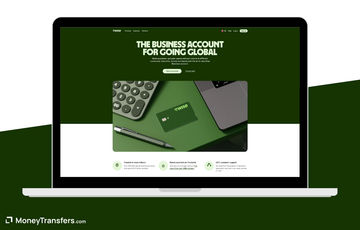
Wise Business
Best for businesses and sole traders.
If you need the cheapest money transfer service for business, Wise Business is a good option.
If your business pays overseas suppliers, contractors or staff, or invoices clients abroad, the cost adds up fast across multiple transactions.
With Wise Business you get the mid-market rate on conversions with a sending fee from 0.33%, no monthly fee or any hidden costs.
Just like with personal transfers, this is generally good for ongoing business transfers. If you need a one-off large transfer, a currency broker is better (even for business transfers).
In addition, you can hold and receive over 70 currencies, open local account details in GBP, EUR, USD and more to get paid like a local, and run batch payments to up to 1,000 recipients in one go, each still at 0.33%.
You can also lock a guaranteed rate on a batch ahead of paying, which works like a mini forward contract on the mid-market rate.
The only major downside is the self-service model. If you’re making a few £1,000 payments a month, that is fine. But once the number grows, it gets a bit more complicated to manage everything.
This is where alternatives like Airwallex make a bit more sense. Have a look at our Airwallex review to learn a bit more.
Wise Business is FCA regulated in the UK, with customer funds safeguarded rather than FSCS-protected.
Are online money transfers cheaper than banks?
Based on our money transfer comparisons and analysis, online money transfer companies are almost always cheaper than a traditional international bank wire.
A bank transfer can include a sending fee, a weaker exchange rate and deductions from intermediary or receiving banks.
The fixed charges affect smaller transfers the most, while the exchange-rate difference becomes more important as the amount increases.
Here’s how top money transfer companies compare to Barclays bank (and Revolut, an app based digital bank):
Last updated at 26/09/2026
GBP USD
Mid Market Rate£1 = $1.3218£1 = $1.3251
Transfer Amount£1,000£10,000
1
Revolut
2
Wise
3
TapTap Send
4
Barclays
1
Wise
2
TapTap Send
3
Barclays
4
Revolut
They get
Delivery Time
Exchange rate
Markup
Cheapest payment method
Transfer fee
$1,317.90
Next day
1.3199
0.14%
Bank transfer
£1.50
$1,315.67
Within minutes
1.3217
0.01%
Bank transfer
£4.60
$1,310.00
Minutes
1.3100
0.90%
Debit card
£0.00
$1,303.59
Minutes - 5 days
1.3036
1.39%
Bank transfer
£0.00
$13,196.65
Within a week
1.3245
0.04%
Bank transfer
£36.88
$13,100.00
Minutes
1.3100
1.14%
Debit card
£0.00
$13,035.91
Minutes - 5 days
1.3036
1.63%
Bank transfer
£0.00
$12,945.85
Within a week
1.3217
0.25%
Bank transfer
£205.00
GBP EUR
Mid Market Rate£1 = €1.162£1 = €1.1633
Transfer Amount£1,000£10,000
1
TapTap Send
2
Revolut
3
Wise
4
Barclays
1
TapTap Send
2
Wise
3
Revolut
4
Barclays
They get
Delivery Time
Exchange rate
Markup
Cheapest payment method
Transfer fee
€1,162.00
Minutes
1.1620
0.00%
Debit card
£0.00
€1,160.00
Within minutes
1.1600
0.18%
Bank transfer
£0.00
€1,157.48
Within minutes
1.1619
0.01%
Bank transfer
£3.81
€1,136.12
Minutes - 5 days
1.1361
2.26%
Bank transfer
£0.00
€11,630.00
Minutes
1.1630
0.02%
Debit card
£0.00
€11,588.35
Within minutes
1.1627
0.05%
Bank transfer
£33.41
€11,502.95
Within minutes
1.1607
0.22%
Bank transfer
£90.00
€11,361.18
Minutes - 5 days
1.1361
2.36%
Bank transfer
£0.00
GBP AUD
Mid Market Rate£1 = $1.8782£1 = $1.8782
Transfer Amount£1,000£10,000
1
Wise
2
TapTap Send
3
Revolut
4
Barclays
1
Wise
2
TapTap Send
3
Revolut
4
Barclays
They get
Delivery Time
Exchange rate
Markup
Cheapest payment method
Transfer fee
$1,878.69
Within minutes
1.8859
-0.41%
Bank transfer
£3.81
$1,870.00
Minutes
1.8700
0.44%
Debit card
£0.00
$1,859.00
Within a week
1.8806
-0.13%
Bank transfer
£11.50
$1,829.55
Minutes - 5 days
1.8296
2.62%
Bank transfer
£0.00
$18,797.49
Within minutes
1.8859
-0.41%
Bank transfer
£32.51
$18,700.00
Minutes
1.8700
0.44%
Debit card
£0.00
$18,423.26
Within a week
1.8809
-0.15%
Bank transfer
£205.00
$18,295.53
Minutes - 5 days
1.8296
2.62%
Bank transfer
£0.00
GBP CAD
Mid Market Rate£1 = $1.8749£1 = $1.8749
Transfer Amount£1,000£10,000
1
Wise
2
Revolut
3
Barclays
1
Wise
2
Revolut
3
Barclays
They get
Delivery Time
Exchange rate
Markup
Cheapest payment method
Transfer fee
$1,865.51
Next day
1.8730
0.10%
Bank transfer
£3.99
$1,845.39
Next day
1.8669
0.43%
Bank transfer
£11.50
$1,828.19
Minutes - 5 days
1.8282
2.52%
Bank transfer
£0.00
$18,668.57
Next day
1.8730
0.10%
Bank transfer
£32.69
$18,288.34
Next day
1.8671
0.42%
Bank transfer
£205.00
$18,281.90
Minutes - 5 days
1.8282
2.52%
Bank transfer
£0.00
GBP INR
Mid Market Rate£1 = ₹126.7619£1 = ₹126.963
Transfer Amount£1,000£10,000
1
Barclays
2
TapTap Send
3
Revolut
4
Wise
1
Barclays
2
TapTap Send
3
Wise
4
Revolut
They get
Delivery Time
Exchange rate
Markup
Cheapest payment method
Transfer fee
₹127,027.12
Minutes - 5 days
127.0271
-0.21%
Bank transfer
£0.00
₹127,000.00
Minutes
127.0000
-0.19%
Debit card
£0.99
₹126,473.76
Within minutes
126.6638
0.08%
Bank transfer
£1.50
₹126,113.43
Within minutes
126.7650
0.00%
Bank transfer
£5.14
₹1,270,271.19
Minutes - 5 days
127.0271
-0.05%
Bank transfer
£0.00
₹1,265,000.00
Minutes
126.5000
0.37%
Debit card
£0.99
₹1,262,758.58
Next day
126.8640
0.08%
Bank transfer
£46.36
₹1,240,448.96
Within minutes
126.6410
0.25%
Bank transfer
£205.00
GBP NGN
Mid Market Rate£1 = ₦1,757.5203£1 = ₦1,757.5203
Transfer Amount£1,000£10,000
1
Wise
2
TapTap Send
3
Revolut
1
Wise
2
TapTap Send
3
Revolut
They get
Delivery Time
Exchange rate
Markup
Cheapest payment method
Transfer fee
₦1,802,601.39
Within minutes
1813.6100
-3.14%
Bank transfer
£6.07
₦1,800,000.00
Minutes
1800.0000
-2.39%
Debit card
£0.00
₦1,723,602.95
Within minutes
1743.6550
0.79%
Bank transfer
£11.50
₦18,035,807.37
Within minutes
1813.6100
-3.14%
Bank transfer
£55.30
₦18,000,000.00
Minutes
1800.0000
-2.39%
Debit card
£0.00
₦17,081,380.19
Within minutes
1743.8877
0.78%
Bank transfer
£205.00
GBP PHP
Mid Market Rate£1 = ₱82.6129£1 = ₱82.6129
Transfer Amount£1,000£10,000
1
Wise
2
TapTap Send
3
Barclays
4
Revolut
1
Wise
2
TapTap Send
3
Barclays
4
Revolut
They get
Delivery Time
Exchange rate
Markup
Cheapest payment method
Transfer fee
₱82,160.22
Next day
82.6387
-0.03%
Bank transfer
£5.79
₱82,100.00
Minutes
82.1000
0.62%
Debit card
£0.00
₱81,425.88
Minutes - 5 days
81.4259
1.45%
Bank transfer
£0.00
₱81,343.28
Within minutes
82.2896
0.39%
Bank transfer
£11.50
₱821,986.49
Next day
82.6387
-0.03%
Bank transfer
£53.25
₱821,000.00
Minutes
82.1000
0.62%
Debit card
£0.00
₱814,258.76
Minutes - 5 days
81.4259
1.45%
Bank transfer
£0.00
₱806,134.17
Within minutes
82.3006
0.38%
Bank transfer
£205.00
GBP PKR
Mid Market Rate£1 = Rs 366.1987£1 = Rs 367.3002
Transfer Amount£1,000£10,000
1
TapTap Send
2
Revolut
3
Wise
1
TapTap Send
2
Wise
3
Revolut
They get
Delivery Time
Exchange rate
Markup
Cheapest payment method
Transfer fee
Rs 367,100.00
Minutes
367.1000
-0.25%
Debit card
£0.00
Rs 364,183.42
Within minutes
364.7305
0.40%
Bank transfer
£1.50
Rs 363,886.39
Within minutes
366.3040
-0.03%
Bank transfer
£6.60
Rs 3,650,000.00
Minutes
365.0000
0.63%
Debit card
£0.00
Rs 3,648,704.57
Next day
367.0500
0.07%
Bank transfer
£59.38
Rs 3,578,618.33
Within minutes
365.3515
0.53%
Bank transfer
£205.00
GBP PLN
Mid Market Rate£1 = zł 5.0852£1 = zł 5.0851
Transfer Amount£1,000£10,000
1
Wise
2
Revolut
3
Barclays
1
Wise
2
Revolut
3
Barclays
They get
Delivery Time
Exchange rate
Markup
Cheapest payment method
Transfer fee
zł 5,059.32
Next day
5.0829
0.05%
Bank transfer
£4.64
zł 5,012.49
Next day
5.0708
0.28%
Bank transfer
£11.50
zł 4,932.28
Minutes - 5 days
4.9323
3.05%
Bank transfer
£0.00
zł 50,652.67
Next day
5.0854
-0.01%
Bank transfer
£39.59
zł 50,217.26
Within minutes
5.0750
0.20%
Bank transfer
£105.00
zł 49,315.52
Minutes - 5 days
4.9316
3.06%
Bank transfer
£0.00
GBP THB
Mid Market Rate£1 = ฿44.1834£1 = ฿44.2236
Transfer Amount£1,000£10,000
1
Barclays
2
TapTap Send
3
Revolut
4
Wise
1
Barclays
2
TapTap Send
3
Wise
4
Revolut
They get
Delivery Time
Exchange rate
Markup
Cheapest payment method
Transfer fee
฿44,084.93
Minutes - 5 days
44.0849
0.22%
Bank transfer
£0.00
฿44,000.00
Minutes
44.0000
0.42%
Debit card
£0.99
฿43,938.55
Within minutes
44.0046
0.41%
Bank transfer
£1.50
฿43,837.91
Within minutes
44.1812
0.00%
Bank transfer
£7.77
฿440,849.33
Minutes - 5 days
44.0849
0.31%
Bank transfer
£0.00
฿440,000.00
Minutes
44.0000
0.51%
Debit card
£0.99
฿439,398.84
Within minutes
44.2234
0.00%
Bank transfer
£64.11
฿430,681.43
Within minutes
43.9695
0.58%
Bank transfer
£205.00
*Table updates weekly. All information comes directly from our comparisons, provider APIs, and manual rate collection.
What impacts the cost of a money transfer
When it comes to any international transfers, the same four things decide it:
The rate and fees
Where you're sending
How much you’re sending
How the money goes in and out
1. Rates and fees
There are two ways a provider charges you:
The exchange rate markup
The exchange rate markup is the gap between that real exchange rate (the one you see on Google) and the rate a provider actually gives you.
If the real rate is £1 = 100 but they hand you £1 = 98, that’s a 2.04% markup.
Many reputable companies will show this, but many won’t, and that’s why it’s known as the “hidden” fee.
The fee for the service
The transfer fee is the upfront charge you always see, like £2.99 to send.
Some providers charge this, some don't, and some skip the fee but increase the markup instead.
Some companies will charge you one or the other, and others will charge you both.
2. Destination
Where you send is the biggest factor when it comes to price.
Popular destinations from the UK like India, Pakistan, or across the EU are usually cheap, because they are the most competitive.
As soon as you go into more exotic currencies like PHP, NGN, MYR, or GHS, it gets more expensive since fewer companies offer it.
Imagine picking a flight abroad
Popular destinations will have multiple airlines and cheaper prices, while remote locations have fewer and are more expensive.
Here’s an example to illustrate this for £1,000 transfer to different locations and the fees you pay across 3 cheapest providers:
Last updated at 26/09/2026
GBP USD
Mid Market Rate£1 = $1.3218
Transfer Amount£1,000
1
Revolut
2
Wise
3
TapTap Send
They get
Delivery Time
Exchange rate
Markup
Cheapest payment method
Transfer fee
$1,317.90
Next day
1.3199
0.14
Bank transfer
£1.50
$1,315.67
Within minutes
1.3217
0.01
Bank transfer
£4.60
$1,310.00
Minutes
1.3100
0.90
Debit card
£0.00
GBP EUR
Mid Market Rate£1 = €1.162
Transfer Amount£1,000
1
TapTap Send
2
Revolut
3
Wise
They get
Delivery Time
Exchange rate
Markup
Cheapest payment method
Transfer fee
€1,162.00
Minutes
1.1620
0.00
Debit card
£0.00
€1,160.00
Within minutes
1.1600
0.18
Bank transfer
£0.00
€1,157.48
Within minutes
1.1619
0.01
Bank transfer
£3.81
GBP INR
Mid Market Rate£1 = ₹126.7619
Transfer Amount£1,000
1
TapTap Send
2
Revolut
3
Wise
They get
Delivery Time
Exchange rate
Markup
Cheapest payment method
Transfer fee
₹127,000.00
Minutes
127.0000
-0.19
Debit card
£0.99
₹126,473.76
Within minutes
126.6638
0.08
Bank transfer
£1.50
₹126,113.43
Within minutes
126.7650
0.00
Bank transfer
£5.14
GBP NGN
Mid Market Rate£1 = ₦1,757.5203
Transfer Amount£1,000
1
Wise
2
TapTap Send
3
Revolut
They get
Delivery Time
Exchange rate
Markup
Cheapest payment method
Transfer fee
₦1,802,601.39
Within minutes
1813.6100
-3.14
Bank transfer
£6.07
₦1,800,000.00
Minutes
1800.0000
-2.39
Debit card
£0.00
₦1,723,602.95
Within minutes
1743.6550
0.79
Bank transfer
£11.50
GBP PLN
Mid Market Rate£1 = zł 5.0852
Transfer Amount£1,000
1
Wise
2
Revolut
They get
Delivery Time
Exchange rate
Markup
Cheapest payment method
Transfer fee
zł 5,059.32
Next day
5.0829
0.05
Bank transfer
£4.64
zł 5,012.49
Next day
5.0708
0.28
Bank transfer
£11.50
GBP PHP
Mid Market Rate£1 = ₱82.6129
Transfer Amount£1,000
1
Wise
2
TapTap Send
3
Revolut
They get
Delivery Time
Exchange rate
Markup
Cheapest payment method
Transfer fee
₱82,160.22
Next day
82.6387
-0.03
Bank transfer
£5.79
₱82,100.00
Minutes
82.1000
0.62
Debit card
£0.00
₱81,343.28
Within minutes
82.2896
0.39
Bank transfer
£11.50
GBP ZAR
Mid Market Rate£1 = R 21.5965
Transfer Amount£1,000
1
Wise
2
TapTap Send
3
Revolut
They get
Delivery Time
Exchange rate
Markup
Cheapest payment method
Transfer fee
R 21,450.37
Within a week
21.6055
-0.04
Bank transfer
£7.18
R 21,210.00
Minutes
21.2100
1.81
Debit card
£0.00
R 21,193.99
Within minutes
21.4623
0.62
Bank transfer
£12.50
GBP GHS
Mid Market Rate£1 = GH₵15.3198
Transfer Amount£1,000
1
TapTap Send
2
Revolut
3
Wise
They get
Delivery Time
Exchange rate
Markup
Cheapest payment method
Transfer fee
GH₵15,389.70
Minutes
15.3897
-0.46
Debit card
£0.00
GH₵15,214.00
Within minutes
15.2369
0.54
Bank transfer
£1.50
GH₵15,097.31
Within minutes
15.3481
-0.18
Bank transfer
£16.34
GBP MYR
Mid Market Rate£1 = RM 5.3984
Transfer Amount£1,000
1
Wise
2
TapTap Send
3
Revolut
They get
Delivery Time
Exchange rate
Markup
Cheapest payment method
Transfer fee
RM 5,372.95
Within minutes
5.3961
0.04
Bank transfer
£4.29
RM 5,350.00
Minutes
5.3500
0.90
Debit card
£0.00
RM 5,314.91
Within minutes
5.3767
0.40
Bank transfer
£11.50
GBP BDT
Mid Market Rate£1 = ৳162.9549
Transfer Amount£1,000
1
Revolut
2
TapTap Send
3
Wise
They get
Delivery Time
Exchange rate
Markup
Cheapest payment method
Transfer fee
৳162,215.21
Next day
162.6218
0.20
Bank transfer
£2.50
৳162,150.00
Minutes
162.1500
0.50
Debit card
£0.00
৳161,242.62
Same day
162.6840
0.17
Bank transfer
£8.86
GBP AED
Mid Market Rate£1 = AED 4.8663
Transfer Amount£1,000
1
Wise
2
Revolut
They get
Delivery Time
Exchange rate
Markup
Cheapest payment method
Transfer fee
AED 4,838.80
Within a week
4.8651
0.02
Bank transfer
£5.40
AED 4,791.12
Within a week
4.8498
0.34
Bank transfer
£12.10
GBP AUD
Mid Market Rate£1 = $1.8782
Transfer Amount£1,000
1
Wise
2
TapTap Send
3
Revolut
They get
Delivery Time
Exchange rate
Markup
Cheapest payment method
Transfer fee
$1,878.69
Within minutes
1.8859
-0.41
Bank transfer
£3.81
$1,870.00
Minutes
1.8700
0.44
Debit card
£0.00
$1,859.00
Within a week
1.8806
-0.13
Bank transfer
£11.50
GBP CAD
Mid Market Rate£1 = $1.8749
Transfer Amount£1,000
1
Wise
2
Revolut
They get
Delivery Time
Exchange rate
Markup
Cheapest payment method
Transfer fee
$1,865.51
Next day
1.8730
0.10
Bank transfer
£3.99
$1,845.39
Next day
1.8669
0.43
Bank transfer
£11.50
*Table updates weekly. All information comes directly from our comparisons, provider APIs, and manual rate collection.
3. Amount
The amount changes how the fees scale up or down.
Usually, the more you send the better deal you will get.
However, just because the fee looks better, doesn’t mean it is the best you can get, especially on very large amounts (£50k+).
On small amounts, fixed fees quickly eat into the received amount.
A £3 fee on a £50 transfer is 6% gone, even without the markup added.
On bigger amounts, fixed fees are barely noticeable (that’s why many providers like Wise charge a percentage fee), but the exchange rate markup is what makes the big difference.
For example, a 1% markup on £50 is 50p, but £500 on £50,000.
Here are a few transfer examples to illustrate this with the cheapest options (use the tabs to switch between amounts):
The point is, on small transfers watch the fee, on mid-large transfers watch the exchange rate.
4. Depositing money in the UK
How you fund the transfer in the UK is what usually impacts the fee (not the exchange rate).
This is largely because some methods are more convenient than others, cost companies more to facilitate, or require additional services.
It affects cost because some pay-in methods are free to process and some carry card-network charges they pass to you.
Bank transfer / Open Banking deposits
Bank transfer is almost always the cheapest, usually free.
You approve the payment from your bank, and there's no card network taking a cut.
On most UK providers this is the default and the one to pick.
Debit card deposits
Debit card is quicker and the most convenient option.
Many companies provide it for free, while some add a small processing fee on top (just like off-license shops do).
Convenience mostly comes from Apple Pay or Google Pay.
Credit card deposits
Credit card is the one to avoid.
On top of any provider fee, your card issuer can treat a transfer as a cash advance, which means an extra fee plus interest from day one.
We suggest avoiding it unless you have to use it.
This is what the cost typically looks like:
Paying in
Typical cost
Transfer speed
Best for
Bank transfer
Free
Minutes to hours
Almost everyone
Debit/prepaid card
Free - £2.99
Instant
Convenience & small transfers
Credit card
~2-3% & cash advance fee
Instant
Best avoided
Use bank transfer for deposit
We suggest using a bank transfer for most transfers as it's usually the cheapest.
But, run a to get the best deal today.
5. Paying out abroad
Same goes for receiving money abroad.
It matters just as much, because the payout method carries its own hefty fees (for largely the same reasons).
Bank deposit payouts
Bank deposit is normally the cheapest and the default for most international transfers. Money lands straight into the recipient's bank account.
Mobile wallet payouts
Mobile wallet (e.g. money sent to a phone-based wallet): is cheap and fast in the countries where it's common, and often the main way people receive money in parts of Africa and Asia.
Cash pickup & cash delivery
Cash pickups & cash deliveries are the most expensive ways to send. It’s useful when the recipient has no access to the bank, but it shouldn't be a default choice.
This is what you can expect from different payout methods:
Paying out
Typical cost
Speed
Best for
Bank deposit
Cheapest
Minutes - 3 days
Recipients with a bank account
Mobile wallet
Low cost
Minutes - Hours
Africa/Asia routes where common
Cash pickup
High
Instant - Minutes
Recipients with no bank account
Cash delivery
Highest
1 - 2 days
Recipients who can't get to the bank
Use bank deposit for payout
In general, bank deposit will be the cheapest option. However, just like with deposit methods, it varies by destination and the company.
The cheapest provider isn't the same for everyone, because the reason for transfer affects what the cost means to you.
Sending money home to family
You're sending small amounts, often monthly, to the same destination.
Because you pay the cost every single time, a tiny per-transfer difference compounds over the months.
If you’re sending £300 a month where one provider is 2% cheaper isn't saving £6 once, that’s saving over £70 a year, every year (that’s almost 1 free transfer).
In this case, you should consider money transfer companies that have a small fee, and either no or small markup, like TapTap Send, Wise, or Revolut.
Buying property or moving a lump sum abroad
Now the amount is huge and it's a one-off, this is where the exchange rate determines everything.
On a £250,000 purchase, a 0.5% difference in the rate is £1,250.
And because a property deal has a gap of weeks or months between agreeing a price and completing, the rate can move against you in the meantime, adding thousands with no one at fault.
This is where a currency specialist like a broker is the cheapest.
They charge no fees, and make profits from the exchange rate markup that they negotiate. It is not a fixed percentage.
This is a good thing, because the bigger the transfer, the more they make from smaller markup, so it’s in their interests to find you the best rate.
Exclusive deals
We at MoneyTransfers.com get exclusive deals from currency brokers. This means the rate you see in our comparisons, will not match the rate you see on other comparison sites.
This also means that we can request a lower rate, but this usually only works on extremely large sums (£250,000+).
If you’re planning to move this much, don’t hesitate to contact us as contact@moneytransfers.com and we can discuss your best options.
Retiring abroad on a pension
This is where things get interesting. Pensions can be large one-off transfers, or recurring mid-large monthly payments.
A pension arriving monthly for twenty years means both costs matter a lot. You want the best fee, and the best exchange rate every month.
Otherwise, budgeting on a fixed income is much harder. One month euro can be up and the other it’s down.
The cheapest and most manageable option tends to be a provider that holds a steady rate across regular payments, not whoever is fractionally cheapest on any single month.
Again, a currency broker is the cheapest way here, because they can help you lock the rate that you agree on for many months.
Spending on a trip abroad
Spending on a normal UK card abroad triggers a foreign-transaction fee of roughly 2-3% on every purchase or ATM withdrawal, plus they add a poor exchange rate on top.
The cost spreads across multiple small fees like conversion fee, ATM fees, exchange rate markup, and similar.
This is where multi-currency cards are the cheapest, like the one you get from Revolut or Wise. You can pre-convert your currencies in advance when the rate is good.
Since the conversion is already done, and you have the currency, there are no fees involved afterwards.
Urgent, or the recipient has no bank account
When you need money urgently, you're deliberately paying a premium for speed and cash access.
But a fair few companies (like MoneyGram and Western Union) actually provide decent value for the service (not cheaper than online methods, but still).
Sending cash pickup or delivery is useful for many, but don’t make it a habit. Unless you definitely need the recipient to get cash, resort to other withdrawal options like bank deposit or mobile wallets.
Are you sacrificing anything for cheaper options?
No, not really.
Choosing a money transfer provider over a bank gets you a better rate and lower fees, without giving up safety.
Every provider on our site is authorised by the FCA, the same regulator that oversees UK banks, and is required to keep your money ring-fenced in separate accounts.
What you might trade for the very cheapest option is a little speed.
But, the main thing here is that you can make use of multiple companies, at no extra cost and without any issues.
The accounts are free, many have first time offers, it’s not financial institutions so there’s no impact on credit score, and you can test as many options as you’d like.
And none of this replaces your bank, it sits alongside it, so you're adding a cheaper option rather than switching anything.
Are there any other ways to minimise cost?
Watch for new-customer offers
Many remittance services and money transfer apps run a promotional rate or a fee-free first transfer to win you over.
On a one-off transfer that's an easy saving, just don't let a one-time perk decide who you use for the long run, since the everyday rate is what matters if you'll send regularly.
Hold the currency in a multi-currency account
If you send or spend in the same currency often, converting once when the rate looks good and holding the balance beats converting fresh every time.
You avoid paying a conversion cost on every transfer, since you already hold the balance in the destination currency.
Use a linked bank account where one exists
Some UK banks let you send to certain countries fee-free through a linked local account, and a few offer fee-free transfers within Europe.
For example, HSBC offers a global account, Lloyds has a paid tier for international transfers, and Natwest offers discounts on certain destinations.
The offering is usually limited, but it's a familiar, quick, and convenient option.
Send peer-to-peer on the same app
If both you and the recipient use the same multi-currency app, you can send money between each other instantly and for free (like Revolut-to-Revolut or Wise-to-Wise), since no currency has to cross a network.
However, it all depends on the account availability and supported currencies in it.
Keep an eye on stablecoin transfers for hard-to-reach routes
An emerging option converts your money into a stablecoin and pays out in local currency, settling in minutes for cheap, which is more useful for remote areas (like parts of Asia or Africa).
A few apps like Sling Money, Aspora, and NALA, are already doing it.
And the best part, you or the receiver never even see crypto or stablecoins, it’s all done behind the scenes.
Keep an eye on GBP forecasts
We've created multiple forecasts that we keep updated for GBP transfers abroad. If you're sending a large amount abroad, it's worth checking to see if it's a good time to send GBP abroad.
With 6+ years of hands-on experience in international money transfer services, Artiom has tested and analyzed dozens of companies, services, and apps firsthand. He has worked on content and product at MoneyTransfers.com since 2019, with a focus on FX rates, transfer apps & companies, and comparison tools. His work has been featured in Forbes, Yahoo Finance, Decrypt, PoundSterling, and more.
Search Now & Save On Your Transfer
Instantly view live exchange rates, fees & features.

























.svg)









.svg)




.svg)












Please share your experience with …