
The Best Multi-Currency Accounts in Japan in 2026
Table of Contents

Author: Artiom Pucinskij
Table of Contents
I suggest considering Wise for receiving supported foreign income and keeping several currencies for overseas payments, provided its Japanese holding limit fits the balance you need.
Sony Bank and PRESTIA combine foreign-currency deposits with card-linked spending, while Revolut can suit smaller weekday exchanges within its Japanese plan allowance.
SBI Shinsei's PowerFlex account offers another way to receive and retain foreign currency, but it no longer provides an overseas bank-payment route following GoRemit's closure.
I'd say choose around the payment you need to make next, because a foreign balance, overseas receiving details and direct card spending are separate features.
Search Now & Save On Your Transfer
Instantly view live exchange rates, fees & features.
At a glance
Wise: foreign income, several balances and overseas payments, with Japanese holding limits
Revolut: smaller weekday exchanges and card spending
Sony Bank: foreign deposits with linked overseas card spending
PRESTIA: foreign-currency banking and GLOBAL PASS spending
SBI Shinsei PowerFlex: foreign receiving and holding, without overseas bank payments
Compare multi-currency accounts in Japan
The account's receiving route and card settlement rules can change how you use the same foreign currency.

"Over 15 million customers use Wise, mostly for their excellent mobile app, transparent fee structure & use of mid-market rates. Now increasingly used for larger transfers."

"Revolut has 70+ million customers globally. You can hold up to 25+ currencies in the app and send money quickly in 25+ currencies to 140+ countries."
US Disclaimer: Revolut is not a bank. Banking services are provided by Lead Bank, Member FDIC. Fees may apply. See revolut.com/en-US/ for details.



My reviews of the accounts
Wise
Foreign receipts and spending from the same balance

Wise lets you receive supported foreign-currency payments and keep the money available for overseas card purchases, avoiding an unnecessary conversion through yen.
I think it is worth considering for occasional foreign income and travel spending, while keeping its Japanese holding limit separate from any larger transfer allowance.
Feature | Japan personal account |
|---|---|
Held currencies | 40+ |
Receiving | Supported local and SWIFT details, depending on currency |
Card | Japan-issued debit card spending from matching balances |
Main cost or limit | ¥1,200 card, no monthly holding fee, default ¥1m total holding limit |
Eligibility | Japanese residents completing local identity and My Number checks |
Protection | Japanese funds-transfer safeguarding, not bank deposit insurance |
| Currency pair | Transfer fees | FX Rate | Markup |
|---|---|---|---|
| JPY / AUD | ¥883.00 | 0.0091 | -0.05% |
| JPY / CAD | ¥909.00 | 0.0090 | -0.41% |
| JPY / CHF | ¥967.00 | 0.0052 | 0.33% |
| JPY / EUR | ¥878.00 | 0.0056 | 0.52% |
| JPY / GBP | ¥921.00 | 0.0048 | -0.82% |
| JPY / HKD | ¥928.00 | 0.0497 | -0.07% |
| JPY / NZD | ¥938.00 | 0.0112 | -0.31% |
| JPY / SGD | ¥950.00 | 0.0081 | 0.00% |
| JPY / THB | ¥1,333.00 | 0.2114 | 0.03% |
| JPY / USD | ¥987.00 | 0.0063 | 0.56% |
The default limit covers the yen-equivalent total across all currencies, so a foreign payment can push your account above it even without another yen deposit.
You can temporarily raise that limit to as much as ¥20 million for up to six months, provided the setup conditions are met.
The limit then resets, making this an account for planned use rather than an unrestricted place to leave a large foreign balance.
Supported local receipts can be free, while SWIFT payments and US dollar wires attract the relevant receiving charges.
JPY funding instructions are for adding your own money, and should not be treated as Japanese salary-receiving details.
Matching-currency card purchases have no conversion charge, but spending another currency requires conversion at the mid-market rate plus Wise’s fee.
Revolut Japan
Holding travel money within a free exchange allowance
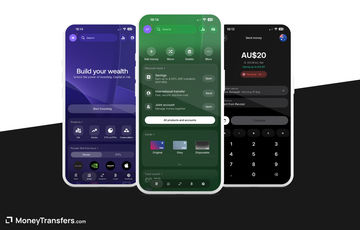
Revolut Japan supports holding more than 35 currencies, with its free Standard plan allowing ¥300,000 of exchange per monthly billing cycle before the excess charge.
I'd say use it for a modest travel balance, buying the required currency during market hours and spending directly from that balance.
Feature | Japan personal account |
|---|---|
Held currencies | 35+ |
Receiving | Own Japanese bank funding and eligible Revolut-to-Revolut receipts |
Card | Matching foreign-balance spending, subject to available funds |
Main cost or limit | Standard free, ¥1m total holding cap, ¥300,000 exchange allowance per cycle |
Eligibility | Japanese personal residents, with My Number verification for international functionality |
Protection | Japanese security-deposit trust arrangements, not bank deposit insurance |
| Currency pair | Transfer fees | FX Rate | Markup |
|---|---|---|---|
| JPY / AUD | ¥0.00 | 0.0091 | -0.05% |
| JPY / CAD | ¥0.00 | 0.0089 | 0.71% |
| JPY / CHF | ¥0.00 | 0.0052 | 0.33% |
| JPY / EUR | ¥0.00 | 0.0056 | 0.52% |
| JPY / GBP | ¥0.00 | 0.0047 | 1.28% |
| JPY / HKD | ¥0.00 | 0.0495 | 0.33% |
| JPY / NZD | ¥0.00 | 0.0111 | 0.58% |
| JPY / SGD | ¥0.00 | 0.0081 | 0.00% |
| JPY / THB | ¥0.00 | 0.2102 | 0.59% |
| JPY / USD | ¥0.00 | 0.0063 | 0.56% |
The account has a ¥1 million equivalent holding ceiling, so it cannot replace a bank account for a substantial foreign-currency reserve.
Its Japanese terms also prohibit salary receipts and external receipts from abroad, making it unsuitable for an overseas employer’s direct salary payment.
Money added by debit, credit or prepaid card can fund purchases, but cannot be withdrawn at an ATM or transferred onwards.
Bank funding gives you more flexibility if you later need to move unused travel money back to another account.
Standard exchange above the allowance costs 0.5%, with an additional 1% charge when foreign-exchange markets are closed.
Revolut uses its own exchange rate, so compare the conversion result alongside those charges before changing a larger amount.
Sony Bank
A Japanese bank account with ten foreign spending currencies
Sony Bank combines ordinary foreign-currency deposits with a debit card that spends directly from ten matching foreign balances.
It also charges no account maintenance fee or own incoming foreign-transfer fee, which suits keeping overseas receipts ready for later travel.
Feature | Japan personal account |
|---|---|
Held currencies | 12 foreign currencies plus JPY |
Receiving | JPY and ten foreign currencies by bank transfer, subject to checks |
Card | Sony Bank WALLET uses ten matching foreign currencies |
Main cost or limit | No maintenance fee, conversion costs apply, standard outgoing wire fee ¥3,000 |
Eligibility | Japanese residents, foreign nationals use postal opening with six months’ residence evidence |
Protection | Eligible yen deposits insured, foreign-currency deposits excluded |
I suggest considering Sony Bank when your income and spending use one of the card’s currencies, such as dollars, euros or pounds.
The twelve holding currencies are not twelve spending currencies, because offshore Chinese yuan and Brazilian real cannot be used through the matching-balance card or foreign-wire service.
Open the relevant foreign-currency account before spending, because that enables the card’s zero overseas shopping administration fee for supported currencies.
If the foreign balance is insufficient, Yen Assist buys the required currency from your yen balance, with the bank’s conversion cost still applying.
Incoming payments can incur intermediary charges, and the bank may request documents confirming the payment’s purpose and source.
Foreign nationals should allow time for postal registration, because English online account-opening applications ended in June 2025.
SMBC Trust Bank PRESTIA
Seventeen foreign balances linked to one debit card
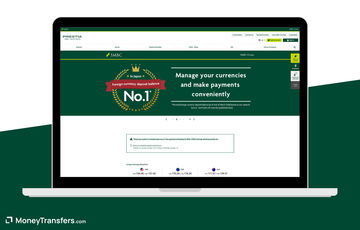
PRESTIA MultiMoney holds seventeen foreign currencies, with GLOBAL PASS providing direct overseas card spending and ATM withdrawals from eligible matching balances.
I think it is worth considering when you need a wider selection of bank-held spending currencies, including Singapore dollars or Thai baht.
Feature | Japan personal account |
|---|---|
Held currencies | 17 foreign currencies plus JPY |
Receiving | Foreign-bank receipts into the contracted foreign-currency deposit account |
Card | GLOBAL PASS linked to seventeen foreign currencies |
Main cost or limit | ¥2,200 monthly, waived under balance or other qualifying conditions |
Eligibility | Japanese personal residents meeting identity and residence-status requirements |
Protection | Eligible yen deposits insured, foreign-currency deposits excluded |
The monthly fee is waived when the previous month’s average total relationship balance reaches ¥500,000, or its foreign-currency portion reaches ¥200,000 equivalent.
Other waiver routes exist, but a small occasional travel balance could leave you paying a substantial annual account cost.
Complete the foreign-deposit agreement before receiving money, otherwise an incoming foreign payment can be converted into yen instead of retained in its original currency.
PRESTIA charges no own receiving handling fee, although intermediary banks may deduct charges before the payment arrives.
The online yen-to-foreign purchase programme waives exchange commission for qualifying purchases, but reverse conversions and exchanges between foreign currencies are excluded.
For card spending, choose the local currency at the terminal, because merchant conversion can debit yen even when you already hold the foreign balance.
SBI Shinsei PowerFlex
Foreign receipts kept in ordinary bank balances
PowerFlex holds thirteen foreign currencies alongside yen, allowing supported incoming bank payments to remain foreign currency until you choose to convert them.
Its status-based incoming-payment cashback can reduce receiving costs for qualifying customers, without imposing a monthly account maintenance fee.
Feature | Japan personal account |
|---|---|
Held currencies | 13 foreign currencies plus JPY |
Receiving | Supported foreign-bank receipts, Brazilian real excluded and yuan restricted to domestic Japanese transfers |
Card | No current linked foreign-balance spending card |
Main cost or limit | No maintenance fee, incoming handling fee around ¥2,000 equivalent before qualifying cashback |
Eligibility | Japanese personal residents, online applications available for foreign nationals |
Protection | Eligible yen deposits insured, foreign-currency deposits excluded |
I suggest considering PowerFlex for receiving and holding foreign funds when spending directly from those balances is not a requirement.
Silver, Gold, Platinum and Diamond customers receive ¥2,000 cashback per qualifying incoming payment when the bank’s handling fee has been charged.
That reimbursement does not remove intermediary-bank charges, and foreign-currency handling fees are periodically adjusted to approximate the yen amount.
The bank must receive the payment in its original currency, so give the sending bank instructions that avoid conversion into yen.
PowerFlex has less flexibility for using the balance overseas, because the GAICA spending card has ended and GoRemit closed in October 2025.
Domestic transfers to another bank in foreign currency also carry a ¥9,000 charge, so frequent onward payments can outweigh the receiving benefit.
Choose an account around the money you will receive and spend
For foreign income followed by expenses in the same currency, keeping that balance can avoid exchanging into yen and buying the foreign currency back later.
I'd say keep the yen needed for local bills accessible separately, rather than depend on a favourable exchange rate when a payment becomes due.
For occasional overseas spending, a card-linked account can fit better than a foreign deposit account that requires another bank payment before you can use the balance.
For a larger retained balance, check the holding ceiling and protection first, because a travel app's account rules can differ from a Japanese bank's foreign-currency deposit.
Interest on a foreign deposit also needs assessing alongside conversion costs and exchange-rate risk, rather than treating its yield as the full return in yen.
Check the exact receiving instructions
A dollar balance does not necessarily come with a domestic US account, and a euro balance does not automatically provide European SEPA receiving details.
For a foreign payment into a Japanese bank, use its currency-specific bank and correspondent instructions, checking whether the sending bank can include every required field.
Ask whether the money will remain in the incoming currency, because a transfer converted into yen before arrival cannot replenish your foreign balance directly.
Include any incoming, intermediary and sending-bank charges when comparing that wire with an account offering local receiving details for the same currency.
Revolut Japan's local terms restrict overseas receiving, so I would not use it as the destination for a foreign salary or ordinary international bank wire.
For a one-off payment abroad without ongoing currency holding, money transfer services in Japan covers yen funding and recipient delivery separately.
Holding money and paying with a card are different features
Check whether a purchase uses the matching balance, draws from yen or requires conversion, particularly when the account supports more currencies than the card.
A bank's foreign-currency deposit list can therefore be wider than the currencies its debit card can spend directly.
When paying overseas, choose the merchant's local currency rather than accepting conversion into yen, so the merchant does not set your exchange rate.
Revolut Japan separates card-funded money from money available for transfers, which means a displayed balance can be spendable without being withdrawable or transferable.
For a bank-funded balance, confirm the card's exchange allowance and charges separately from any cost of moving money to an overseas bank.
Plan the balance before a large receipt
Wise's Japanese holding limit applies across currencies, so several smaller foreign balances can together reach the same account ceiling.
Its temporary higher limit needs setting before the account exceeds the default ceiling, and the limit resets after the selected period ends.
I'd say check that date before directing a substantial payment into Wise, rather than assume the larger limit remains available indefinitely.
A higher holding limit also does not change the separate limit for sending from a Wise balance, so the payment route still needs checking.
Foreign-currency deposits and protection
Foreign-currency bank deposits in Japan are outside the Japanese deposit-insurance scheme, even when the bank's eligible yen deposits have protection.
Wise and Revolut Japan operate under funds-transfer rules rather than as insured Japanese bank deposit accounts, so check their separate customer-money protection arrangements.
How to choose a multi-currency account in Japan
Match the currencies to your payments
Choose around the currencies you receive and expect to spend, keeping the yen needed for local bills available separately.
Check receiving details and eligibility
Confirm Japanese residence and document requirements, then obtain the correct receiving instructions for the currency and payment method your sender uses.
Check how the card uses balances
Confirm which currencies the card can spend directly, along with any conversion allowance, overseas transaction charge and ATM fee.
Check holding and transfer limits separately
Allow space for the incoming payment, checking any temporary holding limit's end date and the route needed for a later overseas transfer.
Add the costs and check protection
Include conversion, account administration and incoming or outgoing payment charges, then check the protection arrangements for the balance you will retain.
Check a yen-funded payment abroad
If your next payment needs a different currency, compare the total transfer cost before moving money from your account.
Find the best rate for transfers from Japan
Enter your destination and amount to compare current JPY transfer costs.Our methodology & why trust us
These selections cover personal currency-holding options for Japanese residents, with bank deposits and card-linked accounts assessed according to their receiving and payment functions.
Official Japanese product terms establish eligibility, holding limits and protection, while our current JPY results support conversion components where account data is available.
The transfer figures do not establish incoming salary access or the cost of bank deposits and card use, which are assessed separately in the reviews.
Read about how we review accounts and companies for the evidence used in our comparisons.
Sources
Contributors

Please share your experience with …