
The Best International Money Transfer Services in Japan in 2026
Table of Contents

Author: Artiom Pucinskij
Table of Contents
I suggest Wise for overseas bank payments that combine yen funding with mid-market conversion, including eligible larger transfers paid directly from your Japanese bank account.
For regular money sent home, Remitly offers flexible receiving methods, SBI Remit supports recipient-linked ATM transfers, and Smiles adds points towards future transfer fees.
Revolut can suit smaller weekday exchanges within its plan allowance, but its card-funded balance cannot be used for overseas payments, so bank funding is essential.
Western Union offers cash collection and local-agent access, while every choice still needs checking against the recipient's destination and the amount you plan to send.
Search Now & Save On Your Transfer
Instantly view live exchange rates, fees & features.
At a glance
Wise: overseas bank payments and eligible larger externally funded transfers
Remitly: family transfers with bank or cash receiving options
Revolut: smaller weekday exchanges, using bank-funded money
SBI Remit: repeat transfers to a registered recipient through ATM funding
Smiles: points towards future remittance fees
Western Union: cash collection and agent access
Compare money transfer services in Japan
Check the recipient's delivery method and the full yen cost before choosing between these six services.

"Over 15 million customers use Wise, mostly for their excellent mobile app, transparent fee structure & use of mid-market rates. Now increasingly used for larger transfers."

"Remitly focuses on sending money to friends and family in Asia, Africa and South America. Wide coverage and well-suited to regular transfers home."

"Revolut has 70+ million customers globally. You can hold up to 25+ currencies in the app and send money quickly in 25+ currencies to 140+ countries."
US Disclaimer: Revolut is not a bank. Banking services are provided by Lead Bank, Member FDIC. Fees may apply. See revolut.com/en-US/ for details.



My reviews of the transfer services
Wise
Bank payments at the mid-market rate, including larger transfers
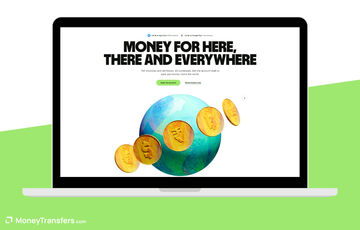
Wise combines the mid-market exchange rate with a separate transfer fee, which makes it easier to compare a bank payment against a remittance app’s exchange-rate margin.
In my opinion, it suits paying an overseas account when the recipient can receive a bank transfer and cash collection adds no benefit.
| Currency pair | They get (after fees) | Transfer fees | FX Rate | Markup | Delivery time |
|---|---|---|---|---|---|
| JPY / CNY | ¥4,158.62 | ¥1,833.00 | 0.0424 | -0.07% | Within minutes |
| JPY / EUR | €558.04 | ¥878.00 | 0.0056 | 0.52% | Within minutes |
| JPY / GBP | £471.61 | ¥921.00 | 0.0048 | -0.82% | Within minutes |
| JPY / INR | ₹59,546.31 | ¥1,027.00 | 0.6016 | -0.03% | Within minutes |
| JPY / PHP | ₱39,495.00 | ¥1,078.00 | 0.3993 | 0.01% | Within minutes |
| JPY / THB | ฿20,859.98 | ¥1,333.00 | 0.2114 | 0.03% | Within minutes |
| JPY / USD | $627.26 | ¥987.00 | 0.0063 | 0.56% | Same day |
| JPY / VND | ₫16,181,566.00 | ¥1,244.00 | 163.8540 | -0.01% | Within minutes |
Japanese residents can send up to ¥150 million equivalent when creating a transfer and funding it directly, subject to the destination and required checks.
That is different from sending an existing Wise balance, where the Japan-resident transfer limit is ¥1 million equivalent.
JPY funding must come from a bank within Japan, and the sender’s name must match the name on the Wise account.
Supported payment methods include bank transfer and debit card, although payment-method limits can reduce the amount you can fund.
You cannot fund a JPY transfer with cash, a credit card or another person’s bank account.
Allow time for Japanese identification and My Number checks before booking a payment with a fixed overseas deadline.
Bank funding can take up to two working days, with conversion and recipient-bank processing affecting the final delivery estimate.
Remitly
Family transfers with a choice of receiving methods
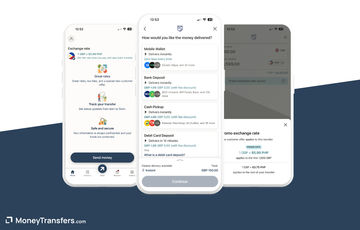
Remitly lets Japanese residents fund an overseas transfer from a bank account, while eligible destinations offer bank deposits or cash collection.
I think it is a good fit when your family member needs a receiving method that a standard account-to-account transfer cannot provide.
| Currency pair | They get (after fees) | Transfer fees | FX Rate | Markup | Delivery time |
|---|---|---|---|---|---|
| JPY / CNY | ¥4,265.00 | ¥0.00 | 0.0427 | -0.78% | Within minutes |
| JPY / EUR | €564.00 | ¥0.00 | 0.0056 | 0.52% | Within an hour |
| JPY / GBP | £477.00 | ¥0.00 | 0.0048 | -0.82% | Within minutes |
| JPY / INR | ₹60,240.00 | ¥0.00 | 0.6024 | -0.16% | Within minutes |
| JPY / PHP | ₱40,110.00 | ¥0.00 | 0.4011 | -0.44% | Within minutes |
| JPY / THB | ฿21,270.00 | ¥0.00 | 0.2127 | -0.59% | Within an hour |
| JPY / USD | $634.00 | ¥0.00 | 0.0063 | 0.56% | Within minutes |
| JPY / VND | ₫16,408,000.00 | ¥0.00 | 164.0800 | -0.15% | Within minutes |
The receiving options depend on the country, so check the exact collection partner or recipient bank before paying.
Remitly Japan is a registered funds-transfer company, with a maximum of ¥1 million per transfer and potentially lower destination limits.
You need a My Number Card for registration, and foreign residents also need a Residence Card or Special Permanent Resident Certificate.
The identity process includes smartphone photos and a selfie or short video, so registration needs more than entering your Japanese bank details.
Eligible first transfers can receive a fee promotion, but the exchange rate still affects how much reaches your recipient.
For regular family support, compare the normal fee and receiving amount after that first-transfer offer has ended.
Delivery estimates depend on the route and payment details, with identity checks or recipient-bank processing potentially extending the wait.
Revolut
Smaller weekday exchanges within the free allowance
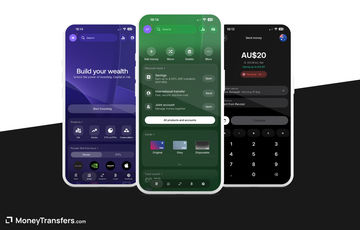
Revolut Japan’s free Standard plan includes ¥300,000 of currency exchange per monthly billing cycle before its fair-use charge applies.
My suggestion is to use that allowance for smaller overseas bank payments, provided the account is funded by bank transfer.
| Currency pair | They get (after fees) | Transfer fees | FX Rate | Markup | Delivery time |
|---|---|---|---|---|---|
| JPY / EUR | €560.97 | ¥0.00 | 0.0056 | 0.52% | Within minutes |
| JPY / GBP | £474.22 | ¥0.00 | 0.0047 | 1.28% | Within minutes |
| JPY / INR | ₹59,816.74 | ¥0.00 | 0.5982 | 0.54% | Within minutes |
| JPY / PHP | ₱39,677.01 | ¥0.00 | 0.3968 | 0.64% | Within minutes |
| JPY / THB | ฿21,016.68 | ¥0.00 | 0.2102 | 0.59% | Within minutes |
| JPY / USD | $631.29 | ¥0.00 | 0.0063 | 0.56% | Within a week |
| JPY / VND | ₫16,285,220.00 | ¥0.00 | 162.8522 | 0.60% | Within minutes |
Money added by any debit, credit or prepaid card can be spent on purchases, but cannot fund an international bank transfer.
This restriction applies even when the card top-up appears in your total balance, so check the amount available for transfers before converting.
Exchange above the Standard allowance attracts a 0.5% fee, while conversion outside foreign-exchange market hours adds a further 1% charge.
Timing the exchange during market hours can therefore reduce the cost, although Revolut uses its own exchange rate rather than guaranteeing the mid-market rate.
Revolut charges no international sending fee under the current Japanese tariff, but intermediary or recipient banks can still deduct charges.
Japan’s service has a ¥1 million transfer limit, and international functionality requires the relevant identity and My Number verification.
Treat the Japanese tariff as controlling, because European Revolut allowances and bank-deposit protection do not apply to this Japanese funds-transfer service.
SBI Remit
Repeat transfers funded with cash at an ATM
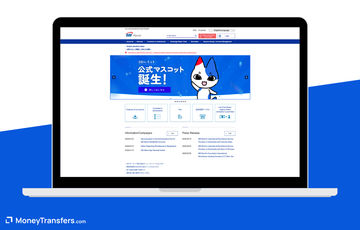
SBI Remit’s RemitCard links a physical card to a registered recipient and receiving method, allowing later transfers through Japan Post or Lawson ATMs.
I suggest this channel for sending cash to the same person regularly, especially when you prefer an ATM deposit to arranging another bank transfer.
The cash deposited, minus the applicable deposit and remittance charges, is sent to the recipient already associated with that card.
Each card belongs to its specific recipient and method, so you should not use it when you need to change those details for that payment.
Registration requires Japanese identity and address checks, with My Number documentation and a mailed welcome pack potentially delaying your first transfer.
The card itself can take around one to two weeks to arrive, making this a poor route for a first payment needed immediately.
Bank receiving and MoneyGram cash collection are available on supported routes, with destination restrictions affecting which method you can register.
Compare the total cost including ATM funding charges, because the remittance fee alone does not cover every deduction.
The exchange rate for an ATM-funded payment is determined when the transfer reference is issued, so an earlier displayed rate may change.
Smiles
Transfer points that can pay future remittance fees
Smiles awards points on transfers that can be used towards remittance fees, giving repeat senders a benefit beyond a one-off registration promotion.
In my opinion, it is worth considering for regular family payments when the destination’s receiving options fit and you can keep using those points.
The points reduce the sending fee, but they do not remove the cost built into the exchange rate or any ATM funding charge.
Smiles also supports cash deposits through its ATM cards, allowing eligible Japanese residents to fund transfers without opening a Japanese bank account.
You can alternatively pay from your own bank account, although another person’s bank account and credit-card funding are not accepted.
A WalletCard deposit is credited automatically, while an ordinary bank deposit may require reporting through the app before the money is processed.
Compare the app’s current receiving amount and total charges for your destination, because the tariff changes with the transfer amount and payout method.
Japanese residence and identity checks apply, including valid local documents for foreign residents and updates when your registered address changes.
If you move out of Japan, notify Smiles and settle the account rather than assuming that Japanese-resident access continues indefinitely.
Western Union
Staffed cash funding and overseas cash collection
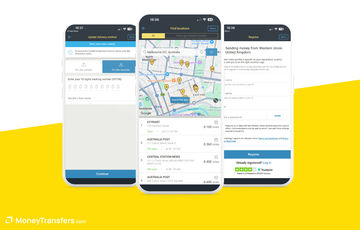
Western Union connects cash payments at Japanese agent counters with recipient cash collection on supported overseas routes, without requiring both people to have bank accounts.
My suggestion is to choose the staffed channel when you need to pay in cash and want help checking the recipient’s collection details.
Online and app transfers are also available from Japan, with bank funding offering a different sending channel from an agent-counter payment.
Compare the quote for the channel you intend to use, because online pricing and an agent’s cash-transfer quote can differ.
Western Union charges through the transfer fee and exchange rate, so a low displayed fee does not establish the lowest overall cost.
Supported destinations may also offer bank receiving or mobile-wallet delivery, although those methods should be checked for the specific country.
Resident identity checks include the relevant Japanese documents and My Number evidence, with separate requirements applying to foreign residents.
The recipient needs the correct collection details and identification, and the agent’s opening hours can affect when cash becomes available.
Seven Bank offers another Western Union channel for registered bank customers, but it requires its own overseas-transfer setup before you can send.
Choose how the recipient will receive the money
For a payment to your own overseas account, I suggest a bank deposit rather than paying for cash collection that you do not need.
For family transfers, check the actual destination and payout method before choosing the company, particularly when the recipient uses a mobile wallet or collects cash.
An international network can cover a country without supporting every bank, wallet or collection location within it, so check the recipient's option first.
Use the same yen budget when checking prices, because a lower fee can be offset by a larger exchange-rate margin.
Our live results show the amount received after the quoted transfer costs, while funding charges from your Japanese bank need checking separately.
For ongoing foreign balances and spending, multi-currency accounts in Japan covers account features separately from a one-off overseas transfer.
Fund the payment through the correct Japanese bank account
A domestic bank transfer to a remittance company uses the bank and account details in its payment instructions, which may differ from the company's brand name.
If your banking app cannot find the company, check the actual receiving bank, branch and account number rather than searching only for the remittance brand.
Use the requested payment reference and matching sender name, because a deposit that cannot be matched can delay an otherwise straightforward transfer.
Wise requires yen funding from your own Japanese bank account, and rejects cash deposits or payments made by another person on your behalf.
For ATM, convenience-store or agent funding, check the funding charge as well as the overseas transfer fee, particularly on small recurring payments.
I suggest completing identity and recipient registration before an urgent transfer, so the funding stage does not begin while those checks are still outstanding.
A ¥1 million limit does not apply to every service
A service's transaction ceiling depends on its Japanese registration and product, so the familiar ¥1 million figure should not be applied to every overseas payment.
Wise's externally funded Send route can handle up to ¥150 million equivalent, while sending from an existing Wise balance remains limited to ¥1 million equivalent per transfer.
For a larger payment, select the external funding route before paying, because adding money to the balance first does not turn it into an eligible large transfer.
The higher transaction ceiling does not remove identity, payment-purpose or source-of-funds checks, and destination-specific restrictions can still affect the payment.
My suggestion is to keep the relevant savings, salary or sale documents ready, and avoid choosing a service solely because its maximum is higher than your amount.
Arrange the transfer before closing your Japanese bank account
If you are leaving Japan, complete verification and arrange funding while your Japanese account and the registered contact details are still accessible.
Allow time for any payment review, rather than scheduling the transfer immediately before a flight or the closure of your funding account.
Keep the transfer confirmation and bank records after departure, because you may need them to trace a delayed payment or explain its source.
A remittance account registered in Japan also needs current residence information, so check the company's relocation process when your address changes.
How to send money abroad from Japan
Choose the destination and delivery method
Check the recipient's bank, wallet or cash collection option, then compare companies offering that method for your destination and amount.
Complete identity and recipient registration
Prepare the requested identity, residence and My Number documents, allowing time for approval before an urgent or first overseas payment.
Check the full price in yen
Compare the recipient's amount after the transfer fee and exchange-rate margin, adding any separate bank or ATM funding charge.
Follow the funding instructions
Use the specified bank, branch, account and payment reference, checking whether the deposit must come from an account in your own name.
Confirm and keep the payment record
Check the recipient's details before confirming, then retain the reference and monitor the payment until the recipient receives the money.
Find a rate for your overseas payment
Enter your destination and yen amount below, then check the delivery method and any separate funding charges before choosing the service.
Find the best rate for transfers from Japan
Enter your destination and amount to compare current JPY transfer costs.Our methodology & why trust us
These selections cover personal overseas transfers funded from Japan, with local registration, payment methods and recipient delivery checked separately from destination coverage.
Our current JPY results establish live options on sampled corridors, while official Japanese service terms establish local funding, identity requirements and product limits.
Local remittance services are assessed alongside companies in our live results, so a missing live quote does not establish that a service is unavailable.
Read about how we review companies for the evidence used in our comparisons.
Sources
Contributors

Please share your experience with …