
The Best Multi-Currency Accounts in Germany in 2026
Table of Contents

Author: Artiom Pucinskij
Table of Contents
Wise is my pick for receiving foreign income and spending abroad, because it combines currency balances, receiving details and a debit card.
Revolut makes more sense if you want those features alongside everyday banking, while bunq adds automatic spending from matching currency balances.
German bank accounts such as comdirect's Währungsanlagekonto serve a different purpose, letting you hold foreign currency without providing an everyday spending account.
Search Now & Save On Your Transfer
Instantly view live exchange rates, fees & features.
Best multi-currency accounts for German residents
I suggest choosing by how you will use the currencies, rather than simply counting how many an account supports.
At a glance
Wise: foreign income and everyday spending abroad
Revolut: travel alongside everyday banking
bunq: automatic spending from matching currency balances
Paysera: holding and exchanging currencies without a travel focus
HSBC Expat: international banking for eligible Premier customers
comdirect: foreign-currency holdings at a German bank

"Over 15 million customers use Wise, mostly for their excellent mobile app, transparent fee structure & use of mid-market rates. Now increasingly used for larger transfers."

"Revolut has 70+ million customers globally. You can hold up to 25+ currencies in the app and send money quickly in 25+ currencies to 140+ countries."
US Disclaimer: Revolut is not a bank. Banking services are provided by Lead Bank, Member FDIC. Fees may apply. See revolut.com/en-US/ for details.


Wise
Wise combines foreign income with everyday spending
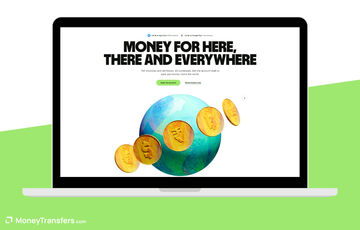
Wise lets you hold more than 40 currencies, receive selected currencies through account details, and spend your balances with a debit card.
Conversions use the mid-market exchange rate with a separate fee, making the cost easier to follow than an exchange-rate margin.
Feature | What you get in Germany |
|---|---|
Currency balances | More than 40 currencies |
Receiving | Local details for selected currencies, with additional international receiving options |
Card access | Spend a matching balance or convert another balance automatically |
Regular cost | No monthly personal-account subscription, conversion and some receiving fees apply |
Protection | Safeguarding, rather than bank deposit insurance |
For someone paid in pounds or dollars while living in Germany, keeping the original currency can avoid an unnecessary conversion before spending it again.
I also like the separation between holding money and converting it, because you can decide when to turn foreign income into euros.
However, a supported balance does not automatically come with local bank details, and international receiving can introduce fees that local payments avoid.
Check the receiving instructions for your currency before giving your employer the account details, particularly when their payroll system requires a local account.
The physical Wise card costs €7 in Germany, although you do not need a physical card simply to hold or receive money.
Wise is a payment account rather than a bank account, so my suggestion is to keep the money needed for German bills in your main bank.
For occasional holidays, the card and clear exchange pricing are useful without requiring another monthly subscription or a paid travel plan.
I'd say consider Revolut instead if integrated banking features are the priority, rather than a dedicated account for managing foreign income.
The examples below show conversion fees and rates for EUR-funded payments, rather than promising that every destination has local receiving details.
| Currency pair | Transfer fees | FX Rate | Markup |
|---|---|---|---|
| EUR / AUD | €5.36 | 1.6163 | -0.01% |
| EUR / CAD | €5.58 | 1.5924 | 0.01% |
| EUR / CHF | €5.97 | 0.9276 | 0.00% |
| EUR / GBP | €5.76 | 0.8441 | 0.01% |
| EUR / JPY | €7.14 | 177.5550 | -0.01% |
| EUR / NOK | €5.82 | 10.6124 | 0.00% |
| EUR / PLN | €6.20 | 4.3697 | 0.00% |
| EUR / SGD | €5.94 | 1.4391 | -0.01% |
| EUR / THB | €9.46 | 37.5763 | -0.01% |
| EUR / USD | €6.21 | 1.1245 | 0.02% |
Revolut
Revolut adds travel features to everyday banking
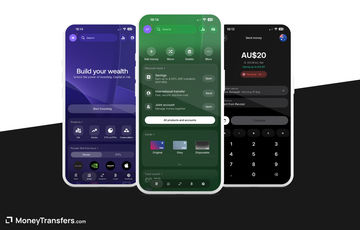
Revolut supports 38 currencies for holding and exchanging money, alongside a debit card and an account for everyday payments.
Its free Standard plan can suit occasional travel, particularly when you exchange during the week and stay within the monthly allowance.
Feature | What you get in Germany |
|---|---|
Currency balances | 38 supported currencies |
Receiving | Account details and transfer routes depend on the currency |
Card access | Spend an available supported balance, with conversion when needed |
Regular cost | Standard has no monthly subscription, paid plans add features and higher allowances |
Protection | Eligible Revolut Bank UAB deposits covered by Lithuanian deposit insurance up to €100,000 per depositor |
Revolut's German Standard plan has a €1,000 monthly exchange allowance, with a 0.5% fair-usage fee on exchange above that allowance.
Standard also adds a 1% weekend exchange fee, which makes converting before a weekend trip a practical way to avoid that extra charge.
Those allowances apply to the account's qualifying exchanges, so travel spending and money converted for transfers can use the same monthly limit.
In my opinion, a higher allowance alone does not justify a paid plan without checking the subscription against the fees you would otherwise pay.
For an existing user, holding euros alongside holiday currencies is convenient because spending, conversion and ordinary account activity sit in the same app.
Revolut uses its own exchange rate, so an exchange within the allowance is not automatically identical to a mid-market-rate conversion elsewhere.
For a larger conversion, I'd say check the complete cost against Wise before deciding whether the convenience is worth any additional charge.
Eligible bank deposits have deposit protection, although that does not mean every investment or other product inside the app has the same cover.
The table below shows transfer conversion costs, which should be considered alongside your remaining exchange allowance and any applicable plan charges.
| Currency pair | Transfer fees | FX Rate | Markup |
|---|---|---|---|
| EUR / AUD | €0.35 | 1.6121 | 0.25% |
| EUR / CAD | €0.50 | 1.5884 | 0.26% |
| EUR / CHF | €0.50 | 0.9252 | 0.26% |
| EUR / GBP | €0.30 | 0.8416 | 0.30% |
| EUR / JPY | €1.00 | 177.0517 | 0.27% |
| EUR / NOK | €0.50 | 10.5873 | 0.23% |
| EUR / PLN | €0.50 | 4.3577 | 0.28% |
| EUR / SGD | €0.50 | 1.4360 | 0.20% |
| EUR / THB | €0.75 | 37.3821 | 0.51% |
| EUR / USD | €0.50 | 1.1210 | 0.33% |
bunq
bunq makes spending from foreign balances more automatic
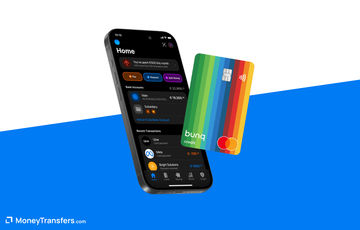
bunq supports 20 currencies including euros, with foreign-currency accounts available to German residents across its current personal plans.
AutoSelect can use a matching foreign-currency balance for card purchases, helping you spend money you already hold without converting it again.
Feature | What you get in Germany |
|---|---|
Currency balances | 20 currencies including EUR |
Receiving | Foreign-currency accounts use UK IBANs and support international receiving |
Card access | AutoSelect can use the matching foreign-currency balance |
Regular cost | Foreign-currency accounts have no separate opening fee, with conversion and receiving fees applicable |
Protection | Eligible deposits, including foreign-currency funds, covered by Dutch deposit insurance up to €100,000 per depositor |
This is particularly useful if you already use bunq and want separate balances for holidays, overseas income or recurring spending in another currency.
However, a UK IBAN is different from local receiving details in each country, so your payer may need an international bank transfer.
Incoming international foreign-currency payments can take several business days, and intermediary charges can reduce the amount that arrives in your balance.
bunq charges a 0.5% conversion fee for foreign-currency accounts, with an additional weekend charge of 0.15% to 0.5% depending on the currencies involved.
bunq Free has no subscription and includes a digital card, while Core costs €3.99 monthly and includes access to a physical card.
Foreign-currency accounts also do not support direct debits, which limits their usefulness for paying local household bills in another country.
I like bunq for the way its balances connect to card spending, although it is not necessarily the cheapest way to receive every currency.
Before switching salary payments, check whether your employer can use the receiving details and whether their bank will charge for that route.
Eligible bunq deposits, including foreign-currency funds, have Dutch deposit protection up to €100,000 per depositor, while payment processing can involve Currencycloud.
That protection should be checked against the terms of the account you open, particularly when choosing between payment balances and separate savings products.
Paysera
Paysera is useful for holding and exchanging foreign currency
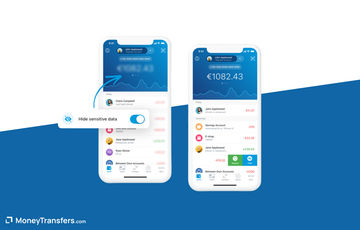
Paysera lets you manage different currency balances and exchange money within one payment account, with receiving and transfer options depending on the currency.
It is more useful for managing balances and payments than for spending directly from foreign currencies with its Visa card.
Feature | What you get in Germany |
|---|---|
Currency balances | Multiple supported foreign currencies |
Receiving | Currency-specific routes and fees |
Card access | Visa card account is denominated in EUR |
Regular cost | Active personal-account maintenance is free, with exchange, transfer and card fees applicable |
Protection | Safeguarding through a regulated electronic money institution, rather than bank deposit insurance |
The key distinction is the card, because a foreign-currency balance is not the same as a card that spends that balance directly.
Money moved from a foreign-currency account into the Paysera Visa account is converted into euros, rather than remaining in its original currency.
A later card purchase in another currency can therefore involve a further conversion, making it less appealing for the regular traveller.
I'd say consider Paysera for holding and transferring currencies, or Wise or Revolut if you want a simpler travel-spending setup.
Its value depends on the exact currency route, so check the exchange quote and the receiving or sending fee before moving money.
Do not assume that a payment account with an IBAN has bank deposit insurance, because Paysera operates under a different protection framework.
HSBC Expat
HSBC Expat suits eligible customers with substantial international finances
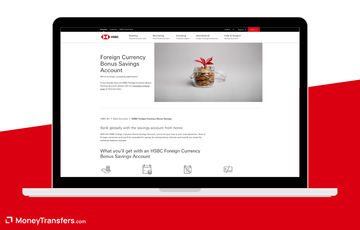
HSBC Expat's Global Money account supports holding and receiving 19 currencies, with its debit card supporting spending in 18 of those currencies.
It connects foreign-currency balances to an established international banking relationship, rather than requiring separate accounts for every country you use.
Feature | What you get as an eligible German resident |
|---|---|
Currency balances | Global Money supports 19 currencies |
Receiving | Payments from employers, friends and family in supported currencies |
Card access | Global Money card supports 18 currencies |
Regular cost | No separate Global Money account fee, exchange-rate and third-party costs can apply |
Protection | Eligible HSBC Expat deposits covered by Jersey's deposit protection scheme up to £50,000 per depositor |
You must first qualify for HSBC Expat, which makes this a much narrower option than opening a free Wise or Revolut account.
The principal route requires at least £75,000 in qualifying deposits or investments, while an existing HSBC Premier relationship can qualify with at least £10,000.
An underfunding charge of £50 can apply if you do not maintain the required relationship balance, so eligibility also affects the ongoing cost.
Those requirements make sense if you already manage sizeable assets internationally, but I suggest avoiding a savings move solely to obtain a travel card.
Global Money can receive supported payments directly, which is useful if your employer pays foreign income and you want to keep that currency.
HSBC sets its own exchange rates, which vary by customer status, amount and currencies, so no separate account fee does not mean free conversion.
The card supports one fewer currency than the wallet, so check the spending eligibility of the currency you intend to use.
Jersey protection is also different from the €100,000 protection associated with eligible German or other EU bank deposits, making that distinction worth understanding.
For an eligible Premier customer, I think the existing banking relationship is the strongest reason to consider it over a separate money app.
comdirect
comdirect offers foreign-currency holdings through a German bank
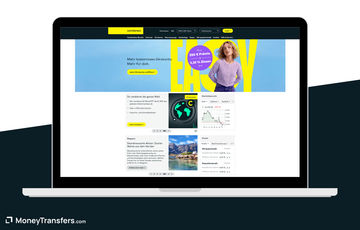
comdirect's Währungsanlagekonto lets you hold 13 foreign currencies without an account-maintenance fee, with a minimum investment equivalent to €500.
It suits currency holdings alongside an existing banking or investment relationship, rather than everyday card spending or a broad overseas payment account.
Feature | What you get in Germany |
|---|---|
Currency balances | Separate holdings in 13 foreign currencies |
Receiving | Payment functionality is limited, with USD international transfers available |
Card access | No everyday debit-card spending directly from these holdings |
Regular cost | No maintenance fee, 1% commission when buying or selling currencies through EUR |
Protection | Eligible deposits covered by the applicable German statutory deposit guarantee |
The supported currencies include USD, GBP, CHF, JPY, CAD and AUD, alongside several European currencies and currencies such as MXN and ZAR.
However, a 1% conversion commission in each direction can make buying and later selling currency expensive compared with a payment-focused money app.
Buying currency and converting it back is therefore a different decision from keeping overseas income in the currency you originally received.
I like comdirect if a German bank relationship and holding foreign currency are priorities, without expecting the cheapest conversion.
It should not be treated as a replacement for local foreign account details, a travel card or a general-purpose international current account.
For someone who only wants to spend euros on an occasional holiday, opening foreign-currency investment accounts is likely to add unnecessary administration.
Which type of account do you need?
Receiving foreign income
To receive money from abroad, start with the currency your employer or payer sends, then check the receiving instructions before choosing a matching balance.
A CHF balance can be useful for someone living in Germany and earning Swiss francs, but the payment route determines receiving fees and payroll compatibility.
Local account details, an international IBAN and a SWIFT payment are different routes, even when the money ends up in the same currency.
Before changing salary instructions, I suggest checking this and keeping enough euros in your German account to cover bills without depending on another conversion.
Travel and card spending
For travel, the useful features are access to held balances, predictable conversion costs and a card you can use where you are going.
Wise, Revolut and bunq connect currency balances to card spending, while Paysera's euro-denominated card and comdirect's holdings serve different purposes.
Always choose the local currency at the checkout or cash machine, because paying in euros can let the merchant set the conversion rate.
You do not need to pre-convert every holiday currency, although doing so can help manage a budget or avoid applicable weekend exchange charges.
Holding savings in another currency
Holding dollars or francs exposes the euro value of your money to exchange-rate changes, even if the balance earns no interest.
A currency can rise or fall against the euro, so foreign-currency holdings should match a practical need rather than an assumption of safety.
Bank deposit protection and payment-account safeguarding address provider failure differently, while neither prevents losses caused by changes in the exchange rate.
For a large balance, my suggestion is to check the protection limit, the legal account provider and the cost of bringing the money back into euros.
How to choose a multi-currency account in Germany
List the currencies you actually use
Write down the currencies you receive, hold and spend, because an account supporting dozens of balances may still lack the one you need.
Check how payments arrive
Confirm whether the payer can use local account details or needs an international transfer, then check receiving fees and possible intermediary deductions.
Follow the money through the card
Check whether a purchase uses the matching balance or converts through euros, particularly when choosing an account mainly for holidays and travel.
Add up the conversion and account costs
Include the exchange fee, any rate margin, monthly subscription and card costs, then check whether allowances or weekend charges change your likely total.
Check protection and access to support
Identify the legal provider and protection scheme, and keep a separate way to pay your German bills if an account needs additional verification.
Do you need a multi-currency account for transfers abroad?
You do not need to hold foreign balances simply to send money abroad, because many transfer companies convert euros during the payment itself.
A dedicated account becomes more useful when you receive foreign income, spend the same currency regularly or want to keep money between transfers.
For a one-off payment, our guide to international money transfer services in Germany covers companies that can send money without a long-term currency balance.
If cost is the priority, the cheapest ways to send money abroad from Germany covers transfer pricing rather than account features and foreign-currency holdings.
My view on the best account
I'd say start with Wise for foreign income and spending, or Revolut if you also want to manage everyday banking in the same app.
bunq is worth considering for automatic spending from matching balances, especially when you already use its banking features and account organisation tools.
HSBC Expat and comdirect serve more specific banking and holding needs, while Paysera deserves a closer look when card spending is not the priority.
The best account is the one that fits how your money arrives and leaves, rather than the one with the longest currency list.
Keeping a foreign balance can reduce conversions, but comparing your next transfer still helps you assess the cost of moving money.
Compare transfer costs from Germany
Enter your destination and amount to compare the available rates for moving money from Germany.Our methodology & why trust us
I assessed accounts available to German residents by currency holdings, receiving routes, card access, conversion costs, eligibility and protection.
Our live transfer results helped identify providers serving Germany, with separate checks confirming whether their personal multi-currency account products are available.
The conversion tables update through our comparison data, while account features and eligibility require separate checks when providers change their products.
Commercial relationships do not determine inclusion, and a provider without comparison data can still be useful for a specific account need.
Read more about how we review providers and interpret the tables as transfer-cost examples rather than a complete account-fee schedule.
Sources
Best money transfer apps
These apps cover different sending needs, from regular family support to managing overseas payments alongside your everyday account.
Cheapest way to send money abroad
These examples compare available companies for €1,000 and €5,000 transfers from Germany across eight destinations.
Best money transfer companies
These services cover different needs, so my suggestion is to choose by how you pay and how the recipient receives their money.
Best currency brokers
The companies below offer the highest receive amounts in our comparison for €50,000 transfers.
Instant money transfers
Fast bank payments without always paying by card
Contributors

Please share your experience with …