
The Best Multi-Currency Accounts in Italy in 2026
Table of Contents

Author: Artiom Pucinskij
Table of Contents
I suggest considering Wise for receiving foreign income and spending the matching balance, while Revolut combines foreign currencies with an Italian bank account.
Fineco suits keeping foreign receipts within an existing Italian banking relationship, with different features from the travel-focused cards and their automatic currency selection.
bunq and Paysera provide other holding and payment options, but their receiving arrangements and card costs need checking alongside the currencies available.
Search Now & Save On Your Transfer
Instantly view live exchange rates, fees & features.
At a glance
Wise: foreign receipts and spending from matching balances
Revolut: Italian banking with held foreign currencies
Fineco: currency balances within local banking
bunq: foreign accounts with matching-balance card selection
Paysera: holding currencies and making bank payments
Best accounts for holding multiple currencies in Italy
I'd say choose around the currencies you receive and the way you spend them, rather than the largest number of balances alone.

"Over 15 million customers use Wise, mostly for their excellent mobile app, transparent fee structure & use of mid-market rates. Now increasingly used for larger transfers."

"Revolut has 70+ million customers globally. You can hold up to 25+ currencies in the app and send money quickly in 25+ currencies to 140+ countries."
US Disclaimer: Revolut is not a bank. Banking services are provided by Lead Bank, Member FDIC. Fees may apply. See revolut.com/en-US/ for details.



Wise
Receive foreign money and spend the same balance
Wise lets Italian residents hold foreign income and use a matching-currency balance for card spending, without converting everything into euros first.
Feature | Wise personal account |
|---|---|
Held currencies | 40+ |
Receiving | Local details for selected currencies, plus supported SWIFT receipts |
Card | Spends matching held currency, otherwise converts |
Regular account fee | No monthly subscription |
Physical card | €7 |
Conversion | Mid-market rate plus a variable fee |
Protection | Safeguarding, without bank deposit insurance |
The receiving details depend on the currency, so forty balances do not mean forty separate local bank accounts.
Before sharing details with an employer, check whether they should use a domestic payment or an international SWIFT transfer.
Those receiving methods can carry different charges, especially when a US-dollar wire is compared with a local ACH payment.
You can keep the currency after it arrives, then convert only the amount needed for your Italian euro expenses.
For travel, paying from an existing matching balance avoids a fresh conversion, while an unavailable currency requires conversion with Wise’s fee.
The physical card costs €7, and withdrawals up to €250 a month avoid Wise’s withdrawal fee before the excess attracts 2.69%.
An ATM operator can still charge separately, so the free allowance does not guarantee that every withdrawal costs nothing.
I think Wise is worth considering for foreign receipts and matching-balance spending, while remembering that safeguarded payment money has different protection from an insured bank deposit.
The figures show conversion and transfer charges for payments from euros, which should be checked separately from card or ATM charges.
| Currency pair | Transfer fees | FX Rate | Markup |
|---|---|---|---|
| EUR / AUD | €5.36 | 1.6147 | 0.00% |
| EUR / CAD | €5.58 | 1.5920 | 0.00% |
| EUR / CHF | €5.97 | 0.9271 | -0.01% |
| EUR / GBP | €5.76 | 0.8440 | 0.00% |
| EUR / JPY | €7.14 | 177.6450 | -0.01% |
| EUR / PLN | €6.20 | 4.3693 | 0.00% |
| EUR / RON | €6.26 | 5.3348 | 0.01% |
| EUR / SGD | €5.94 | 1.4388 | -0.01% |
| EUR / THB | €9.46 | 37.5635 | -0.01% |
| EUR / USD | €6.21 | 1.1229 | 0.01% |
Revolut
Combine an Italian IBAN with foreign balances
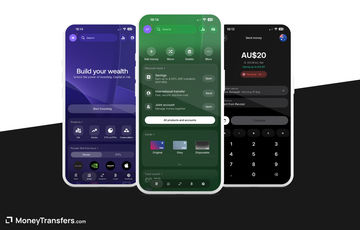
Revolut combines an Italian euro account with 38 currency balances, so you can receive local salary and keep foreign money in the same app.
Feature | Revolut Standard |
|---|---|
Held currencies | 38 |
Receiving | Italian EUR IBAN, with currency-specific details in the app |
Card | Matching balance or automatic conversion |
Regular account fee | €0 |
Physical card | First card issuance free, local standard delivery €6.99 |
Conversion | Own rate, €1,000 monthly allowance then 1% excess charge |
Protection | Eligible Lithuanian bank deposits up to €100,000 in aggregate |
Check the receiving details for each currency rather than assume the Italian IBAN provides domestic payment details in every country.
The card can spend more currencies than the account can hold, so a supported purchase may still require an automatic conversion.
That conversion uses your plan’s allowance, together with other qualifying exchanges already completed during the monthly plan cycle.
On Standard, exchange above €1,000 incurs a 1% fair-use fee, and weekend exchange carries a separate 1% charge.
Keeping the required currency beforehand can avoid conversion at purchase, although buying that currency earlier may itself have incurred an exchange fee.
External foreign-currency bank payments also have separate pricing, which is relevant if you intend to move a balance to another account.
I'd say choose Revolut when the Italian account and travel spending belong together, then check whether the free allowance covers your expected conversions.
Its deposit guarantee applies across eligible balances at Revolut Bank UAB, rather than providing a separate €100,000 limit for every currency.
The figures show conversion and transfer charges for payments from euros, which should be checked separately from card or ATM charges.
Fineco Multicurrency
Keep foreign salary within an Italian bank account
Fineco adds foreign-currency balances to an Italian current account, allowing foreign salary and bank payments without converting every receipt into euros.
Feature | Fineco Multicurrency |
|---|---|
Supported currencies | Up to 20 including EUR, initially USD, GBP and CHF |
Receiving | One IBAN, receipts credited to the matching currency balance |
Main use | Holding foreign income and making bank payments |
Regular account fee | One €0/month, Classic €3.95/month before applicable waivers |
Currency service fee | Activation free, CHF/JPY/SEK maintenance exceptions |
Conversion | Currency-dependent spread, with different weekend pricing |
Protection | Eligible FITD bank deposits up to €100,000 in aggregate |
I think Fineco is worth considering for holding foreign income within a local bank, particularly when you also need payments from those balances.
The free activation initially enables dollars, pounds and Swiss francs, with other supported currencies enabled through the account settings.
Its holding and payment functions are separate from speculative forex products, and you do not need to treat the balance as an investment.
Most currency services have no monthly maintenance fee, but CHF, JPY and SEK have charges depending on the average balance.
For example, the Swiss-franc service charges CHF5.95 a month up to CHF5,000 average balance, then CHF19.95 above that threshold, subject to its low-balance waiver.
The euro account’s own plan also needs comparison, since Fineco One has no monthly account fee while Classic has different pricing.
Conversion includes a spread even when no separate exchange commission applies, so compare the final rate before moving money between currencies.
I suggest considering Fineco for foreign receipts and bank payments, while Wise or Revolut suit spending from matching currency balances.
bunq
Spend matching foreign balances alongside your euro banking
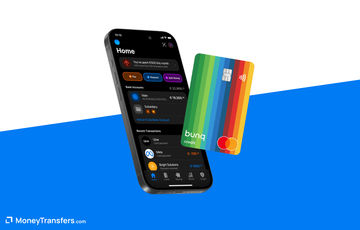
bunq’s foreign-currency accounts let Italian residents keep separate balances, with AutoSelect choosing the matching currency when paying by card.
Feature | bunq personal foreign-currency accounts |
|---|---|
Supported currencies | 20 including EUR |
Receiving | Foreign-account UK details, with GBP/USD local methods where supported |
Card | AutoSelect can use the matching currency balance |
Regular account fee | Free plan available, Core €3.99/month |
Accounts and cards | Free has three accounts and a digital card, Core five accounts and a physical card |
Conversion | 0.5% network fee, with extra weekend markup |
Protection | Eligible Dutch DGS deposits up to €100,000 in aggregate, including non-EUR funds |
The free plan’s account limit means you cannot open every available currency account simultaneously without considering which plan fits.
Core costs €3.99 a month and includes a physical card, making its subscription part of the comparison if you need one.
Foreign-currency receiving details use a different structure from the Italian euro account, so share the details for the intended currency.
GBP and USD local receipts carry a €0.70 charge, while SWIFT receipts have separate fees and can involve additional bank deductions.
Currency conversion has a 0.5% network fee, with a further weekend markup depending on which currencies you exchange.
A card payment from the matching balance avoids that new conversion, which is the main benefit of keeping travel money ready.
Current protection includes eligible non-euro deposits under the Dutch guarantee, so older descriptions excluding all foreign balances should not guide your decision.
I'd say compare the account limit and receiving charges alongside card use before choosing a plan for regular foreign income.
Paysera
Keep payment balances, with a separate euro card account
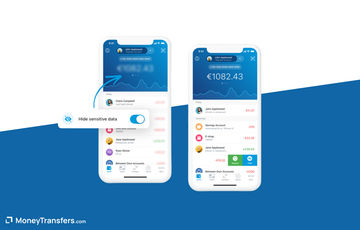
Paysera gives Italian residents a personal multi-currency payment account, but its separate euro card account changes how foreign balances are spent.
Feature | Paysera personal account |
|---|---|
Held currencies | Multiple currencies, with exchange available in up to 30 |
Receiving | Currency-specific bank instructions |
Card | Separate EUR account, without automatic matching foreign-balance spending |
Regular account fee | Active personal account maintenance free, inactivity charges possible |
Card fee | €1/month, digital issuance €0–10 |
Conversion | Paysera rate, with Visa conversion and card fees for foreign purchases |
Protection | Electronic-money safeguarding, without bank deposit insurance |
I think it is worth considering for keeping and transferring supported payment currencies, while comparing the card separately if travel spending is the main purpose.
Money moved into the card account in another currency is converted into euros, rather than preserved as that foreign card balance.
A later purchase in the original foreign currency can therefore involve another conversion through Visa, plus the applicable card charge.
That differs from using a dollar balance directly with Wise, Revolut or bunq for a dollar purchase.
The first digital or physical card costs €1 a month, and physical cards are currently unavailable for new orders.
Foreign-currency purchases in EU shops add €0.10 plus 0.70%, with a different charge for foreign purchases outside the EU.
Check the receiving instructions before arranging foreign salary, since the account’s currency support does not promise local bank details everywhere.
Paysera is an electronic money institution, so its safeguarded balances should be compared separately from insured deposits held with a bank.
Choose by receiving and spending, not just currency count
Foreign income and local receiving details
A balance in pounds or dollars does not automatically provide local UK or US bank details, so check the receiving instructions for your payer.
Wise offers selected local receiving details, while a bank's foreign-currency balance may require an international transfer with different sending or intermediary charges.
For a salary or regular receipt, confirm the account name, supported currency and payment rail before deciding that the largest holding count is best.
Travel spending and existing balances
For travel, I'd say choose a card that spends the matching held balance rather than buy foreign currency in an account the card cannot use directly.
Paying in the merchant's local currency avoids accepting the merchant's separate conversion into euros, although your card's own terms still determine any conversion charge.
A euro-only travel card can also be suitable for occasional spending, but that does not make it an account for keeping foreign income.
Conversion fees and monthly plans
Compare the amount of foreign currency bought with the same euro budget, including the rate, conversion charge and account-plan subscription.
An allowance may reset on a plan cycle rather than a calendar month, so check the account's timing before assuming your next conversion is included.
For an occasional foreign bill, international money transfer services from Italy can solve the payment without requiring you to keep several balances afterwards.
If price is your main concern, the cheapest ways to send money abroad from Italy covers payment funding and conversion costs in more detail.
Safeguarding and deposit protection
A regulated payment account and a bank deposit have different protection, even when both let you hold money and use a card.
Eligible bank-deposit protection is normally aggregated across your balances at the same bank, rather than renewed for every currency or account number.
For a substantial balance, check the legal account holder and protection terms instead of assuming an Italian-language app means an Italian bank deposit.
Foreign accounts can have Italian reporting obligations
If you are Italian tax resident, a foreign account can create reporting or IVAFE obligations depending on its structure, values and your circumstances.
The foreign-bank-account monitoring exception up to a €15,000 maximum aggregate value does not remove the obligation to complete the relevant return where IVAFE is due.
Use the current Agenzia delle Entrate instructions for your account rather than treat every foreign balance or IBAN as having identical reporting requirements.
How to set up the account for your needs
Confirm the held and receiving currencies
Check the balances you need and the payer's receiving instructions, distinguishing local account details from international bank-transfer details for the same currency.
Check the Italian opening terms
Use the personal product available for your residence and identification, including any existing bank relationship or paid plan required for the features you want.
Compare the complete conversion cost
Check how much currency the same euro budget buys, adding any conversion fee, weekend surcharge or subscription affecting your planned usage.
Set the card and keep enough balance
Confirm whether the card spends a matching foreign balance, uses automatic selection or converts from euros, then fund the arrangement you intend to use.
Keep the account and payment records
Save the receiving details and transaction records, including the legal account structure needed to check any Italian reporting obligations applying to you.
Choose the account matching your actual receiving and spending needs, then check its current Italian terms before opening or moving a substantial balance.
When foreign income needs to move to another account, compare the transfer cost before deciding how much to convert.
Compare transfer costs from Italy
Enter your destination and amount to compare the available rates for moving money from Italy.Our methodology & why trust us
I selected personal accounts available to residents of Italy, checking held currencies, receiving arrangements, card behaviour and ongoing account or conversion costs separately.
Our Italy transfer results helped identify companies to investigate, while their personal account terms determined whether they offered eligible multi-currency holding.
The fee-and-rate tables show conversion costs rather than recipient amounts, because choosing an account is a different task from choosing a single remittance.
The shortlist includes an Italian bank alongside international services, with regulated status and the relevant protection checked for each account structure.
Read more about how we review companies, including the evidence used for our account and transfer assessments.
Sources
Best money transfer apps
I suggest choosing the app around your funding and recipient, especially when Postepay, cash collection or a retained foreign balance changes the payment.
Instant money transfers
Send with Postepay after enabling online fund transfers
Receiving money from abroad
Easiest means the fewest extra steps for you, although the sender’s choice still affects the price and when you can use the money.
Cheapest way to send money abroad
The examples compare available companies across eight destinations at €500 and €2,000, with the received amount reflecting fees and exchange rates.
Best multi-currency business accounts
A multi-currency business account keeps customer revenue in its original currency, letting you choose when to convert it or use it for foreign expenses.
Contributors

Please share your experience with …