We only list companies that are trustworthy and appropriately licensed. Our aim is to give you a comprehensive view of the regulated money transfer marketplace.
|Disclosure
MoneyTransfers aims to help users find the best money transfer provider for their needs. To support our free service, we may earn a commission from some of the providers listed in our search results. The commission may also impact the ordering of the providers shown. Our reviews are independent from this and are based on our editorial policy, research and testing of dozens of remittance providers on the market.
Table of Contents
Receiving naira for family support and retaining dollars in a domiciliary account require different instructions, even when the same overseas person sends both payments.
My suggestion is to settle the receiving currency first, then compare a supported bank deposit, mobile-money receipt or eligible cash collection for money you need in naira.
To keep foreign currency, obtain your bank’s instructions for an eligible domiciliary-account transfer before the sender pays.
Payments for overseas work also need a service that accepts the commercial purpose, separately from family-support remittances.
Search Now & Save On Your Transfer
Instantly view live exchange rates, fees & features.
At a glance
Spend naira: ask the sender for an NGN bank-deposit quote.
Keep foreign currency: use your bank’s domiciliary-account receiving instructions.
MoMo: receive through a supported international partner into your verified account.
Cash: check the small-cash payout conditions and accepted ID before the sender pays.
Work payments: confirm commercial eligibility and retain invoices and payment records.
Ways to receive money from abroad in Nigeria
Family support, your own savings and an overseas client payment can require different receiving arrangements, even when all three come from the same country.
Method
What reaches you
Details needed
Main limitation
Personal remittance to your bank
NGN bank credit
Matching name, bank and account number
Sending country and service eligibility
Domiciliary-account bank wire
Supported foreign currency
Currency-account and SWIFT instructions
Bank checks, fees and accepted payment purpose
MoMo international receipt
Balance in your Nigerian MoMo account
Registered MTN number and required beneficiary details
Partner route and account-tier limits
Cash collection
Eligible NGN cash payout
Accepted ID and transfer reference
Cash amount restrictions and agent availability
Approved commercial collection
Payment for work or sales
Verified account, invoice and business details
Personal remittance terms may exclude it
Receive naira into your Nigerian bank account
The overseas sender can use Remitly, MoneyGram, Wise or another supported service to send a personal remittance paid into your Nigerian account.
You generally do not need that company’s app when the money arrives directly through the bank account you already use.
For example, receiving money from the UK in Nigeria can mean the sender pays pounds while you receive the naira amount shown in their quote.
Give the sender the beneficiary details requested by their service:
Your full name as recorded on the account.
Nigerian bank name and account number.
Your phone number or address when requested.
An accurate payment purpose.
UBA supports direct-to-account remittance receipt through its international partners, giving you a local receiving option alongside cash collection at eligible branches.
Its remittance partners include Western Union, MoneyGram and Ria, while the overseas sender still needs an available sending route.
The CBN’s IMTO framework uses naira settlement for personal remittances, so historical dollar-cash guides should not determine your current collection instructions.
I like a quoted NGN deposit for expenses in Nigeria, because you can compare the spending amount before the sender commits.
Ask for the expected recipient amount and confirm the chosen bank, especially when your sender has saved an older beneficiary or a different currency account.
For payments from participating African countries, UBA also supports PAPSS, which connects eligible banks so a sender can pay locally while you receive naira.
Ask both banks whether the specific country route and payment purpose qualify, particularly when the money relates to trade within Africa.
Receive foreign currency into a domiciliary account
A domiciliary account can receive eligible foreign-currency bank payments, allowing you to retain the supported currency rather than taking an NGN remittance payout.
UBA offers domiciliary accounts in currencies including US dollars, pounds and euros, with account-opening and operating requirements separate from a naira account.
Ask your bank for the incoming instructions for the exact currency and account you want credited.
These instructions can include your beneficiary name and address, domiciliary account number, bank SWIFT/BIC and the relevant correspondent bank.
A sender using its bank can then arrange the compatible wire, subject to both banks accepting the source and purpose of the payment.
I like this route when you need foreign currency for a later expense, although small wires can lose value to fixed bank charges.
Check the following points with your bank before sharing the account details:
Whether the bank accepts your payment type and currency.
Incoming-wire and correspondent-bank charges.
Requirements for retaining or later withdrawing the balance.
Any source-of-funds or purpose documents.
Our multi-currency accounts in Nigeria guide covers account selection, including the difference between local domiciliary accounts and other currency-collection products.
A company supporting NGN transfers does not establish that its foreign-currency account is available to you as a Nigerian resident.
Receive into your MoMo account
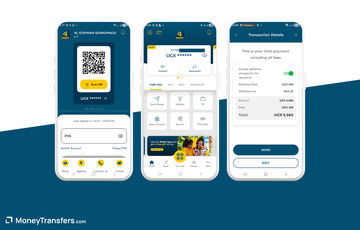
MoMo PSB supports international receiving through Lightway Finance, giving you another option when you use a registered MTN-linked MoMo account.
Share the registered MTN number with the sender, who chooses Direct to MoMo Wallet through the supported Lightway service.
MoMo identifies the UK, US and Canada among its receiving origins, with other available countries depending on the international partner’s coverage.
Check the recipient name and account verification before the sender pays, then confirm the incoming credit in your MoMo balance.
The amount you can receive depends on your account tier and the sending service’s conditions, so inspect your receiving limit first.
I'd say consider this when you want the money in MoMo already, while including any later cash withdrawal or onward-transfer charge in the comparison.
Our mobile money transfers in Nigeria guide covers wallet use in more detail, including the distinction between receiving credit and getting physical cash.
Collect an eligible remittance in cash
You can collect supported remittances through participating bank agents, including UBA branches, when the overseas sender selects an eligible cash payout.
Take the transfer reference and accepted photo ID, with the name on the payment matching the identification you bring.
Have the sender’s name, sending country and expected amount available, and check that the branch can pay before travelling.
UBA’s IMTO receiving instructions allow cash up to the naira equivalent of US$200, with larger amounts paid into the beneficiary’s own account.
That makes bank receipt the relevant route for larger personal remittances, rather than trying to collect the full amount in cash.
I'd say consider cash for a qualifying small payment when bank access is unavailable, while comparing the exchange rate before choosing it for convenience.
Receive money for freelance work or a business invoice
If the payment is for your work, use a bank or collection account that accepts commercial receipts and supports your legal status.
A family-remittance service’s Nigerian payout coverage does not establish that it accepts invoices, platform earnings or payments made by a business.
Before giving a client payment instructions, confirm the payer countries, accepted currencies, settlement account and records available for each receipt.
Keep your contract and invoices alongside the payment confirmation, particularly if your bank asks you to explain repeated foreign receipts.
A visible sending fee can be small while the exchange rate changes the naira amount substantially, so start with the quoted recipient amount.
For a domiciliary-account wire, also check bank and correspondent deductions before comparing it with a service delivering NGN.
Cost
Applies to
What you should check
Sending fee
Overseas bank or transfer company
Sender’s total payment
Currency conversion
Service converting into NGN
Naira credited for the same input
Correspondent and incoming fees
International bank wires
Fee-sharing instruction and bank tariff
Cash-out or onward transfer
Wallet or bank access after receipt
Cost of using the money where you need it
These rounded sending amounts are roughly worth ₦1 million before fees, illustrating a family payment or other personal bank receipt.
Last updated at 16/10/2026
GBP NGN
Mid Market Rate£1 = ₦1,770.531
Transfer Amount£600
1
Remitly
2
TapTap Send
3
MoneyGram
Transfer amount
They get (after fees)
Transfer fees
FX Rate
Markup
Delivery time
£600.00
₦1,089,624.00
£0.00
1816.0400
-2.54%
Within a week
£600.00
₦1,081,800.00
£0.00
1803.0000
-1.82%
Minutes
£600.00
₦1,080,819.84
£0.99
1801.3664
-1.73%
Minutes - 24 hours
USD NGN
Mid Market Rate$1 = ₦1,331.0896
Transfer Amount$750
1
Remitly
2
MoneyGram
3
TapTap Send
Transfer amount
They get (after fees)
Transfer fees
FX Rate
Markup
Delivery time
$750.00
₦1,030,792.50
$0.00
1374.3900
-3.20%
Within minutes
$750.00
₦1,023,000.00
$1.99
1364.0000
-2.44%
Minutes - 24 hours
$750.00
₦1,012,500.00
$0.00
1350.0000
-1.41%
Minutes
CAD NGN
Mid Market Rate$1 = ₦938.9374
Transfer Amount$1,100
1
Remitly
2
TapTap Send
3
Africhange
Transfer amount
They get (after fees)
Transfer fees
FX Rate
Markup
Delivery time
$1,100.00
₦1,058,860.00
$0.00
962.6000
-2.49%
Within a week
$1,100.00
₦1,056,000.00
$0.00
960.0000
-2.22%
Minutes
$1,100.00
₦1,050,500.00
$0.00
955.0000
-1.70%
Minutes
EUR NGN
Mid Market Rate€1 = ₦1,494.686
Transfer Amount€700
1
Remitly
2
TapTap Send
3
Sendwave
Transfer amount
They get (after fees)
Transfer fees
FX Rate
Markup
Delivery time
€700.00
₦1,081,696.00
€0.00
1545.2800
-3.33%
Within a week
€700.00
₦1,066,142.00
€0.00
1523.0600
-1.88%
Minutes
€700.00
₦1,060,620.74
€0.99
1517.3184
-1.50%
Minutes - 3 days
AUD NGN
Mid Market Rate$1 = ₦924.0377
Transfer Amount$1,100
1
TapTap Send
2
Africhange
3
Remitly
Transfer amount
They get (after fees)
Transfer fees
FX Rate
Markup
Delivery time
$1,100.00
₦1,052,700.00
$0.00
957.0000
-3.50%
Minutes
$1,100.00
₦1,047,200.00
$1.10
952.0000
-2.98%
Minutes
$1,100.00
₦1,035,375.00
$0.00
941.2500
-1.85%
Within minutes
Compare companies for the sender’s actual route and check the selected payout method, because these quotes do not price domiciliary-account USD wires.
If someone needs a fixed naira amount, ask the sender to check that recipient target rather than assuming their usual foreign-currency payment still covers it.
How long does receiving take?
Supported personal transfers can arrive within minutes after payment and verification, while bank wires can take several working days across the institutions involved.
A sender’s transfer receipt proves that a payment was arranged, but you should check your credited balance before treating the money as available.
For cash, opening hours and the branch’s ability to pay your amount can delay collection even when the remittance itself is ready.
Limits, reporting and receiving documents
The sending service and your Nigerian account can impose different limits, while cash payout has separate restrictions from direct bank credit.
Your bank may request identity, source-of-funds or purpose evidence for a large or unusual payment, including transfers from your own overseas account.
Keep bank statements for existing savings, supporting records for gifts and inheritance, and invoices or contracts for work receipts.
A compliance report or a request for documents is separate from a tax assessment, so do not treat reporting as a tax-free allowance.
Do you pay tax on money received from abroad?
Tax depends on the underlying income, your residency and available exemptions or relief, rather than the receipt arriving through an international transfer company.
Nigeria’s tax rules can cover foreign income of residents, so overseas salary or freelance earnings should not automatically be treated as exempt.
Existing savings, family gifts and payment for services have different explanations, which is why I suggest keeping records of the source.
If income has already been taxed abroad, foreign-tax credit provisions may be relevant, subject to the conditions and limits in Nigeria’s tax law.
Check your current filing obligations with the relevant tax authority for significant gifts, inheritance, investments or ongoing foreign income.
How to receive money from abroad in Nigeria
Set the currency and purpose
Decide whether you need naira, a permitted foreign-currency receipt or payment for work, then choose a compatible account and service.
Check your receiving account
Confirm the account is active and verified, with enough receiving capacity for the selected bank or mobile-money payment.
Share matching payment details
Give the sender your exact beneficiary name and account details, or the currency-specific SWIFT instructions for your domiciliary account.
Confirm receipt and keep records
Check the credited amount and retain the payment reference, source documents and any invoice records needed to explain the receipt.
What if the money has not arrived?
Check the account number, bank and beneficiary name against the sender’s receipt, then establish whether funding and verification are complete.
If the sending service shows delivery but your balance is unchanged, ask your bank or MoMo for the matching incoming credit using the reference.
For a domiciliary-account wire, the sender should request a trace through its bank and provide the payment confirmation or tracking details.
For cash collection, confirm readiness and any identity mismatch with the sending company before visiting another branch.
The sender usually needs to request corrections or cancellation from the sending service, while you respond to your receiving institution’s document requests.
If you receive less money
Compare the quoted naira amount with the bank or wallet credit, then separate any later withdrawal charge from the original payment.
For a foreign-currency wire, ask about correspondent deductions and incoming-bank charges before assuming the sender paid too little.
Use the form with your sender to compare the next personal payment into Nigeria in the currency you want to receive.
Compare transfers to Nigeria
Enter the sender’s country and amount, then choose Nigeria as the destination to compare available transfer rates and fees.
Our methodology & why trust us
We checked Nigerian receiving-bank instructions, MoMo’s international partner workflow and CBN material, keeping naira remittances separate from domiciliary-account wires.
Our five inward comparisons use rounded sending amounts roughly worth ₦1 million before fees and do not establish commercial collection-account eligibility.
I prioritised receiving-currency choice and access to the credited funds, with separate handling for family support and overseas work payments.







Please share your experience with …