We only list companies that are trustworthy and appropriately licensed. Our aim is to give you a comprehensive view of the regulated money transfer marketplace.
|Disclosure
MoneyTransfers aims to help users find the best money transfer provider for their needs. To support our free service, we may earn a commission from some of the providers listed in our search results. The commission may also impact the ordering of the providers shown. Our reviews are independent from this and are based on our editorial policy, research and testing of dozens of remittance providers on the market.
Table of Contents
You can receive money from abroad straight into your German bank account, without opening an account with the sender’s transfer company.
For euros coming from another SEPA account, my suggestion is usually to keep things simple and use your existing IBAN.
If the money starts in pounds, dollars or another currency, deciding where it gets converted can make a bigger difference than changing your receiving account.
You also have options for keeping foreign currency, collecting cash and receiving payments through apps, depending on how you want to use the money.
Search Now & Save On Your Transfer
Instantly view live exchange rates, fees & features.
At a glance
Receiving euros: receive a SEPA transfer into your bank account.
Receiving converted euros: the sender can use a transfer company to deliver euros to your existing account.
Keeping USD or GBP: receive into matching account details with Wise or a supported Revolut currency account.
Without a bank account: collect cash through Western Union or MoneyGram.
Large payments: check documents and any AWV reporting obligation before you need the money.
Ways to receive money from abroad in Germany
The best option depends on whether you need euros now, want to keep the original currency, or need access to cash.
Receiving option
Best for
What you need
Main limitation
SEPA transfer to your bank
Euros from another SEPA account
Your name and IBAN
Only works for euro payments
Transfer company paying your bank
Converting foreign currency before it reaches you
Your name and bank details
Sender must use a service available where they live
International bank wire
Payments sent directly by an overseas bank
IBAN, BIC and bank instructions
Conversion and bank deductions can reduce the payment
Multi-currency account
Receiving and keeping foreign currency
Verified account and matching currency details
Conversion and some receiving methods cost extra
Cash collection
Receiving without a bank account
Photo ID and transfer reference
Collection hours and cash availability
PayPal or transfers within an app
Money from someone using the same service
An account or supported payment link
Currency conversion and withdrawal can add costs
These options can overlap, so you can receive through a money transfer company while continuing to use the bank you already have.
Receive a SEPA transfer into your bank account
SEPA lets you receive euro payments from participating countries into your German account, using much the same process as a domestic transfer.
It includes countries outside the eurozone, so someone in the UK or Switzerland can send euros through a participating bank too.
The payment must still be in euros, meaning a transfer of Swiss francs does not become a SEPA payment simply because Switzerland participates.
For a bank payment in euros, give the sender these details:
Your full account-holder name, matching the bank’s records.
Your IBAN, copied from your banking app or statement.
A payment reference, such as your name or an invoice number.
An IBAN is normally sufficient for a standard SEPA payment, although the sender’s service may request additional bank information.
I suggest using this for family support from another euro account, or moving euros you already hold elsewhere in Europe.
When the sender needs to convert money first, check their conversion price before assuming a euro bank transfer is the cheapest overall option.
Receive euros through a money transfer company
The sender can pay in their own currency through Wise, Remitly, Instarem or another supported service, then have euros deposited into your German account.
You usually do not need the same app, because the money arrives as a bank payment to the account details you provide.
This is the option I suggest checking first when someone abroad wants to send you money for rent, living costs or a one-off payment.
The company handles the conversion before delivering euros, letting the sender see the expected EUR amount while setting up the payment.
Give them your full name and IBAN, plus your address or other details requested during their transfer setup.
Your sender should select Germany and bank deposit, rather than cash collection or a payment into an app balance.
For example, someone in the US can pay dollars through a transfer service while you receive euros into your existing German bank account.
For proceeds from a property sale or a substantial pension transfer, a currency broker can organise the conversion and payment into your German account.
Currencies Direct is one option when the sender’s country is supported, with an account manager to help coordinate the payment and required documents.
I think that support is worth considering for a deadline-sensitive payment, especially when the sending bank has its own transfer limit or documentation requirements.
Agree whose account will fund the transfer before booking it, because a broker’s funding instructions may require payment from the registered customer’s account.
Receive an international bank wire
An overseas bank can send money directly to your German account through SWIFT, including foreign-currency payments that cannot use SEPA.
This may suit you when an employer, pension administrator or another organisation pays through its own bank and gives you little choice over the service.
Ask your German bank for its incoming international payment instructions, including the currency it can accept into your particular account.
For an international wire, the sender will generally need these details:
Your full name and address.
Your IBAN and the receiving bank’s BIC/SWIFT code.
The bank’s name and any required bank address or intermediary details.
The payment currency and a clear payment reference.
For example, ING’s German receiving instructions require your name, address, IBAN and its BIC, which you can share directly with the sender.
Foreign currency arriving into ING’s euro account is converted before crediting, so you cannot use that account to keep an incoming USD balance.
Other banks and foreign-currency accounts can work differently, so my suggestion is to settle the receiving currency before sending the details.
If you need exactly €2,000 for a payment, ask whether the sender can arrange delivery of that EUR amount instead of sending a dollar amount for your bank to convert.
This can make sense for regular foreign income, a pension or money you will spend later in the same currency.
You still carry the exchange-rate risk while holding the balance, so waiting does not guarantee you will get more euros.
Local receiving details for foreign income
9.2
Wise
Fees
0.1% - 2.6%
Exchange Rate Markup
0%
Transfer Speed
Minutes - 24 hours
"Over 15 million customers use Wise, mostly for their excellent mobile app, transparent fee structure & use of mid-market rates. Now increasingly used for larger transfers."
"Revolut has 70+ million customers globally. You can hold up to 25+ currencies in the app and send money quickly in 25+ currencies to 140+ countries."
US Disclaimer: Revolut is not a bank. Banking services are provided by Lead Bank, Member FDIC. Fees may apply. See revolut.com/en-US/ for details.
Wise works well for local receiving details
With Wise, you can receive USD using US account details, GBP using UK details and EUR using a European IBAN.
For example, a US payer can send dollars by ACH to your Wise USD details, leaving you with dollars rather than automatically converted euros.
Share the details for the currency and payment method they will use, because an ACH payment and an international SWIFT transfer require different instructions.
Wise has no personal-account monthly subscription fee, and local GBP, EUR and USD ACH payments are free to receive.
USD domestic wires and USD SWIFT payments cost $6.11 to receive, while EUR SWIFT receipt costs €2.39, before any correspondent-bank deductions.
You pay a separate conversion fee when exchanging currencies, and transferring the balance onward can also carry a fee.
I like this option when you regularly receive foreign currency, because you can avoid converting money you intend to spend abroad later.
Revolut combines receiving with spending
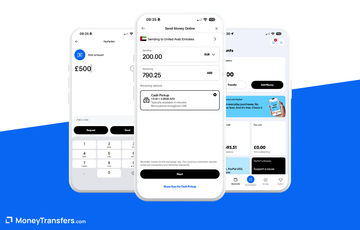
If you already use Revolut, you can receive supported currencies into the corresponding balance and spend or exchange the money from there.
Open the currency account’s details in the app and share the local or international instructions shown for that currency.
Revolut does not charge for incoming bank transfers, although SWIFT intermediary charges and the sender’s bank fees can still apply.
Its exchange costs depend on your plan and usage, so free receipt does not automatically mean converting the balance will be free.
In my opinion, it is worth considering when receiving is part of your everyday banking, rather than opening several accounts for occasional small payments.
Some German banks also offer foreign-currency accounts, but check whether you can open the account personally and receive payments directly into it.
A foreign-currency savings product is less suitable if it only accepts transfers from your own linked account and cannot receive money from other people.
Collect cash without a bank account
Western Union and MoneyGram let you collect an international transfer in cash at participating locations in Germany.
Participating Reisebank and Deutsche Post locations offer Western Union services, although you should check the individual branch before travelling.
The sender must choose cash collection when setting up the payment, rather than paying into your bank account.
This can help if you have just arrived, cannot access your account, or need money while replacing a lost card.
For Western Union, take a valid government-issued photo ID and the Money Transfer Control Number (MTCN) supplied by the sender.
You may also need the sender’s name, sending country and expected amount, with your own name matching the transfer and ID.
For MoneyGram, bring the transfer reference and accepted ID, with your name matching the transfer record exactly.
Check that the payment is ready, then confirm the agent’s opening hours and accepted ID before travelling there.
I suggest using cash collection when access to cash solves a problem, rather than choosing it automatically for money you will later pay into your bank.
The sender’s fee and exchange rate still affect the amount available, even when you do not pay a separate collection charge.
Receive through PayPal or another app
PayPal works for receiving money from someone who uses it, with payments going into your PayPal account rather than directly into your bank.
You can share your registered email address or a supported payment link, then withdraw eligible funds to your linked bank account.
Receiving a personal payment is free when no currency conversion is involved, but the sender can face international transfer charges.
Converting the balance introduces another cost, while payments for goods or services have separate commercial fees.
My suggestion is to keep PayPal for convenience when you already use it, especially for a small payment in euros.
For regular payments in another currency, I suggest checking local account details or direct EUR bank delivery before accepting ongoing conversion costs.
If you both have Revolut, the sender can also pay your Revtag or registered phone number directly within the app.
Same-currency transfers between Wise accounts are another option, and both sides need the relevant account for this kind of internal payment.
The wider choice of money transfer apps in Germany includes services whose sender app pays your bank, so receiving through an app does not always require downloading it yourself.
Wero and receiving money on a card
Wero supports euro payments between participating banks in Germany, France and Belgium, using a registered phone number or email address.
If you and the sender have access through your banks, it can handle a personal cross-border payment without exchanging IBANs.
Some transfer services, including Paysend, also support delivery to eligible cards in Germany, so the sender may be able to use your card as the receiving option.
That depends on the sending country and supported card, and the money goes to the associated account rather than becoming a separate foreign-currency balance.
What does it cost to receive money from abroad?
Your total cost includes any fees paid by the sender, currency conversion and charges deducted before you can use the money.
These are the main costs to check with the sender:
Cost
Where it applies
What to check
Sending fee
Sender’s bank or transfer company
Whether it is added to their payment or deducted
Currency conversion
Whoever exchanges the money
Exchange rate and any separate conversion fee
Intermediary charges
Banks handling a SWIFT payment
Fee-sharing instruction and possible deductions
Receiving charge
Your bank, wallet or account
Tariff for that currency and incoming method
Withdrawal or onward transfer
Moving money after receipt
Whether you need another transfer to use the balance
For example, ING charges no incoming-transfer fee, but converting dollars into euros costs 1% through its exchange rate, roughly €5 on €500 worth of dollars.
Here’s how much you can receive through transfer companies for sending amounts roughly equivalent to €500 before fees.
Last updated at 16/10/2026
GBP EUR
Mid Market Rate£1 = €1.1846
Transfer Amount£450
1
Remitly
2
TapTap Send
3
Revolut
Transfer amount
They get (after fees)
Transfer fees
FX Rate
Markup
Delivery time
£450.00
€533.97
£0.00
1.1866
-0.17%
Within a week
£450.00
€532.80
£0.00
1.1840
0.05%
Minutes
£450.00
€531.45
£0.00
1.1810
0.31%
Within minutes
USD EUR
Mid Market Rate$1 = €0.8909
Transfer Amount$600
1
Instarem
2
Remitly
3
Revolut
Transfer amount
They get (after fees)
Transfer fees
FX Rate
Markup
Delivery time
$600.00
€533.64
$0.00
0.8894
0.16%
Minutes - 24 hours
$600.00
€532.98
$0.00
0.8883
0.29%
Within minutes
$600.00
€532.34
$0.90
0.8886
0.25%
Within minutes
CHF EUR
Mid Market RateCHF 1 = €1.0773
Transfer AmountCHF 500
1
Revolut
2
Wise
3
Currencies Direct
Transfer amount
They get (after fees)
Transfer fees
FX Rate
Markup
Delivery time
CHF 500.00
€537.52
CHF 0.00
1.0750
0.21%
Within minutes
CHF 500.00
€536.05
CHF 2.36
1.0772
0.00%
Within minutes
CHF 500.00
€535.80
CHF 0.00
1.0716
0.53%
Minutes - 24 hours
CAD EUR
Mid Market Rate$1 = €0.6279
Transfer Amount$800
1
Instarem
2
Remitly
3
Currencies Direct
Transfer amount
They get (after fees)
Transfer fees
FX Rate
Markup
Delivery time
$800.00
€501.44
$0.00
0.6268
0.18%
Minutes - 24 hours
$800.00
€500.88
$0.00
0.6261
0.29%
Within a week
$800.00
€499.84
$0.00
0.6248
0.50%
Minutes - 24 hours
AUD EUR
Mid Market Rate$1 = €0.6181
Transfer Amount$850
1
Remitly
2
Western Union
3
TapTap Send
Transfer amount
They get (after fees)
Transfer fees
FX Rate
Markup
Delivery time
$850.00
€527.43
$0.00
0.6205
-0.40%
Within minutes
$850.00
€524.53
$0.00
0.6171
0.15%
Minutes - 2 days
$850.00
€523.60
$0.00
0.6160
0.33%
Minutes
For a SWIFT payment, the sender chooses how bank charges are shared, which can affect how much reaches you:
SHA: the sender pays their bank, while receiving and intermediary charges can fall to you.
OUR: the sender takes responsibility for the transfer charges, usually at a higher upfront cost.
BEN: transfer charges are taken from the money being sent.
If an exact amount must arrive, ask the sender’s bank how it handles third-party charges under its available fee option.
How long does it take to receive money?
The delivery method and the time it takes the sender to fund the payment both affect when you can use the money.
Method
Typical timing
What can slow it down
SEPA Instant
Within 10 seconds, around the clock
Payment limits, account eligibility or checks
Standard electronic SEPA
Up to one banking business day
Cut-off times, weekends and bank holidays
Transfer company paying your bank
Minutes to several working days
Sender funding, currency and verification
SWIFT bank transfer
Often several working days
Intermediary banks, missing information or checks
Cash collection
Can be available within minutes
Sender funding, ID checks and agent opening hours
Transfer within the same app
Often seconds or minutes
Account checks, currency conversion or restrictions
For a euro payment from a participating account, asking the sender to use SEPA Instant is often the simplest way to receive quickly.
Your bank being able to receive instant payments does not make every transfer instant, because the sender must use a compatible service and payment type.
If a company gives a delivery estimate, check whether it starts after receiving the sender’s money or immediately after they create the transfer.
How much money can you receive in Germany?
Germany does not impose a single general cap on the amount you can receive from abroad into a bank account.
The sending service, funding bank and receiving account can each have their own limits, with extra checks for unusually large payments.
For example, the sender may need to raise an online-banking limit even though your German account can accept the full amount.
Cash collection and app payments can have tighter limits than bank receipt, so confirm the allowed amount before the sender commits.
For a large payment, keep documents showing where it came from and why you are receiving it.
The documents depend on why you are receiving the money:
Bank statements showing your own savings and the transfer trail.
A property-sale agreement or completion statement.
A gift letter and evidence of your relationship to the sender.
Inheritance documents, pension statements or an employment agreement.
A payment reference helps explain the transfer, but it does not replace evidence when the bank asks for supporting documents.
AWV reporting for payments over €50,000
If you live in Germany, certain payments of more than €50,000 involving a non-resident must be reported to the Deutsche Bundesbank.
The threshold has been €50,000 since January 2025, replacing the older €12,500 threshold you may still see in bank messages or online guides.
The obligation depends on residence and the underlying transaction, rather than citizenship or simply whether the bank account is abroad.
Transfers between your own accounts are exempt from payment reporting, including moving your own savings from an overseas account to Germany.
Other exemptions can apply, so use the Bundesbank’s payment-reporting guidance to establish whether your particular transaction needs a report.
Reporting is separate from a receiving limit
The €50,000 reporting threshold does not stop you receiving a larger payment, and an AWV report does not determine whether you owe tax.
Your bank can still ask about the source of funds even when the payment is exempt from Bundesbank reporting.
Do you pay tax on money received from abroad?
The tax treatment depends on what the money represents and your circumstances, rather than the transfer arriving from another country.
Moving savings you already own between your accounts does not by itself create new income, although interest, investment gains or the original income may have separate tax consequences.
Salary, freelance payments and rental income can carry tax obligations even when the payer and payment account are abroad.
Gifts and inheritances follow separate rules, with allowances depending on your relationship to the person giving you the money.
A gift may need to be notified to the tax office even when no gift tax is payable, so a tax allowance should not be treated as a transfer limit.
For substantial gifts, overseas inheritance or foreign income, check the relevant German tax rules before assuming the sender’s tax treatment settles yours.
How to receive money from abroad in Germany
Once you know how you want to receive the money, these steps help prevent avoidable conversion costs and payment problems.
Agree the currency you need
Tell the sender whether you need euros in your bank or want to keep their currency, so conversion happens in the right place.
Share the details for that receiving method
Copy the name and account instructions from your banking app, or confirm the exact name on your ID for cash collection.
Check how much you will receive
Ask the sender to compare the amount you receive after conversion and fees, using services available in their country.
Check your own account’s receiving charges too, especially if the payment will arrive by SWIFT or be converted by your bank.
Keep the payment record and supporting documents
Save the transfer reference and evidence of the payment’s purpose, particularly for large amounts or any required AWV or tax notification.
What if the money has not arrived?
Ask the sender for the transfer receipt, reference and expected delivery date, then compare the receiving details with your account information.
If the transfer is still being processed, the sender should check whether their bank payment cleared and whether the transfer company needs further information.
If it is marked delivered, contact your bank or receiving service with the amount, currency, date and reference.
For a missing SWIFT payment, ask the sender to request a trace from their bank and obtain its payment confirmation or tracking reference.
For cash collection, check the transfer status before visiting an agent, because a receipt from the sender does not always mean the payment is ready.
If the details are wrong, the sender should contact the sending service promptly to request correction or recovery.
If less money arrives than expected
Compare the original currency and amount with the sender’s receipt, then check whether your bank converted the payment or deducted a receiving fee.
With SWIFT, intermediary charges may also explain the difference, so ask for a breakdown before paying to send the missing amount again.
Use the form below with the sender to find an option for your next payment into Germany.
Compare transfers to Germany
Enter the sender’s country and amount, then choose Germany as the destination to compare available transfer rates and fees.
Our methodology & why trust us
We assessed the receiving methods available in Germany, including euro bank payments, foreign-currency accounts, cash collection and transfers through apps.
Our research uses German bank instructions and tariffs, account terms and official guidance from the Deutsche Bundesbank and tax authorities.
The comparison shows available transfer quotes into Germany, using fixed sending amounts roughly equivalent to €500 in each origin’s currency.
They show the transfer quote, while separate receiving-bank charges are explained where they can affect the money you keep.
I prioritised using your existing account where it meets the need, with alternatives for holding currency or receiving without a bank account.















Please share your experience with …