
The Best Multi-Currency Business Accounts in Nigeria in 2026
Table of Contents

Author: Artiom Pucinskij
Table of Contents
Verto is my first option for managing several business currencies online, while a corporate domiciliary account is worth opening for foreign revenue within Nigerian banking.
GTBank gives you a clear route for receiving USD, EUR and GBP inflows, and Access supports foreign-currency balances alongside its business banking.
Zenith and UBA also offer corporate domiciliary accounts, so your existing banking relationship can be a good starting point.
Search Now & Save On Your Transfer
Instantly view live exchange rates, fees & features.
At a glance
Account | Why I'd consider it |
|---|---|
Verto | Several currency balances and online collection tools |
GTBank domiciliary | USD, EUR and GBP revenue through correspondent banking |
Access business domiciliary | Foreign receipts with domestic standing-order options |
Zenith corporate domiciliary | Currency balances linked to corporate mandates and trade needs |
UBA corporate domiciliary | Major-currency accounts within UBA corporate banking |
What does a business currency account do?
You can receive foreign revenue, retain the currency and use it for business expenses without changing every receipt into naira immediately.
A Nigerian domiciliary account normally keeps one currency per account, while a digital multi-currency wallet can manage several balances through one dashboard.
Both can meet the same business need, but their receiving instructions and ways of accessing the money differ.
You will benefit from one if… | Find alternatives if… |
|---|---|
Overseas clients pay your business in dollars, euros or pounds | Your receipts and spending are entirely in naira |
You have foreign bills that match some of those receipts | You only need a single occasional overseas payment |
You need company-owned balances and authorised signatories | You are looking for a personal travel account |
You want to choose when to convert revenue into naira | You expect an account to guarantee access to purchased FX |
For occasional overseas payments, international business money transfers can cover the invoice without maintaining several foreign-currency balances for your business.
The accounts I suggest considering
The shortlist combines an online currency platform with four Nigerian banks offering accounts in the business's own name.
Account | Best for | Main limitation |
|---|---|---|
Verto | Managing multiple balances online | Non-naira collection charges apply |
GTBank | Receiving major-currency client inflows | SWIFT instructions include correspondent-bank details |
Access | Combining currency balances with local account payments | Cash withdrawal charges apply |
Zenith | Corporate currency mandates and trade banking | Charges need a business-specific tariff |
UBA | Holding currencies in an existing corporate relationship | Separate account and payment conditions apply |
"B2B payments platform, originally built for businesses in emerging markets, especially in Africa and Asia, but now expanding globally. It offers access to exotic currencies, multi-currency wallets, and real-time FX."

Verto connects foreign collections with currency balances
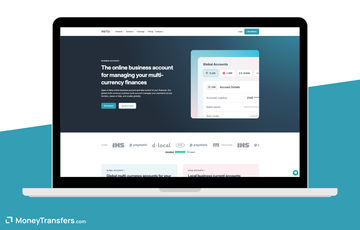
I'd say start with Verto if you need several business balances and want to collect overseas revenue before deciding what to convert.
Its Nigeria plans include a multi-currency wallet, with local and global receiving accounts subject to eligibility and compliance checks.
Local receiving details use domestic clearing systems, whereas global details receive through SWIFT, so give clients the instructions for their payment method.
The free plan still charges 0.5% on non-naira collections, making receipt volume an important part of your monthly cost.
Verto account features
Feature | What you get |
|---|---|
Business access | Nigeria company plans, subject to onboarding |
Balances | Multi-currency wallets, including USD, GBP, EUR and NGN |
Local account range | GBP, EUR, USD, NGN, KES and ZAR across eligible accounts |
Global receiving | 25+ currencies through SWIFT, distinct from local account coverage |
Team access | Multi-user tools, advanced permissions depend on plan |
Currency reuse | Pay from retained balances and convert when required |
Legal arrangement | VertoFX Ltd for relevant international services, Verto Financial Technologies for Nigerian local services |
The Nigerian tariff differs from Verto's general pricing, and currency conversion remains a separate cost from collecting revenue.
Cost | Verto Nigeria |
|---|---|
Monthly plan | Free $0, Lite $15, Emerging $35, Enterprise custom |
Non-naira collection, Free | 0.5% |
Non-naira collection, Lite | 0.5% on first $10,000, 0.3% above |
Developed-market FX | 0.6% Free, 0.5% Lite, 0.4% Emerging |
Other-market FX | 0.6%–2% Free, 0.5%–2% Lite, 0.4%–2% Emerging |
SWIFT payment | $25 on standard plans |
NGN collection and local payment | Free under Nigeria tariff |
Receiving $10,000 on Free would create a $50 collection charge before any conversion or payment fees, using the listed 0.5% rate.
I suggest keeping the account for working currency balances and assessing its fee tiers against your normal receipts.
GTBank suits clients paying through correspondent banks
GTBank's business inflow service receives USD, GBP and EUR into an active domiciliary account matching the currency sent.
That suits you if overseas clients can send bank wires and you want their revenue retained in a Nigerian bank account.
Other incoming currencies are converted into one of those three, so this account does not preserve every currency a client might send.
I'd say use its exact correspondent instructions on invoices, because the bank's SWIFT code alone does not supply every required routing detail.
GTBank account features
Feature | What you get |
|---|---|
Business structures | Business domiciliary applications include sole proprietorships and partnerships |
Confirmed retained inflows | USD, EUR and GBP |
Receiving route | Foreign-currency bank inflows through correspondent banks |
Other inflow currencies | Converted into a supported currency |
Invoice instructions | Business name, account number, bank SWIFT and correspondent details |
Account setup | Company/business registration and entity documents |
Balance use | Withdraw or use foreign inflows through permitted account channels |
The price depends on how you receive and use the currency, so obtain the corporate domiciliary tariff alongside the account instructions.
Cost | GTBank |
|---|---|
Account charges | Corporate domiciliary tariff applies |
FX | Bank quote when conversion is required |
Wire deductions | Sending and correspondent-bank charges may apply |
I think it is worth considering for retaining major-currency bank receipts, particularly if your finance team already uses GTBank's business banking.
Access adds domestic standing-order options
Access's business domiciliary account lets you retain foreign money, with transfers available through online banking and a security token.
It also supports standing orders to Access and other Nigerian banks, which can help when your business has recurring permitted currency payments.
Cash withdrawals carry a 0.5% handling charge, so frequent access through cash can make the account more expensive to operate.
Access account features
Feature | What you get |
|---|---|
Eligibility | Individuals and corporate entities, with business documentation |
Core currencies | USD, EUR and GBP under the account-opening requirements |
Receipts | Currency inflows, cash deposits and foreign cheques |
Holding | Foreign-currency current account |
Online access | Internet banking and security token |
Domestic instructions | Transfers and standing orders to Nigerian bank accounts |
Corporate documents | Registration, signatories, board resolution and company search as applicable |
I'd say compare its electronic payment charges with your expected cash withdrawals before selecting the account for day-to-day foreign spending.
Cost | Access |
|---|---|
Cash withdrawals | 0.5% cash handling charge |
Minimum daily balance | Zero under the domiciliary FAQ |
Transfers and conversion | Relevant business tariff and bank FX quote |
|---|
The account-opening deposit is money held in your account, so separate it from fees when comparing the initial cost.
Zenith gives you a corporate currency mandate
Zenith's corporate application supports dollar, euro and sterling domiciliary accounts, including limited companies, partnerships and sole proprietorships.
I think it is worth considering when your currency receipts sit alongside trade banking, because its domiciliary application covers source of funds and intended disposal.
That includes retaining funds for transfers or trade instruments, although access to a particular facility still needs the bank's approval.
Zenith account features
Feature | What you get |
|---|---|
Business structures | Limited company, partnership, sole proprietorship and other corporate categories |
Account currencies | USD, EUR and GBP on corporate application |
Entity ownership | Registered company/business account |
Receipt documentation | Sender, source of funds and expected inflow frequency |
Balance use | Domestic domiciliary transfers, offshore transfers and trade instruments subject to permission |
Digital operation | Corporate I-bank application covers nominated company accounts |
Account authority | Signatory mandate and corporate documents |
I'd say get its corporate charges in writing, including the route you will use to move unchanged currency balances.
Cost | Zenith |
|---|---|
Account and wire charges | Corporate tariff and agreed services |
Conversion | Zenith FX quote |
Other deductions | Correspondent charges on relevant bank wires |
Avoid selecting a cash-only currency product if your main purpose is collecting overseas wires and retaining money for electronic business payments.
UBA keeps major-currency revenue within corporate banking
UBA offers corporate domiciliary accounts in major currencies, including dollars, euros and pounds, alongside its business current-account services.
It is worth considering if you already operate through UBA and want foreign balances under the same corporate banking relationship.
The corporate terms attach conditions to how domiciliary money can be withdrawn, so the funding method affects how you subsequently access it.
UBA account features
Feature | What you get |
|---|---|
Account category | Corporate domiciliary |
Named currencies | USD, EUR and GBP |
Holding structure | Currency-denominated accounts |
Business onboarding | Corporate account application and authorised signatories |
Account conditions | Minimum balance and relevant service-charge conditions apply |
Withdrawals | Funding-mode conditions under corporate terms |
Broader banking | Separate corporate current and fixed-deposit products |
I suggest settling the withdrawal conditions before directing a new client to the account, especially when their money arrives through a foreign bank.
Cost | UBA |
|---|---|
Account charges | Relevant corporate domiciliary tariff |
Minimum balance | Account-specific conditions |
FX and transfers | Bank quote, applicable transmission charges and intermediary deductions |
UBA's personal Freedom and Kiddies domiciliary accounts have different limits and functions, so their fees do not establish your corporate account costs.
Retaining dollars does not create local US banking
A Nigerian dollar domiciliary account holds USD, but an overseas client will normally need the bank's international receiving instructions.
Local US ACH details are a different collection method, and a dollar balance alone does not mean you have them.
If your client can only pay through ACH, I'd say choose an eligible account with that receiving route before opening a domiciliary account.
For a company receiving $8,000 and expecting $5,000 of dollar expenses, retaining that matched amount avoids converting it into naira and buying dollars again.
You still need enough naira for local obligations, and receiving or outgoing charges can apply even when no conversion happens.
Protection depends on the account arrangement
The Nigerian bank options hold deposits, with eligible Deposit Money Bank coverage subject to NDIC's ₦5 million limit and exclusions.
Foreign-currency deposits are an insured deposit category, but that does not create a separate unlimited dollar guarantee for each account.
Verto's relevant international services use electronic-money arrangements, with safeguarding of client funds rather than ordinary Nigerian bank-deposit insurance.
I suggest reading the entity and protection terms for the specific accounts activated, because Nigerian local services and international wallets have different arrangements.
How to open your business currency account
Match the incoming payment method
Confirm the currencies clients send and whether they use a local clearing system or an international bank wire.
Prepare your business documents
Gather registration records, signatory identification, ownership information and company mandates, with the account-opening documents required for your legal structure.
Document foreign receipts
Prepare invoices or contracts explaining incoming revenue, plus expected amounts and the ways you intend to use retained balances.
Activate the correct account instructions
Check that receiving details show the permitted business beneficiary and test the payment route before moving a recurring client invoice.
When foreign revenue needs to pay an overseas supplier, compare the transfer cost before moving money out of your business account.
Compare business transfer costs from Nigeria
Enter your destination and amount to compare the available rates for moving money from Nigeria.Questions about business currency accounts
Can you use a personal domiciliary account for a company?
Your company should use an account opened for its business activity, with the correct company name and authorised access.
For private foreign income or travel spending, personal multi-currency accounts cover a different set of account needs and permissions.
Does opening an account guarantee FX funding?
Holding foreign revenue and purchasing foreign currency are separate activities, so an empty domiciliary account does not guarantee dollars for your next invoice.
Which costs should you compare?
Include account charges, foreign receipt deductions, currency conversion and the cost of withdrawing or paying retained currency in your normal business month.
Before applying, ask your shortlisted bank or platform for receiving instructions and a tariff covering the exact way your business will use its currency.
Our methodology & why trust us
We assessed Nigerian business eligibility, retained currencies, receiving routes and the ability to use balances after overseas revenue arrives.
The selection includes corporate domiciliary banking because those accounts meet business currency needs alongside online wallet platforms.
Official business product information and entity applications support inclusion, with unresolved bank prices omitted rather than replaced by personal account tariffs.
Our review process explains how we assess account options and the evidence behind the comparison.
Sources
Best money transfer apps
These apps support different overseas payment tasks, so choose the route that matches your recipient and the money you hold.
Receiving money from abroad
Family support, your own savings and an overseas client payment can require different receiving arrangements, even when all three come from the same country.
Mobile money transfers
A mobile wallet holds money that you can spend or transfer through your phone, using the functions attached to that account.
Instant money transfers
Pay a participating African bank directly from naira
Sending large amounts abroad
Africhange suits naira-funded online payments, while Regency FX is worth contacting for a managed NGN transfer if you live outside Nigeria.
Contributors

Please share your experience with …