
The Best Multi-Currency Business Accounts in the Philippines in 2026
Table of Contents

Author: Artiom Pucinskij
Table of Contents
I suggest starting with Wise Business for a Philippine company collecting overseas client fees and keeping foreign balances available for subscriptions or supplier expenses.
BPI suits companies holding several foreign currencies within Philippine banking, while Metrobank and RCBC offer narrower dollar accounts for company funds.
Payoneer deserves a separate look when marketplaces already send your business revenue through its network, because collection and withdrawal charges can change the result.
Search Now & Save On Your Transfer
Instantly view live exchange rates, fees & features.
At a glance
Account | Best use |
|---|---|
Wise Business | Foreign client receipts and multi-currency team spending |
BPI corporate foreign-currency savings | Several currencies within Philippine business banking |
Payoneer Business | Marketplace and platform revenue |
Metrobank MetroDollar business savings | Company USD receipts and dollar retention |
RCBC corporate Dragon Dollar Savings | USD reserves and company online payments |
What does a business currency account let you do?
You can receive company income in foreign currency, retain the balance and spend or pay from it without first converting everything into pesos.
An agency paid in dollars can keep part of that revenue for dollar software bills, while converting the remainder for Philippine payroll.
Some accounts hold many currencies in one interface, while a bank may require a separate deposit account for each currency.
You will benefit from one if… | Find alternatives if… |
|---|---|
Overseas clients pay your company in USD, EUR or other foreign currencies | Your company only receives and spends pesos |
Foreign receipts will cover matching overseas expenses | You only need occasional supplier payments |
You need company balances separate from personal earnings | You want an account for private travel spending |
You reconcile foreign revenue before converting for local costs | You need borrowing more than currency retention |
For occasional invoices, international business money transfers can handle the payment without leaving several foreign balances for you to manage.
Private travel money and household overseas income fit personal multi-currency accounts, where company ownership and employee permissions are different requirements.
Five accounts I suggest comparing
The following accounts accept Philippine business use, although the two dollar-only bank options provide a narrower service than a broad multi-currency account.
Account | What you can retain | Why I'd consider it | Main trade-off |
|---|---|---|---|
Wise Business | 40+ currencies | Local receiving routes and reusable team balances | PHP-funded foreign conversion limits |
BPI corporate foreign-currency savings | Nine published foreign currencies through separate accounts | Bank deposits with corporate currency coverage | Minimum balance per account and bank payment charges |
Payoneer Business | Approved foreign balances including USD, EUR and GBP | Marketplace collection and supplier reuse | Account-specific receiving, withdrawal and card fees |
Metrobank MetroDollar savings | USD | Dollar retention within local company banking | Dollar-only account and business-channel enrolment |
RCBC corporate Dragon Dollar Savings | USD | Corporate dollar savings and online supplier payments | US$2,500 required balance |

"Wise Business is used by 300,000+ businesses each year. Easy integrations with Xero, QuickBooks, FreeAgent and more are available."

"Payoneer specializes in cross-border payments for freelancers, online sellers, and businesses. It offers local receiving accounts in major currencies and easy integration with global marketplaces."


Wise Business gives an agency room to reuse foreign revenue

A company collecting dollars from American clients can receive through local account details and keep those dollars available for its next business expense.
Wise combines that receiving access with foreign balances, team permissions and business cards, which is why it leads my shortlist for service companies.
Its 22 receiving currencies include local and SWIFT routes, so you should give clients the instructions for their specific payment method.
Wise Business account features
Feature | What you get |
|---|---|
Access | Eligible Philippine companies and self-employed businesses |
Holding | 40+ currencies |
Receiving | 22 currencies through local or SWIFT routes, not 22 domestic networks |
Business ownership | Business onboarding separate from a personal account |
Cards | Physical and digital cards for you and eligible team members |
Controls | Team access and spending controls |
Reuse | Pay suppliers or spend retained currency, convert for PHP bills |
The Philippines has no Wise holding cap, but converting pesos into foreign currency is limited to US$10,000 equivalent per transaction and US$50,000 per calendar month.
A separate ₱10 million monthly funding and receipt limit applies to personal and freelancer business accounts, rather than every incorporated company account.
Cost | Wise Business Philippines |
|---|---|
Setup | ₱1,400 once, no monthly subscription |
Holding | Free |
Conversion | Currency-dependent, from 0.27% |
Domestic non-wire receipts | Free in supported currencies |
USD wire/SWIFT receipt | US$6.11 |
GBP/EUR SWIFT receipt | £2.16 / €2.39 |
Same-currency Wise-to-Wise payout | Free |
External-bank payout without conversion | Currency and route fee, no additional Philippine cross-border surcharge |
Card issue and standard delivery | First and team cards ₱0 under the published business card tariff |
Card purchases | Free in held currency, conversion fee if currency absent |
ATM withdrawals | ₱13,000 monthly allowance, 2.69% on excess, operator fees possible |
My suggestion is to check your regular peso-funded conversion volume before choosing Wise, because those limits can constrain larger supplier purchases despite unrestricted holding.
BPI provides several corporate foreign-currency deposits
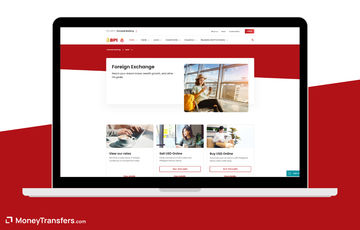
BPI offers corporate savings in nine foreign currencies, giving businesses a bank alternative when their receipts extend beyond US dollars.
The list includes USD, AUD, GBP, CAD, CHF, EUR, HKD, JPY and CNY, with a separate required balance for each account.
My suggestion is to compare BPI first among local banks for that breadth, especially when your business already uses its corporate services.
BPI corporate foreign-currency savings account features
Feature | What you get |
|---|---|
Business access | Corporate deposit schedule explicitly published |
Currencies | USD, AUD, GBP, CAD, CHF, EUR, HKD, JPY and CNY |
Account structure | Separate currency deposits |
Receiving | Bank remittances credited to the relevant foreign-currency account |
Payments | FCDU-funded outward remittances, purpose and supporting documents apply |
Management | BizLink is a separate corporate service with its own enrolment terms |
Protection | Eligible deposits fall under PDIC rules |
Receiving through SWIFT and paying from a foreign-currency deposit both carry bank charges, even when you leave the currency unchanged.
The published standard remittance charges below can vary with correspondent agreements, and your corporate service arrangement may use a separately agreed tariff.
Cost | BPI corporate deposits |
|---|---|
Opening and monthly average balance | 500 units each for USD/AUD/GBP/CAD/CHF/EUR/HKD, JPY50,000, CNY3,500 |
USD SWIFT receipt | Published minimum US$6.50, correspondent charges additional |
EUR/GBP SWIFT receipt | Published minimum €5.10 / £4.50 |
Outward payment from FCDU | Published standard US$14 service commission, correspondent and beneficiary charges additional |
Conversion | Bank exchange quote, no universal business margin published |
Foreign currency bought through BizLink for a declared remittance must reach that beneficiary by its due date, so purchased funds have purpose-related conditions.
Retaining earned foreign revenue and buying currency for a documented payment can therefore involve different requirements under your company's banking arrangement.
Payoneer fits revenue already arriving through platforms
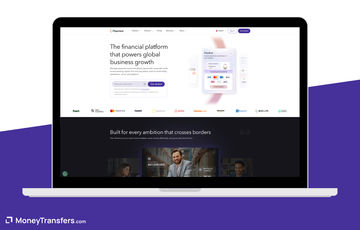
Payoneer can consolidate marketplace and overseas client revenue, then let your business retain approved currency balances or pay suppliers from them.
I think it is worth considering when your platforms already support Payoneer, provided you compare the full receipt and withdrawal cost against direct bank collection.
Payoneer Business account features
Feature | What you get |
|---|---|
Philippine access | Official company onboarding for registered Philippine businesses |
Holding | Approved foreign balances including USD, EUR and GBP |
Receiving | Eligible receiving-account details and marketplace payouts |
Account type | Company registration differs from the Individual route for self-employed traders |
Reuse | Business supplier payments and withdrawals to local banks |
Management | Company access and verification requirements |
Cards | Eligibility-dependent, not included automatically |
Payoneer's January 2026 pricing is a global common-fee schedule, so the figures below are indicative until your Philippine account tariff confirms them.
Cost | Payoneer common tariff |
|---|---|
Foreign receiving-account collection | 1%, minimum US$1 equivalent |
Marketplace receipts | Platform-dependent |
Between currency balances | 0.5% |
Same-currency bank payout | 1.2–4% for the published recipient-local-currency route, possible minimum |
Annual account fee | US$29.95 if receipts below US$6,000 equivalent over 12 consecutive months, plan exceptions |
Card annual fee | US$29.95 if eligible |
Card purchases | Up to 1.8% without conversion, free when merchant and issuing countries match, up to 3.5% with conversion |
An Individual Payoneer account can serve a self-employed business, but an incorporated company's documents and linked bank account must identify the company.
Metrobank keeps a company's dollar balance in local banking
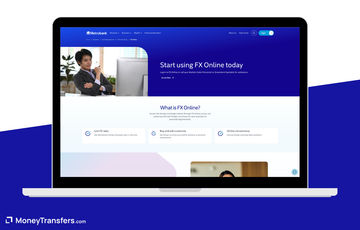
Metrobank's business MetroDollar Savings account explicitly accepts corporations, partnerships and sole proprietors, allowing company dollar receipts to remain in a dollar deposit.
This is a USD account, so my suggestion is to shortlist it for dollar-heavy revenue rather than a business needing several currencies in one wallet.
Metrobank MetroDollar business savings account features
Feature | What you get |
|---|---|
Eligibility | Corporations, partnerships and sole proprietors |
Holding | USD |
Access | Business deposit account opened through a branch |
Receipts | Dollar payments credited to the account |
Records | Monthly statements |
Services | Business FX Online is separately arranged |
Protection | Eligible bank deposit under PDIC rules |
The published charges include a short holding period after deposit, which deserves attention if you expect to withdraw incoming dollars immediately.
Cost | Metrobank MetroDollar |
|---|---|
Opening deposit | US$500 |
Maintaining balance | US$500 |
Withdrawal within five banking days of deposit | 0.25% handling/swap charge |
Close within one month | US$10 |
Interbranch foreign-currency cash deposit | 0.25% |
Incoming and unchanged-currency outgoing wires | Confirm current business-channel charges and correspondent deductions before opening |
Currency conversion | Business exchange quote applies |
I suggest asking Metrobank to price one normal month's incoming and outgoing wires, because the deposit minimum alone does not reveal that cost.
RCBC combines dollar reserves with company online payments
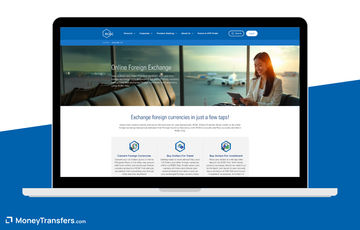
RCBC offers corporate Dragon Dollar Savings with a US$2,500 opening deposit and required average daily balance.
In my opinion, RCBC suits dollar reserves that also fund overseas invoices through company online banking, provided the required balance fits your cash flow.
RCBC corporate Dragon Dollar account features
Feature | What you get |
|---|---|
Account type | Corporate savings deposit |
Holding | USD |
Opening route | Company banking application and verification |
Records | Passbook |
Reuse | Bank payments, including separately enrolled corporate online routes |
Breadth | Dollar-only product in this comparison |
Protection | Eligible deposits covered under PDIC rules |
Cost | RCBC corporate Dragon Dollar |
|---|---|
Opening / required average balance | US$2,500 / US$2,500 |
Below required balance | Published FCDU fee US$10 |
Early closure within six months | US$5.50 |
SWIFT incoming | US$10 |
SWIFT outgoing | US$8 through RCBC Online Corporate, US$10 over the counter |
OUR payment option | Additional US$25 |
Domestic USD PDDTS outgoing | US$11 commission plus US$5 bank fee |
Domestic USD receipt | US$6.50 PDDTS fee |
Currency conversion | Business exchange quote applies |
I suggest choosing a lower required balance elsewhere if tying up US$2,500 would leave your business short of cash for local expenses.
What will holding foreign revenue actually cost?
Count receipts, retained-currency payments, conversion and card spending separately, because keeping a balance free can still leave several charges around it.
For example, five US-dollar SWIFT receipts cost US$30.55 at Wise, compared with BPI's published minimum US$32.50 before correspondent deductions.
The same five receipts cost US$50 with RCBC's SWIFT receiving charges, but outgoing payments and minimum balances can change your monthly comparison.
A US client paying Wise through eligible domestic non-wire details avoids that receipt charge, which can be more useful than a small conversion saving.
My suggestion is to compare your actual collection method before moving revenue, then include the cost of paying suppliers in the currency you kept.
How are company balances protected?
BPI, Metrobank and RCBC are Philippine banks, while Wise and Payoneer provide payment accounts with different legal protections from insured bank deposits.
PDIC increased the maximum deposit insurance coverage to ₱1 million per depositor per bank from 15 March 2025, subject to its eligibility rules.
Eligible foreign-currency deposits are included under PDIC rules, and holding several currencies at one bank does not create a separate limit for each currency.
Wise Pilipinas operates under BSP registration, but its payment balances should not be described as a PDIC-insured corporate bank deposit.
Payoneer's contracting entity and applicable regulatory terms determine its fund protections, and its foreign receiving details do not themselves create Philippine deposit insurance.
I suggest keeping the company's near-term peso bills funded locally, so foreign receipt delays or verification requests do not interrupt payroll.
Opening a business currency account
Prepare documents for the company and its owners before applying, then confirm that the approved account can receive the currencies your clients actually send.
Identify the account owner
Use the company name for an incorporated business, and choose the provider's correct self-employed route if you operate as a sole proprietor.
Prepare the business records
Gather registration, tax and address records, identification for authorised representatives, ownership information and evidence explaining your expected client receipts.
Confirm receipt and reuse routes
Ask whether your clients can use domestic details or SWIFT, and whether retained balances can pay the suppliers or cards you need.
Approve the fee schedule
Check minimum balances, receipt charges, unchanged-currency payouts and conversion limits against one normal month of your company's activity.
Receive a first business payment
Give the client the exact approved account instructions, then reconcile the credited currency, deductions and invoice before directing regular revenue there.
Compare the cost of your next overseas business payment before deciding how much retained revenue to convert or transfer.
Compare business transfer costs from the Philippines
Enter your destination and amount to compare the available rates for moving money from the Philippines.Questions about business currency accounts in the Philippines
Can my company keep dollars instead of converting to pesos?
Yes, eligible foreign-currency bank deposits and approved payment-account balances can retain dollars, subject to account terms, verification and the source of funds.
Do all five accounts hold multiple currencies?
No, Wise and Payoneer provide several balances, BPI offers separate corporate currency deposits, and the Metrobank and RCBC products here are dollar-only.
Can a personal account receive my company's sales?
An incorporated company should use an approved company account, while a sole proprietor needs the provider's account route that expressly supports self-employed business activity.
Are Philippine Wise limits the same for every business?
The peso-funded foreign conversion limits apply to business accounts, while the ₱10 million monthly funding and receipt cap specifically includes freelancer business accounts.
Which account would I start with?
For a Philippine service company collecting foreign client fees, my suggestion is to start with Wise and compare BPI if holding money at a local bank takes priority.
For a dollar-only company, I suggest adding Metrobank or RCBC to that comparison and requesting the complete business-channel fees before deciding.
Our methodology & why trust us
We assessed Philippine business access, currency holding, receiving routes and the costs of retaining and reusing foreign revenue across payment accounts and local banks.
Our review process explains how we assess providers and the evidence behind our account choices.
Sources
Instant money transfers
Pay directly from your account into fast overseas networks
Mobile money transfers
A mobile wallet holds money you can use through an app, including payments, transfers and withdrawals supported by that particular account.
Best money transfer apps
These apps support different receiving methods, from foreign bank deposits to selected wallets and cash collection.
Receiving money from abroad
Decide where you want the money available, because collecting cash, receiving a wallet balance and keeping foreign currency involve different instructions.
Cheapest ways to transfer money internationally from the Philippines
The comparison shows available bank-payout quotes at PHP10,000 and PHP100,000 across popular destinations.
Contributors

Please share your experience with …