
The Best Multi-Currency Business Accounts in Switzerland in 2026
Table of Contents

Author: Artiom Pucinskij
Table of Contents
PostFinance is my leading bank option for a Swiss business retaining euros or dollars, while Wise suits a wider mix of foreign client currencies.
PostFinance gives you separate bank accounts by currency, while Wise provides a broader wallet with foreign receiving routes and company debit cards.
Airwallex and WorldFirst extend the wallet choices, while UBS and the cantonal banks connect retained currencies with an established Swiss banking relationship.
Search Now & Save On Your Transfer
Instantly view live exchange rates, fees & features.
At a glance
Account | Why I'd consider it |
|---|---|
PostFinance business currency accounts | Separate bank balances for recurring foreign receipts |
Wise Business | Several currencies with local overseas receiving routes |
Airwallex | Foreign receipts connected to team expenses and approvals |
WorldFirst | Marketplace revenue retained for supplier orders |
UBS Business Current Account | Foreign balances alongside wider business banking |
Zürcher Kantonalbank (ZKB) foreign-currency current account | Bank-held revenue with online international payments |
Basler Kantonalbank (BKB) business foreign-currency account | Currency accounts within a business banking package |
What can a business currency account do?
A business currency account lets you keep foreign receipts available for bills in the same currency, instead of converting the whole payment into francs immediately.
If your business receives euros from customers and pays a euro supplier each month, retaining that amount avoids buying back euros for the invoice.
Some banks create a separate account for each currency, while a multi-currency wallet displays several balances within the same account service.
You will benefit from one if… | Find alternatives if… |
|---|---|
Foreign receipts can fund expenses in the same currency | Receipts and bills are almost entirely in CHF |
Your clients need overseas local payment details | You only need a Swiss IBAN for domestic invoices |
You want to decide how much revenue becomes CHF | You expect holding currency to guarantee a favourable rate |
Several currencies need separate accounting records | An occasional international transfer covers the job |
If you need to pay an overseas supplier from CHF, our international business money transfers guide covers the conversion and payment options.
Seven business currency accounts to compare
The Swiss banks and specialist wallets solve different collection problems, so I compare their account structures before looking at the separate payment charges.
Account | Currency arrangement | Main account cost | Limitation |
|---|---|---|---|
PostFinance | CHF/EUR plus eight other currency accounts | CHF5/month CHF/EUR, CHF2/month other currencies at standard volume | Separate account for each currency |
Wise Business | Multi-currency wallet | CHF55 full setup, no monthly plan | Foreign receiving routes differ from a Swiss domestic bank account |
Airwallex | Multi-currency wallet through Netherlands entity | EUR19/month Explore, waived with qualifying EUR10,000 deposits or balance | Route charges and additional spend users apply |
WorldFirst | Retained balances with overseas receiving details | Individually agreed Swiss account tariff | Collection, FX and payout charges vary by arrangement |
UBS | Current accounts in CHF/EUR/USD and other common currencies | CHF20/quarter | International payment charges and FX rate apply |
ZKB | Current account in selected foreign currency | CHF7/month | Additional cards and international transactions cost separately |
BKB | Selected foreign-currency business account | CHF5/month standard, reductions with banking relationship | Booking charges and no Visa Debit on this account |


"Wise Business is used by 300,000+ businesses each year. Easy integrations with Xero, QuickBooks, FreeAgent and more are available."
"Airwallex offers a comprehensive financial platform for businesses. Make global transfers to 150+ countries, receive funds in 20+ currencies. Connect with popular software for a seamless approach."
"WorldFirst helps growing businesses control cross-border costs with forward contracts and tailored FX solutions. Manage 40+ currencies and make international payments with specialist support on-hand."
 - Logo.svg)
 - Logo.svg)
PostFinance separates your foreign receipts by currency
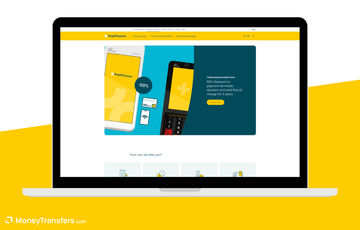
PostFinance is a strong fit when you already use e-finance and need a bank balance for the currencies your customers and suppliers share.
Its eight foreign-currency accounts cover AUD, CAD, DKK, GBP, JPY, NOK, SEK and USD, alongside separate CHF and EUR business accounts.
That means a euro-and-dollar operation can retain both currencies, but the setup involves two accounts rather than one wallet covering every foreign balance.
PostFinance currency-account features
Feature | What you get |
|---|---|
Access | Swiss business banking, companies and supported self-employed businesses |
Holding | Separate accounts in CHF, EUR and eight additional currencies |
Receiving | Account-specific banking instructions, receipts kept in account currency |
Payments | Online domestic/international transfers and euro SEPA |
Team | e-finance rights and collective-signing arrangements |
Accounting | Electronic statements and business reporting channels |
Operator | PostFinance Ltd, Swiss bank |
Cost | PostFinance business currency accounts |
|---|---|
CHF/EUR account | CHF5 per account/month at standard domestic volume |
Other currency account | CHF2 per account/month below 60,000 domestic transactions yearly |
Electronic statement | Free |
International receipt | No PostFinance receipt charge |
Standard online EUR SEPA | Free |
Other international payout | Route and cost-option tariff applies |
Conversion | Margin included in daily or real-time rate |
My suggestion is to calculate the combined account fees before opening currencies you rarely use, particularly when only euro revenue is significant for your business.
For CHF, EUR and USD accounts at standard volume, the ongoing account fees total CHF12 monthly before other services or any qualifying promotion.
Wise provides foreign receiving routes without a monthly plan
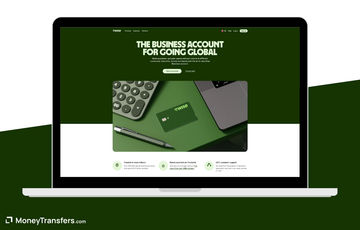
Wise is attractive when clients pay through local overseas networks, particularly if a Swiss bank wire is awkward for their invoice-payment process.
You can retain more than 40 currencies and use a business card, although receiving capabilities are narrower than the full holding list.
I suggest keeping Swiss domestic banking alongside it if QR-bills and other local services form a large part of your daily business administration.
Wise Business features
Feature | What you get |
|---|---|
Access | Supported Swiss business applications and activity checks |
Holding | 40+ currencies |
Receiving | 22 receiving currencies across local and SWIFT arrangements |
Cards | Physical/digital business debit cards |
Users | Team permissions and payment approvals |
Accounting | Supported accounting connections and exports |
Operator | Wise Payments Limited, electronic-money arrangement |
Cost | Wise Business Switzerland |
|---|---|
Full setup | CHF55 one-off |
Monthly account/holding | CHF0 |
Conversion | Currency-dependent fee from 0.19%, mid-market rate |
Eligible local receipts | Free |
USD wire/SWIFT receipt | USD6.11 |
GBP/EUR SWIFT receipt | GBP2.16 / EUR2.39 |
Same-currency external-bank payout | Currency and route-dependent charge |
Matched-currency card purchase | Free |
The fee for converting money is separate from a same-currency bank payout, so compare both when withdrawing retained revenue to another business account.
Airwallex organises foreign balances around a finance team
.png)
Airwallex accepts Swiss-registered businesses through its Netherlands entity, giving an importer another way to collect foreign revenue and allocate it to overseas expenses.
In my opinion, it is worth considering when several people approve supplier bills or manage spending, because those workflows can justify its subscription beyond the currency accounts themselves.
Its Global Account locations provide specific receiving routes, and access to Swiss business onboarding does not establish a local Swiss IBAN for every balance.
Airwallex account features
Feature | What you get |
|---|---|
Swiss access | Swiss-registered businesses onboarded to Airwallex Netherlands |
Currency balances | 20+ currencies advertised for collection and holding, capability varies by route |
Receiving | Local and SWIFT instructions depend on the Global Account location |
Team tools | Bill payments, employee spending, permission and approval workflows |
Accounting | Xero and QuickBooks connections, additional integrations by plan |
Account protection | Electronic money safeguarded separately, Dutch deposit guarantee does not cover the wallet |
Cost | Airwallex Netherlands tariff |
|---|---|
Explore | EUR19/month, waived with EUR10,000 qualifying monthly deposits or end-of-cycle wallet balance |
Grow | EUR49/month, additional transaction charges remain |
Extra spend users | Five included, then EUR6 Explore or EUR12 Grow per active user/month |
Manual conversion | 0.5% listed major currencies, 1% other currencies |
Card automatic conversion | 1% when enabled and the matching balance is insufficient |
CHF/GBP local and EUR SEPA payouts | Free |
Other local payouts | Explore charges generally EUR1–7 from 12 October 2026, CNY percentage exceptions, waived on Grow/Accelerate |
SWIFT payouts | EUR10 shared charges or EUR20 sender-paid charges |
Receiving | 0.6% KRW/VND/BRL/MYR, USD15 US Fedwire, other Global Account receipts 0% |
These published subscription and transaction figures exclude applicable VAT, and the supplier's receiving bank can still affect the amount credited on a wire payment.
WorldFirst keeps marketplace receipts available for restocking
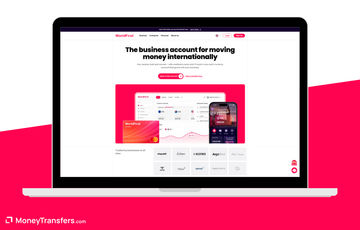
WorldFirst supports Swiss businesses using a World Account to retain foreign funds until a withdrawal or payment, with overseas receiving arrangements for eligible collections.
That setup fits an online seller receiving overseas marketplace proceeds, especially when those receipts will fund the next order without first becoming Swiss francs.
My suggestion is to check the marketplace's payout currency and receiving instructions before moving collections, because payment coverage is much wider than the account-detail list.
WorldFirst account features
Feature | What you get |
|---|---|
Swiss access | Eligible Swiss-registered businesses and activity checks |
Retaining funds | Several currency balances retained for later withdrawal or payment |
Receiving | Overseas account details, individual currencies and local routes differ |
Marketplace collections | Connections with supported marketplaces and payment gateways |
Administration | Team permissions and Xero integration |
Cost | WorldFirst Swiss business account |
|---|---|
Opening and account maintenance | Individually agreed account tariff |
Receiving and holding | Applicable currency and collection arrangement |
Currency conversion | Quoted FX rate and margin under the Swiss account agreement |
Bank payout | Currency, network and cost-option charges |
World Account payment | Applicable account and payment terms |
I suggest pricing the complete collection-to-supplier cycle using the Swiss account agreement, including how much foreign revenue remains after receiving, conversion and payment charges.
UBS keeps foreign balances within a broader banking relationship
UBS makes sense if you need foreign balances alongside business lending or other banking services that your company already manages through the bank.
Its business current account is available in CHF, EUR, USD and other common currencies, with electronic banking and payment approvals.
The limitation is that account maintenance does not cover every international transaction, and the charging instruction can affect deductions from incoming money.
UBS business current-account features
Feature | What you get |
|---|---|
Access | Swiss business onboarding and ownership checks |
Holding | Account in a supported chosen currency |
Receiving | UBS bank-account instructions, overseas receipts supported |
Team | E-banking access and secure payment approvals |
Wider banking | Credit and investment services separately agreed |
Reporting | Statements and electronic reporting |
Operator | UBS Switzerland AG |
Cost | UBS business current account |
|---|---|
Maintenance | CHF20/quarter |
Included activity | 500 electronic domestic CHF/EUR payments under account terms |
Standard electronic overseas non-SEPA payment | CHF5 |
Incoming overseas non-SEPA with SHA/BEN | CHF6 UBS cost, third-party charges may apply |
Standard SEPA | Included/no-charge terms, allowance conditions apply |
Conversion | UBS rate, no universal fixed account FX percentage |
My suggestion is to compare the cost of your usual overseas receipts with the banking services you would otherwise need to keep at a second institution.
ZKB offers online payments from a foreign-currency bank balance
ZKB's foreign-currency current account suits companies based in Switzerland that regularly receive or pay foreign money and want e-banking access to that balance.
It supports common foreign currencies and lets you withdraw the available balance without a notice period, giving you flexibility when business expenses fall due.
USD and EUR credit cards are separate paid services, so the account fee alone does not buy a multi-currency company spending package.
ZKB foreign-currency account features
Feature | What you get |
|---|---|
Access | Swiss-based companies, associations and organisations |
Holding | Chosen common foreign currency |
Receiving | ZKB IBAN/BIC bank instructions |
Payments | E-banking international transfers and SEPA |
Cards | Paid USD/EUR credit-card services available separately |
Balance return | No withdrawal notice or restriction |
Interest | No credit interest |
Cost | ZKB foreign-currency account |
|---|---|
Maintenance | CHF7/month |
Electronic standard SEPA | Free under applicable transaction terms |
Other electronic foreign payment | CHF4 |
Receipts | CHF0.20 beyond 600 included transactions under the tariff allowance |
Sender-pays cost option | CHF20 additional flat charge |
Conversion | Bank exchange rate |
For a business mostly collecting euros and paying suppliers through SEPA, I suggest comparing the account fee and included transactions before paying for a broader wallet.
BKB can fit a business already using its banking package
BKB's foreign-currency account has no maintenance charge within its Comfort and Premium business packages, although the package itself and payment transactions still have costs.
Outside those arrangements, the standard account fee is CHF5 monthly, with a lower fee for qualifying credit or mortgage relationships.
I suggest it if your current BKB setup already covers Swiss operations and you want foreign revenue accounted for within that relationship.
BKB foreign-currency business account features
Feature | What you get |
|---|---|
Access | Business-client onboarding with BKB |
Holding | Common foreign currencies, including USD, GBP and JPY |
Payments | Foreign-currency bank transactions, payment tariff separate |
Accounting | Digital banking and accounting-software connection |
Card | No Visa Debit on this account, paid business credit card separate |
Balance | Available without withdrawal restrictions, no credit interest |
Operator | Basler Kantonalbank |
Cost | BKB foreign-currency business account |
|---|---|
Opening | Free |
Standard maintenance | CHF5/month equivalent |
Qualifying credit/mortgage relationship | CHF2/month with at least CHF100,000 equivalent limit/mortgage |
Comfort/Premium package | Currency-account maintenance included, package costs separate |
Booking | CHF0.40 equivalent per entry |
Electronic foreign payment | CHF4, eligible SEPA free, OUR adds CHF20 |
Closure | CHF20 equivalent |
A maintenance waiver is less valuable when many entries attract booking costs, so include your expected receipt and payment count in the calculation.
A Swiss IBAN and foreign local details do different jobs
A Swiss foreign-currency account lets you retain the selected currency, but its Swiss IBAN does not automatically give clients local US ACH or UK payment details.
If your euro customers can pay through SEPA, a Swiss euro account can be sufficient, while American customers may prefer US domestic receiving instructions.
My suggestion is to match the route to the customer's accounts-payable system, then check its receipt charge before judging the account by its currency count.
Your bank's foreign-currency payment list also does not establish how many separate balances you can hold or which company cards use those balances directly.
Keep francs ready for Swiss commitments
Retaining euros for a euro stock invoice avoids an extra conversion, but your CHF payroll and tax obligations still need enough francs available on time.
For example, receiving EUR12,000 and retaining EUR7,000 for supplier bills leaves EUR5,000 to convert for domestic expenses, without predicting a better future exchange rate.
Include account subscriptions, receipt fees and outgoing payments when comparing the cost of that arrangement with converting the complete receipt immediately.
The benefits depend on matching expenses, and currency brokers offer separate contractual tools if a future foreign payment needs a fixed CHF budget.
Protection of your business balances
Swiss deposit insurance covers eligible bank deposits up to CHF100,000 per client and bank, including foreign currencies converted at the applicable insolvency exchange rate.
Company deposits qualify under the scheme's rules, and balances across several currency accounts at the same bank share the overall limit.
A virtual Swiss IBAN or correspondent-bank arrangement does not establish that you are the Swiss bank's contractual depositor, so it does not automatically provide this protection.
Wise's electronic-money arrangement uses safeguarding rather than Swiss bank-deposit insurance, which changes how funds are handled if the account company fails.
I suggest keeping essential Swiss bills funded through a working domestic route and saving account statements whenever foreign receipts form a large share of operating cash.
How to open your business currency accounts
Choose the currencies you will retain
Identify the foreign expenses your revenue can cover, then decide whether separate bank accounts or a shared wallet better fits the accounting workflow.
Prepare Swiss business and ownership records
Provide your registration and authorised-signatory details, with owner identification and trade documents explaining the expected origin and use of incoming money.
Confirm receiving routes and signing rights
Set the appropriate account permissions and collective approvals, then send clients the exact bank details for the currency and transfer method they use.
Reconcile the first transactions
Check a permitted receipt and payment against your statement, including deductions, before moving recurring overseas invoices and keeping larger balances in the account.
I suggest comparing the cost of moving your business funds before converting retained revenue for your next overseas payment.
Compare business transfer costs from Switzerland
Enter your destination and amount to compare the available rates for moving money from Switzerland.Questions about Swiss business currency accounts
Is a euro account enough for a business working with Europe?
If you primarily collect and spend euros, a separate EUR business account can cover the foreign balance without requiring a platform holding dozens of currencies.
Can you use a personal account for an AG or GmbH?
Keep company money within an account approved for its business use, even if personal multi-currency accounts already cover your own overseas spending.
Does retaining currency remove the need for conversion?
You still need to convert the money required for CHF expenses, and any foreign revenue exceeding matching bills remains exposed to exchange-rate movements.
Compare the receiving instructions with your next foreign invoice, then choose the account combination that keeps Swiss bills and matching foreign expenses funded.
Our methodology & why trust us
We compared Swiss business access, currency retention and receiving arrangements, with account tariffs and the distinction between bank deposits and electronic-money balances.
Our review process explains how official product evidence supports the account selection and editorial comparisons in this guide.
Sources
Mobile money transfers
A mobile wallet keeps an electronic balance, although the account behind a phone payment can also be a bank account.
Receiving money from abroad
Online receipt can mean a bank deposit, a foreign-currency balance or a payment inside an app, and each gives you a different outcome.
Instant money transfers
Send EUR directly to an eligible European bank
Best money transfer apps
Choose the app around your funding account and the way your recipient receives the money, including any foreign balance you want to keep.
Cheapest ways to send money abroad from Switzerland
These examples below cover popular destinations, plus sterling payments to the UK and dollar payments to the US.
Contributors

Please share your experience with …