
The Best Multi-Currency Business Accounts in Kenya in 2026
Table of Contents

Author: Artiom Pucinskij
Table of Contents
I suggest starting with Verto for a Kenyan company keeping revenue in several currencies, particularly when those balances will fund suppliers abroad.
Equity is a stronger fit when you mainly need dollar, euro or sterling deposits alongside local banking, while Stanbic adds business treasury and trade services.
KCB Sahl and NCBA also offer business foreign-currency accounts, giving businesses different ways to retain export income and manage overseas bills.
Search Now & Save On Your Transfer
Instantly view live exchange rates, fees & features.
At a glance
Account | Best fit |
|---|---|
Verto | Kenyan companies managing several trading currencies |
Equity Current Account | USD, EUR and GBP deposits with local bank access |
KCB Sahl Business Current Account | Sharia-compliant business currency accounts |
NCBA Business Current Account | Currency deposits within a growing company's banking relationship |
Stanbic Business Current Account | Foreign balances linked to trade and treasury services |
What does the account do for your business?
A business multi-currency account lets you receive overseas revenue, retain it in the original currency and pay matching expenses without converting everything into shillings.
For example, an exporter receiving dollars can keep enough for imported packaging and convert the remainder into KES for payroll and local transport.
Kenyan banks usually provide separate currency accounts, while a payment platform brings several balances together within its business dashboard.
You will benefit from one if… | Find alternatives if… |
|---|---|
Your company regularly earns foreign revenue | Most receipts and bills are in KES |
Overseas suppliers invoice in currencies you receive | You only send an occasional overseas payment |
You want to decide when to convert revenue | Your main need is a working-capital loan |
You reconcile foreign receipts separately | You need private travel spending or personal savings |
Occasional supplier invoices can use international business money transfers, and personal multi-currency accounts cover private money with different ownership and permissions.
Five accounts worth considering in Kenya
I'd say compare the account currency, receiving instructions and unchanged-currency payout cost together, because a bank's correspondent network does not provide overseas domestic account details.
Account | Why I'd consider it | Main cost to weigh |
|---|---|---|
Verto | Several currency wallets and eligible local collection routes | Non-KES receipt percentage and currency conversion |
Equity | Core foreign deposits without a monthly account charge | Incoming and outgoing SWIFT fees |
KCB Sahl | Business currency holding with an Islamic banking relationship | Maintenance, ledger and remittance charges |
NCBA | Foreign balances alongside SME banking and business controls | International transfer and online access charges |
Stanbic | Company treasury needs beyond collecting invoices | Currency service fees and Business Online subscription |
"B2B payments platform, originally built for businesses in emerging markets, especially in Africa and Asia, but now expanding globally. It offers access to exotic currencies, multi-currency wallets, and real-time FX."


Verto brings trading currencies into one business dashboard
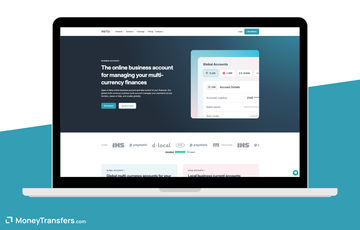
Verto suits a Kenyan company receiving overseas customer revenue and paying suppliers in several markets, without opening a separate bank account for each currency.
Its Kenya plans are specifically for Kenyan companies, so I suggest checking your registered structure before treating the account as suitable for a sole proprietor.
Verto account features
Feature | What you get |
|---|---|
Access | Kenyan companies, subject to business and compliance checks |
Holding | Multiple currency wallets, payout-only currencies cannot be retained |
Receiving | 25+ Global Account collection currencies via SWIFT |
Local details | Six supported local-account currencies globally, including KES, USD, GBP and EUR, subject to eligibility |
Payments | Local rails, SWIFT and V Pay between business users |
Controls | Multi-user access and API capabilities depend on plan |
Cost | Verto Kenya |
|---|---|
Monthly plans | Free US$0, Lite US$10, Emerging US$30, Enterprise custom |
Holding | Wallet and Global Account access free |
KES receipts | Free |
Non-KES receipts | Free plan 0.5%, Lite 0.5% first US$10,000 then 0.3%, Emerging adds 0.2% above US$350,000 |
Developed-market FX | Free 0.6%, Lite 0.5%, Emerging 0.4% |
Other-market FX | Free 0.6–2%, Lite 0.5–2%, Emerging 0.4–2% |
Unchanged-currency payouts | Supported local payments and ordinary business V Pay free, SWIFT US$15 |
Do not equate the exchange menu with currencies you can hold, because several supported currencies are only available for conversion and immediate payout.
On Free, a US$10,000 foreign receipt costs US$50 before conversion or payment, so collection charges deserve attention even if you retain the entire dollar balance.
Verto's Kenya service uses approved partnerships with Kenyan banks, but that does not make every wallet balance a deposit insured directly in your company's name.
Equity is my starting point for a straightforward foreign bank account
Equity's SME current account supports registered businesses holding USD, EUR and GBP, making it a useful fit when you need three major foreign currencies.
You can combine those accounts with local payments and branch banking, although I suggest confirming which company users can access each foreign balance online.
Equity Current Account features
Feature | What you get |
|---|---|
Business access | Registered business entities, documentation depends on legal structure |
Holding | USD, EUR and GBP alongside KES accounts |
Receiving | SWIFT using Equity beneficiary and correspondent instructions |
Account structure | Separate currency-denominated bank accounts |
Management | Business online banking and statements |
Records | Free monthly statements |
Local services | Cash, cheques, standing orders and eligible overdrafts |
Cost | Equity Kenya |
|---|---|
Monthly account charges | No maintenance or ledger fees for current account |
Foreign opening balance | US$100 or equivalent |
Foreign minimum balance | Tariff states US$100 equivalent, confirm application to SME account |
Incoming SWIFT | KES600 or foreign equivalent |
Outgoing unchanged-currency SWIFT | KES1,500 or foreign equivalent, correspondent costs may apply |
Business online subscription | Free annual EazzyBiz subscription |
Access tokens | First two free, additional KES3,500 |
Conversion | Bank exchange rate quoted for the currency pair |
The product page says there is no operating minimum, while the foreign-currency tariff specifies US$100 equivalent, so obtain the account-specific terms before funding it.
I suggest considering Equity for reusable bank deposits, while checking the full SWIFT deduction when smaller customer invoices make a fixed receipt fee expensive.
KCB Sahl provides foreign-currency holding within Islamic business banking
KCB Sahl is a useful option if your business wants a Sharia-compliant current account while retaining foreign revenue instead of converting each receipt.
The account supports USD, GBP, CHF, EUR, AUD and ZAR, giving it a broader named currency selection than the Equity account above.
KCB Sahl Business Current Account features
Feature | What you get |
|---|---|
Access | Registered businesses, companies and partnerships with supporting documents |
Holding | USD, GBP, CHF, EUR, AUD and ZAR, plus KES |
Receiving | Foreign bank transfers through KCB SWIFT arrangements |
Account structure | Currency-specific bank deposits |
Balance rules | No minimum operating or maximum balance on product page |
Access | Statements and cheque facilities, sole-proprietor ATM services |
Banking model | Sahl Islamic business banking |
Cost | KCB Sahl Kenya |
|---|---|
Holding and receiving | Obtain one account-specific quote for the foreign account, including opening balance, maintenance, ledger and inward transfer charges |
Foreign supplier payment | Remittance commission and outward SWIFT charges apply according to the currency and channel |
Conversion | KCB currency quote |
Tax | General tariff states 15% excise on money transfers and 20% on other bank fees and commissions |
For an exporter receiving more than dollars or euros, the six named foreign currencies give KCB Sahl a useful range within one banking relationship.
I'd say obtain the foreign-account tariff before opening, because monthly holding and receipt charges can outweigh the benefit of keeping a small occasional balance.
NCBA fits a company building its wider business banking relationship
NCBA's Business Current Account holds major foreign currencies and offers business banking services, making it suitable when overseas revenue sits within a broader SME relationship.
The first fifteen qualifying transactions avoid the KES30 transaction fee, but international transfer charges remain separate from that monthly allowance.
NCBA Business Current Account features
Feature | What you get |
|---|---|
Access | Business account with entity and signatory checks |
Holding | Major foreign currencies |
Receiving | Foreign-currency bank deposits through international transfers |
Business banking | Online and mobile access, relationship manager |
Transaction allowance | First fifteen qualifying transactions free of the additional transaction fee |
Records | Monthly electronic statements |
Local services | M-Pesa collection options, cheques and eligible lending |
Cost | NCBA Kenya |
|---|---|
Opening balance | KES2,000 business tariff, request foreign equivalent |
Ledger fee | Waived |
Extra transaction fee | KES30 after first fifteen qualifying transactions, on top of underlying service fee |
Incoming international transfer | KES750 general tariff, confirm any account-specific waiver |
Unchanged-currency international payout | KES1,950 online/mobile or KES2,400 manual |
Correspondent charges | US$15–30 in tariff, confirm charge option and actual deductions |
FX conversion | Bank quote, separate from transfer charge |
The general international receipt fee is KES750, with any account-specific waiver reducing that charge under the terms agreed for your business.
I suggest comparing the complete receipt and payment cycle against Equity, particularly if your company already pays for NCBA's online access and banking services.
Stanbic is a stronger fit when currency holding connects to trade services
Stanbic's business current account combines foreign-currency deposits with access to treasury, trade finance and company online banking, rather than treating every receipt as an isolated payment.
For a business importing stock or managing contractual foreign expenses, I value that banking relationship more than a long wallet currency menu.
Stanbic Business Current Account features
Feature | What you get |
|---|---|
Access | Companies and businesses with registration, tax and mandate documents |
Holding | Business foreign tariff includes USD, EUR, GBP and ZAR |
Receiving | SWIFT and telegraphic transfers into currency accounts |
Online banking | Business Online with subscription and company access controls |
Treasury | Foreign-exchange services with quoted exchange rates |
Trade services | Eligible trade finance and lending services |
Transfers | Account sweeping and inter-account transfers can be arranged |
Cost | Stanbic Kenya |
|---|---|
Monthly foreign account service | USD5.50 / EUR5.50 / GBP3.50 / ZAR40 |
Foreign ledger entry | USD1 / EUR1 / GBP0.75 / ZAR3 |
Incoming SWIFT/telegraphic transfer | KES1,150 |
Unchanged-currency outgoing SWIFT | 0.25%, minimum KES1,050, maximum KES5,250, confirm additional correspondent costs |
Business Online subscription | KES2,000 monthly |
Online forex payment | 0.25%, minimum KES1,050, maximum KES5,250 |
Online inter-account transfer | Free under Business Online tariff |
Conversion | 0% stated FX commission, bank exchange rate can still include a spread |
Business Online alone costs KES24,000 across twelve months, so I'd say count it before choosing Stanbic for a company with only occasional foreign receipts.
Decide how much revenue to keep in foreign currency
Start with expenses in the same currency as your customer receipts, then retain only the amount your company expects to reuse over its planning period.
Keeping dollars avoids an unnecessary round trip when suppliers also want dollars, but a retained balance can lose shilling value before you convert it.
For bank accounts, ask whether each currency needs its own account number and whether your finance staff can view and approve payments across all accounts.
For wallets, check which receiving route is available to your Kenyan company, because a global currency list does not guarantee domestic account details everywhere.
A small fixed SWIFT fee can dominate a low-value invoice, while a percentage receipt fee grows with revenue even when no conversion takes place.
Are foreign business deposits protected in Kenya?
KDIC covers eligible foreign-currency deposits at member institutions, with protection up to KES500,000 per depositor at each institution rather than a separate limit for each currency.
Your company's eligible accounts at the same bank share that limit, so opening dollar and euro accounts does not multiply the protection amount.
Payment wallets require a different assessment of the contracting entity and its fund-protection arrangements, even when local banks participate in collecting or paying funds.
How to open the right business currency account
Map your receipts and expenses
Record the currencies customers pay, the usual invoice size and which supplier bills you can pay using the retained balance.
Check business eligibility
Confirm your Kenyan registration, legal structure and sector qualify, then prepare registration records, KRA PIN, ownership details and authorised signatory documents.
Get account-specific costs
Ask for the holding fee, incoming transfer deduction, unchanged-currency payment charge, online access cost and any card conversion fee applying to your business.
Set company permissions
Create the appropriate signatory mandate or user approvals, then separate payment preparation from authorisation where your business needs that control.
Share correct receiving instructions
Give clients the instructions for the exact currency and route, then reconcile the invoice against the amount credited before retaining or converting it.
I suggest comparing the cost of moving your business funds before converting retained revenue for your next overseas payment.
Compare business transfer costs from Kenya
Enter your destination and amount to compare the available rates for moving money from Kenya.Frequently asked questions
Can a Kenyan company open Wise Business to hold foreign revenue?
Kenya is absent from Wise's current holding-country list, so I would not choose a new Wise account for a locally registered company's currency balances.
Sending money into Kenya or having an older account with different features does not establish new Kenyan business access to foreign-currency holding.
Can I use the company's foreign balance for card spending?
Some accounts offer cards, but confirm that the card can debit your company's foreign account directly before assuming it avoids conversion through KES.
A personal travel card or a sole-proprietor card allowance does not establish eligibility for a limited company's authorised users and signing mandate.
Is the provider with the most currencies the best account?
I'd say prioritise the currencies your business earns and reuses, then compare receiving access and total charges rather than choosing by a headline currency count.
For a company earning dollars and paying dollar suppliers, a well-priced USD bank account can be more useful than dozens of unused wallet currencies.
Our methodology & why trust us
We assessed Kenyan business eligibility, retained currency balances, receiving routes and the cost of reusing foreign revenue across payment accounts and local banks.
Our review process considers business features, fees and fund protection, with account-specific tariff differences identified where they affect your choice.
Sources
Best money transfer apps
These apps cover different receiving methods, from regional mobile wallets to foreign bank payments and overseas cash collection.
Instant money transfers
Send abroad from your existing M-Pesa wallet
Receiving money from abroad
The account you use every day is often the simplest destination, provided it can accept the payment and has enough capacity.
Cheapest ways to send money abroad from Kenya
The cheapest route delivers the most after matching the KES amount, destination, funding method and recipient outcome.
Best international money transfer services in Kenya
Choose the route around the recipient method first, because a strong wallet service can still be useless for a university or overseas bank account.
Contributors

Please share your experience with …