
The Best Multi-Currency Business Accounts in Brazil in 2026
Table of Contents

Author: Artiom Pucinskij
Table of Contents
C6 Conta Global Empresas is my pick for keeping dollars and euros alongside your Brazilian business account, especially if you already bank with C6.
For a business with one owner holding 100%, I suggest Wise when overseas clients pay in several currencies and you want to keep those payments available.
BS2 adds five foreign-currency balances and a digital company card, while Payoneer fits marketplace income and Inter works well for a business operating mainly in dollars.
You can open these accounts for a Brazilian business, but the number of owners, payment limits and account location affect which one will work for you.
Search Now & Save On Your Transfer
Instantly view live exchange rates, fees & features.
At a glance
Account | Best for | Main limitation |
|---|---|---|
C6 Conta Global Empresas | USD and EUR alongside your C6 business banking | Higher conversion spreads outside business hours |
Wise Business | Receiving several currencies for a business you wholly own | One-owner rule and limits on BRL payments |
BS2 Conta Internacional Multimoedas | Five foreign balances and digital card payments | Fixed charges on most incoming and outgoing transfers |
Payoneer | Keeping marketplace and overseas client revenue available | Receiving, withdrawal and card charges can accumulate |
Inter Global Account Business | A USD account alongside Inter Empresas | Holds dollars only |
Why keep business money in different currencies?
A business multi-currency account lets you receive foreign payments, keep separate balances and use the money before converting everything back into reais.
For example, dollars from a US customer could cover your next cloud-hosting bill, while euros from European sales pay a supplier charging in euros.
You avoid converting that part of your revenue into BRL and buying the same foreign currency again when the bill comes due.
Keeping foreign balances also means their value in reais changes, so I suggest leaving enough BRL available for payroll, taxes and other Brazilian expenses.
You will benefit from one if… | Find alternatives if… |
|---|---|
You receive regular business payments in USD or EUR | Every receipt needs to cover expenses in BRL immediately |
Foreign revenue can pay bills in the same currency | You only make an occasional overseas payment |
A client needs US or European receiving details | Your main need is domestic Pix, lending or cash deposits |
Your company buys overseas software or stock regularly | One USD account already covers every foreign transaction |
You need to separate company funds from personal travel money | You cannot use an account meeting your ownership and business requirements |
If you only need to pay an overseas invoice occasionally, international business money transfers can cover the payment without maintaining several foreign balances.
The best business accounts for foreign currencies
My suggestion is to choose around the currencies you receive and spend, then check whether your company can use the account's payment routes and limits.

"Wise Business is used by 300,000+ businesses each year. Easy integrations with Xero, QuickBooks, FreeAgent and more are available."


"Payoneer specializes in cross-border payments for freelancers, online sellers, and businesses. It offers local receiving accounts in major currencies and easy integration with global marketplaces."
C6 combines dollar and euro balances with your business banking
I like C6 for a company that receives in dollars or euros and wants to handle Brazilian and international banking through the same app.
The international account is separate from your BRL account, with USD and EUR balances that you can retain or convert when the business needs reais.
You can receive foreign wires, pay overseas banks and exchange dollars for euros between accounts belonging to the same company.
That last option is useful if your dollar sales fund euro purchases, although the 0.90% conversion spread still reduces what reaches the euro balance.
C6's company debit card also lets you pay from the foreign account, including online purchases and spending through Apple Pay or Google Wallet.
The drawback is the exchange spread, which rises from 2% for dollars and 2.5% for euros during business hours to 4% for both outside those hours.
My suggestion is to avoid buying currency at the weekend simply because the app stays open, unless waiting would disrupt a payment you need to make.
C6 account features
Feature | C6 Conta Global Empresas |
|---|---|
Business access | Active C6 Empresas account and legal representative with Master/Manager access |
Foreign balances | USD and EUR |
Receiving | Foreign bank wire payments |
Overseas payments | External wires and transfers to other C6 Global business accounts |
Currency management | BRL conversion, USD/EUR conversion and target-rate exchange orders |
Card spending | Company debit card, including online payments and digital wallets |
Company controls | Business account access with authorised user permissions |
Account location | C6's Cayman Islands operation |
C6 costs
Cost | Charge |
|---|---|
Opening | US$15, refundable under the conditions below |
Monthly maintenance | Free |
BRL conversion during business hours | 2% spread for USD, 2.5% for EUR |
BRL conversion outside business hours | 4% spread for USD or EUR |
Conversion between your own USD and EUR accounts | 0.90% spread, without IOF on that currency-to-currency conversion |
BRL funding and return | Product's standard IOF rates of 3.5% outward and 0.38% on return |
Incoming wire | US$10 or €10 per payment |
Outgoing wire | US$20 or €20 without foreign-bank deductions, or US$10 or €10 with deductions |
Same-currency C6 Global business transfers | Free |
Card purchase in another currency | Mastercard conversion plus an additional 2% spread |
The opening charge is refunded if you hold at least R$20,000 in qualifying C6 CDBs or exchange at least US$100 or €100 by the end of the following month.
For a supplier needing the full invoice amount, I suggest using the wire option without foreign-bank deductions rather than choosing the smaller sending charge.
C6 works better for fewer substantial receipts than many small wires, because a US$10 receiving fee takes a larger share of a US$100 invoice.
Wise works well when you own the whole business
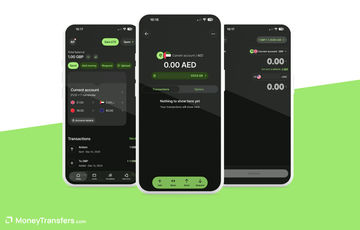
Wise gives you a wider range of balances and receiving details than the local USD/EUR accounts, but its Brazilian ownership requirements are restrictive.
Your company must have one owner holding 100%, and that owner needs to open the business account through their own personal Wise profile.
Supported structures include an individual entrepreneur or MEI, a qualifying single-owner limited company and a single-person law firm with an active CNPJ.
In my opinion, it suits a consultancy receiving dollars, pounds and euros, particularly when clients can pay through local banking routes instead of SWIFT.
You can keep more than 40 currencies, use receiving details for supported currencies and add team members with their own account permissions.
The business card is available in Brazil, so a matching foreign balance can cover a company expense without first converting the money into reais.
However, you cannot receive BRL into the Brazilian business account or send batch payments, which limits its role in your company's daily banking.
BRL-funded outward payments are also capped at the equivalent of US$5,000 per transfer including fees, so I suggest choosing another account for larger supplier invoices.
Wise business account features
Feature | Wise Business in Brazil |
|---|---|
Ownership | One owner holding 100%, using their personal Wise profile |
Business verification | Active CNPJ, supported legal form and owner CPF verification |
Currencies held | More than 40 |
Receiving details | Supported details for 23 currencies, including a mixture of local and SWIFT routes |
BRL receiving | Unavailable |
BRL outward limit | US$5,000 equivalent per payment, including fees |
Payments to BRL | US$3,000 equivalent to a personal account or US$10,000 to a business account |
Annual payment capacity | Based on company revenue and supporting financial documents |
Business card | Available, including a digital card |
Team access | Team members and account permissions |
Batch payments | Unavailable for Brazilian businesses |
Protection | Safeguarded funds, rather than a bank deposit guarantee |
Wise costs
Cost | Charge |
|---|---|
Registration | R$250, payable through Pix |
Holding balances | Free, with no monthly subscription |
Conversion and sending | From 0.4%, depending on currencies and payment route |
Supported domestic non-wire receiving | Free |
USD wire or SWIFT receiving | US$6.11 |
GBP SWIFT receiving | £2.16 |
EUR SWIFT receiving | €2.39 |
External-bank payment in the same currency | Currency- and route-dependent payment fee |
Same-currency Wise-to-Wise payment | Generally free |
Spending an available matching card balance | Free |
For US client invoices, the choice between ACH and wire changes your receiving cost even when the customer sends exactly the same dollar amount.
My suggestion is to separate the conversion fee from the payment fee, because paying an external bank can still cost money when both balances use USD.
Wise can handle the foreign part of your business, while your Brazilian PJ account covers local collections and the expenses you pay in reais.
BS2 offers five balances and a digital company card
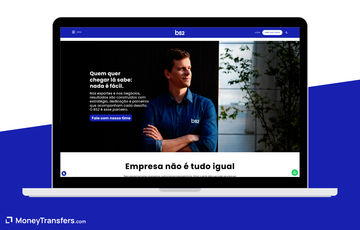
In my opinion, BS2 is worth considering if USD and EUR alone are too limiting and you also receive or spend in pounds, Australian dollars or Canadian dollars.
Its international business account holds all five currencies, with a digital Mastercard that pays directly from the corresponding currency wallet.
This fits an agency receiving in several markets and paying software bills abroad, especially if you already use BS2 for the company's domestic banking.
You need a Brazilian BS2 business account first, and foreign funding comes from that linked account, other BS2 accounts or banks outside Brazil.
You cannot send money directly into the international account from another Brazilian bank, so move domestic funding through the linked BS2 account first.
The main limitation is the fixed incoming and outgoing payment charge, which can make a series of small invoices expensive to collect.
BS2 international account features
Feature | BS2 Conta Internacional Multimoedas |
|---|---|
Business access | Brazilian legal entity with a linked BS2 domestic business account |
Currencies | USD, EUR, GBP, AUD and CAD |
Receiving and paying | International payment orders and transfers between BS2 international accounts |
Funding | Linked domestic account, supported BS2 transfers or overseas banks |
Company card | Digital Mastercard Black debiting the currency wallet |
Card activation | At least US$30 equivalent in qualifying account movement |
Other-currency spending | Converted to USD through the card network |
Account operation | BS2 Empresas online banking |
Account location | Banco BS2's Cayman Islands international deposit operation, regulated by CIMA |
BS2 costs
Cost | Charge |
|---|---|
Opening and monthly maintenance | Free |
Incoming or outgoing international payment | US$12, €12, £10, C$18 or A$20 per payment |
Receiving from Google, Facebook or Twitch | Receiving payment-order fee waived |
Transfer between BS2 international accounts | Free |
International payment order to a Brazilian bank | 2%, with minimums of US$12, €12, £10, C$18 or A$20 |
Foreign-currency conversion | Business exchange quote and applicable IOF |
Card spending from a matching supported wallet | No conversion fee or spread |
Card spending in another currency | Additional 2% spread |
For example, collecting four separate US$250 payments costs US$48 in standard receiving fees, while collecting one US$1,000 payment costs US$12.
The receiving-fee waiver can change that calculation for eligible platform income, so I suggest checking how your largest customers or platforms pay.
I also like the card's five matching wallets, although funding those wallets and paying Brazilian expenses still involve separate exchange or transfer costs.
Payoneer keeps marketplace revenue available for your next purchase
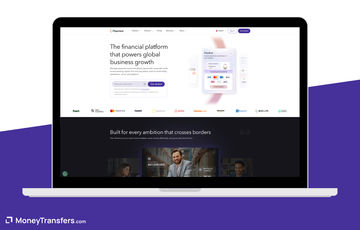
Payoneer is worth using when overseas platforms already pay your business through it, because you can retain that revenue and use it for supported business expenses.
You can receive into currency balances such as USD, EUR and GBP, then pay suppliers or withdraw the money to your Brazilian company bank account.
Local receiving details help clients pay in their own market, while marketplace connections reduce the need to arrange a separate payment for each sale.
My suggestion is to use it around the platforms your business relies on, rather than moving unrelated payments there solely to open another foreign balance.
The card can pay company expenses from an eligible currency balance, but matching the currency does not always remove the card's cross-border purchase fee.
This is where Payoneer can become expensive, because a receiving charge, withdrawal cost and card fee may all apply at different stages of the same month's activity.
Payoneer account features
Feature | Payoneer |
|---|---|
Business use | Company and professional cross-border commercial income |
Balances | Multiple currencies, including USD, EUR and GBP |
Receiving | Supported local account details, client payment requests and marketplace payouts |
Reusing revenue | Business payments from an available balance |
Returning money to Brazil | Withdrawal to your company bank account, including BRL conversion |
Card | Eligible business accounts can obtain a balance-linked card |
Payment controls | Marketplace connections and supported bulk payments |
Protection | Regulated payment service with segregated customer funds, rather than a deposit-taking bank |
Payoneer costs
The standard charges below depend on your account, platform and payment route, with negotiated packages available for higher-volume businesses.
Cost | Standard charge |
|---|---|
Receiving from another Payoneer balance | Free |
Marketplace payout | Platform-specific |
Non-local-currency receiving account payment | 1%, minimum US$1 equivalent |
Client payment by card | Up to 3.99%, potentially plus US$0.49 |
Moving money between currency balances | 0.50% |
Annual account fee | US$29.95 if you receive less than US$6,000 equivalent in any consecutive 12 months |
Local-bank withdrawal | Currency- and route-dependent fee, included in the rate when conversion applies |
Card annual fee | US$29.95 |
Card purchase without currency conversion | Up to 1.8%, depending on merchant and card issuing country |
Card purchase with currency conversion | Up to 3.5% |
The account's annual fee and card's annual fee are separate charges, so I suggest including both when working out the cost of occasional use.
If the money will immediately return to Brazil, compare the final BRL withdrawal amount with receiving directly into your Brazilian PJ account.
Keeping a balance pays off when you can reuse the currency, while collecting and converting everything immediately may remove much of that benefit.
Inter is a good fit for a business operating in dollars

Inter Global Account Business is a USD account, so I suggest it when US customers and dollar bills cover nearly all your international activity.
It gives your Brazilian company US receiving details and supports ACH and wire payments, alongside the domestic account you already use through Inter Empresas.
You can keep the money in dollars and move it back into your BRL business account when you need to cover Brazilian expenses.
This is simpler than opening several balances you will rarely use, although receiving euros or pounds does not create separate balances in those currencies.
ACH payments are free, while a US wire costs US$15, which makes the payment method worth agreeing with your customer or supplier before sending.
My suggestion is to keep an account with EUR or GBP balances if those currencies start appearing regularly on both sides of your business.
Inter business dollar account features
Feature | Inter Global Account Business |
|---|---|
Eligibility | Brazilian business with an Inter Empresas account, subject to international account approval |
Balance | USD only |
Receiving details | US account number, routing number and SWIFT information |
US payments | ACH and wire |
BRL movement | Conversion between the Global Account Business and Inter Empresas |
Account service | Inter&Co Payments Inc, a US regulated non-bank financial service |
Deposit arrangement | Funds held through Community Federal Savings Bank, an FDIC member |
Inter costs
Cost | Charge |
|---|---|
Opening | Free |
Maintenance and inactivity | Free |
ACH transfer | Free |
US wire transfer | US$15 |
USD/BRL conversion | Business exchange quote plus applicable IOF |
I like the free ACH option for routine US payments, but the exchange quote still decides the cost of bringing dollars back into reais.
The US partner-bank arrangement also differs from your Brazilian account, so do not treat the overseas balance as an ordinary FGC-covered Brazilian deposit.
Receiving details, cards and balances solve different problems
A foreign balance lets you keep money in its original currency, while receiving details decide how your customer can get that money to you.
For a US customer, an ACH payment into US details may be easier and cheaper than arranging an international wire to a Cayman Islands account.
But a company receiving occasional larger wires could prefer the foreign account connected to its Brazilian bank, especially when wider business banking is already there.
Cards add another use, although the card must support your company account and the currency being spent before it avoids another conversion.
What your business needs | Feature to prioritise |
|---|---|
Regular US client invoices | USD receiving details accepting ACH |
Euro revenue paying a euro supplier | EUR holding and EUR bank payments |
Software bills in several currencies | Balance-linked company card with matching-currency spending |
One large import payment | Business payment capacity and full invoice delivery |
Several owners approving payments | Eligible ownership structure and separate user permissions |
Brazilian tax and payroll payments | BRL available in the domestic company account |
I suggest checking these uses before paying for an account, because a long currency list will not help if your client cannot use its receiving route.
What will it cost to keep and reuse your revenue?
The account's monthly price is only part of the cost, with receiving charges and currency conversion often making a larger difference to a Brazilian business.
For a US$1,000 invoice, BS2's standard US$12 receipt charge takes 1.2%, while C6's US$10 charge takes 1% before any later conversion.
A supported domestic USD receipt into Wise avoids its US$6.11 wire fee, although the one-off registration cost still belongs in your first year's calculation.
Those examples compare receiving charges alone, with the customer's sending cost, your subsequent payments and the final BRL conversion still separate.
My suggestion is to price a normal month using the number of receipts, currencies retained, supplier payments and the amount eventually converted into reais.
A free account can cost more overall if you collect many small wires or repeatedly buy foreign currency outside business hours.
What Brazilian businesses should know about foreign accounts
These accounts belong to the company, so use its legal name and CNPJ rather than collecting business revenue through your personal travel account.
An overseas payment account also does not remove Brazilian accounting obligations, even when you leave the money abroad and never convert that particular receipt into reais.
Give your accountant the invoices, foreign-currency statements and exchange records needed to reconcile the revenue and movements through your company accounts.
A foreign account abroad differs from one inside Brazil
From 1 October 2026, domestic foreign-currency deposit eligibility expanded to specified businesses, including goods exporters, companies with external debt and companies with foreign participation in their capital.
That change does not make a domestic dollar account available to every CNPJ, and it does not turn overseas accounts into Brazilian deposits.
If your company qualifies for a domestic foreign-currency deposit account, its bank may offer another route for retaining eligible receipts alongside its wider corporate services.
Companies with overseas assets reaching US$1 million equivalent at year-end must submit the annual CBE declaration, counting their total overseas assets rather than each account separately.
Quarterly CBE reporting applies from US$100 million equivalent at the relevant quarter-end dates, with reporting separate from your company's other tax and accounting requirements.
How safe are these accounts for business balances?
My suggestion is to separate the account's regulator from the protection covering its money, because those are different checks when deciding how much working capital to keep there.
Wise safeguards customer funds, and Payoneer keeps customer money separate from its own operating funds, rather than offering ordinary bank deposit protection.
C6 and BS2 international accounts use Cayman Islands operations, with BS2's international deposit service regulated by the Cayman Islands Monetary Authority.
The FGC excludes deposits and other funds raised abroad, so a Brazilian bank's brand does not automatically extend its domestic guarantee to an overseas balance.
Inter's US partner bank is an FDIC member, but deposit eligibility and account ownership determine the protection, and deposit insurance does not cover the payment company's failure.
I suggest keeping upcoming Brazilian operating expenses accessible at home, then holding foreign revenue around the payments your business expects to make in that currency.
How to set up the account around your business
Start with the company and its owners
Use the company's registered information and authorised representative, checking any ownership restriction before changing the receiving details on your invoices.
For Wise, one owner must hold the entire business, while C6, BS2 and Inter require their linked domestic business relationship first.
Set receiving routes for your largest customers
Share the right details for ACH, euro payments or international wires, including the account name and any intermediary information the sending bank requires.
Agree who covers payment deductions before collecting an invoice, especially when the amount must reach you in full to settle a supplier bill.
Connect retained money to real bills
Keep the foreign amount needed for upcoming same-currency expenses, and make the remaining BRL conversion part of your company's monthly cash planning.
Give each person the permissions they need and supply your accountant with statements that keep company receipts separate from personal transactions.
I suggest comparing the cost of moving your business funds before converting retained revenue for your next overseas payment.
Compare business transfer costs from Brazil
Enter your destination and amount to compare the available rates for moving money from Brazil.Frequently asked questions
Can a Brazilian business open a multi-currency account?
Yes, eligible Brazilian companies can open accounts holding foreign currencies, with company structure and the account's jurisdiction determining the options available.
Wise requires a wholly owned business, while C6, BS2 and Inter offer international accounts linked to their Brazilian business banking relationships.
Which business account holds the most currencies?
Wise holds more than 40 currencies, compared with BS2's five, C6's dollar and euro accounts and Inter's dollar-only business account.
My suggestion is to choose around the currencies your business uses regularly, rather than paying for extra balances that never receive or fund a payment.
Is a USD account enough for my business?
A USD account can cover your needs if most foreign customers pay dollars and your overseas costs are also charged in dollars.
If euros or pounds regularly arrive and leave your business, separate balances can avoid converting that money through USD or BRL unnecessarily.
Is Revolut Business available for a Brazilian company?
Revolut Business is still on a waiting list in Brazil, so its overseas company features are not a current Brazilian business account option.
A Brazilian resident applying through a qualifying overseas company faces that country's company requirements, which is different from opening an account for your CNPJ.
Can I use a personal multi-currency account for company payments?
Open the appropriate business account for your company's activity, rather than choosing a personal account because the travel card or opening fee looks attractive.
Personal multi-currency accounts serve a different purpose, with account ownership and bookkeeping becoming harder to follow when business revenue lands under your CPF.
Start with the currencies on your largest invoices and bills, then check the account's ownership requirements and total receiving, payment and conversion costs.
Our methodology & why trust us
We assessed business eligibility, retained currency balances, receiving routes, company spending and account costs, alongside the regulation and protection relevant to each service.
Our review process explains how we assess financial services against the ways people and businesses need to move and manage money.
Sources
Instant money transfers
Use the eligible fast route for EUR or GBP
Best money transfer apps
Choose around the recipient's needs, or around your own foreign account if you are moving travel or investment money.
Cheapest ways to send money abroad from Brazil
The cheapest service delivers the most foreign currency for the same BRL budget after fees, exchange costs and applicable IOF.
Best international money transfer services in Brazil
My picks cover bank payments, cash collection and smaller remittances, alongside services for larger transfers and people already using a global account.
Best multi-currency accounts in Brazil
A multi-currency account lets you hold, convert and spend foreign currencies without converting every transaction back to BRL.
Contributors

Please share your experience with …