
The Best Multi-Currency Business Accounts in the Netherlands in 2026
Table of Contents

Author: Artiom Pucinskij
Table of Contents
Wise is my first pick if you invoice overseas clients and want to keep their payments in the original currency without a monthly subscription.
For a Dutch team spending and paying from several balances, I suggest considering Airwallex or Revolut depending on your payment volume and expense controls.
bunq combines foreign accounts with Dutch daily banking, WorldFirst suits foreign sales funding stock purchases, and Rabobank adds a bank account for established trade relationships.
You do not need a foreign balance for every overseas customer, especially when those customers already pay your invoices in euros through SEPA.
Search Now & Save On Your Transfer
Instantly view live exchange rates, fees & features.
At a glance
Account | Best for | Main limitation |
|---|---|---|
Wise Business | Foreign client payments without a monthly plan | Extra fees on some unchanged foreign-currency receipts and payments |
Airwallex | Foreign revenue used across a growing team | Collection and active-user fees add to conversion costs |
Revolut Business | Currency allowances and controlled company spending | Monthly plan and extra fees beyond its allowances |
bunq Business | Dutch daily banking with foreign balances in the same app | Account limits and separate foreign-payment charges |
WorldFirst | Keeping foreign sales available for stock and advertising | External payouts still have currency-specific fees |
Rabobank Vreemde Valutarekening | Foreign balances alongside bank finance and trade services | A monthly charge for each currency and worldwide-payment fees |
When does a business multi-currency account help?
A multi-currency account lets you receive supported currencies, keep separate balances and use the money before deciding how much to convert into euros.
For example, sterling client income could pay your UK software bill, while dollars from overseas sales cover your next dollar-denominated stock purchase.
The benefit comes from avoiding unnecessary conversions, rather than opening as many currency accounts as your chosen provider will let you create.
I'd say start with the currencies appearing on both sides of your business, then add receiving details where clients need a domestic payment route.
You will benefit from one if… | Find alternatives if… |
|---|---|
You regularly invoice in GBP, USD or other foreign currencies | Your overseas customers already pay everything in EUR |
Foreign revenue can cover bills in the same currency | You only make occasional international payments |
Team spending needs to come from several currency balances | Your main need is borrowing, cash deposits or a Dutch payment terminal |
Clients need local receiving details outside the euro area | One foreign-currency bank account covers your business |
You want to keep receipts separate before reconciliation | You need every balance to have identical deposit protection |
For occasional supplier payments, international business money transfers can cover the payment without adding another account to your monthly administration.
The best accounts for your business
I suggest choosing the account around your receipts and bills, with Dutch banking features deciding whether it can replace your main euro account.

"Wise Business is used by 300,000+ businesses each year. Easy integrations with Xero, QuickBooks, FreeAgent and more are available."
"Airwallex offers a comprehensive financial platform for businesses. Make global transfers to 150+ countries, receive funds in 20+ currencies. Connect with popular software for a seamless approach."
"WorldFirst helps growing businesses control cross-border costs with forward contracts and tailored FX solutions. Manage 40+ currencies and make international payments with specialist support on-hand."
Wise keeps overseas client income available without a monthly plan
Wise works well when you run a small business or work as a zzp'er with clients paying in several currencies throughout the year.
You can keep more than 40 currencies, receive using account details for 22 currencies and use a business card to spend an available matching balance.
The receiving details are more valuable than the currency count if your US client needs to pay through ACH or your UK client uses a domestic transfer.
Neither client needs to arrange a SWIFT payment simply because your business is based in the Netherlands, which can reduce deductions before the invoice reaches you.
The drawback is that keeping the currency unchanged does not make every receipt or external payment free, and the Dutch tariff adds specific cross-border charges.
I think Wise is worth considering for irregular foreign income, because a quiet month does not leave you paying for unused conversion or transfer allowances.
Wise Business account features
Feature | What you get |
|---|---|
Currency holding | More than 40 currencies |
Receiving details | Details for 22 currencies, with local and SWIFT routes depending on currency |
Spending | Business debit card using a matching balance before conversion |
Administration | Team access, batch payments and accounting integrations |
Eligibility | Supported Dutch businesses, including sole traders |
Operator | Wise Europe SA, a Belgian payment institution |
Protection | Safeguarded payment balances, separate from bank deposit insurance |
Wise Business costs
I'd say count your foreign receipts as well as conversions, because a business keeping dollars can still pay fees before spending those dollars.
Cost | Charge |
|---|---|
Business setup with receiving details | €60 once |
Monthly account and ordinary currency holding | €0 |
Currency conversion | From 0.2%, depending on currency and amount |
Matching-currency card spending | €0 conversion fee |
External same-currency bank payments | Currency and route-dependent payment fee |
Wise-to-Wise same-currency payments | Free |
Incoming USD wire or SWIFT | $6.11 per payment |
Incoming GBP SWIFT | £2.16 per payment |
Incoming EUR SWIFT | €2.39 per payment |
Additional eligible foreign same-currency network payment | €4 outgoing, up to €1 incoming |
Waiver of those additional network charges | Hold the required €18,000 equivalent under Wise's balance rules |
ATM withdrawals | €250 monthly free, then 2.69% on the excess |
The additional €4 and €1 charges apply to eligible foreign-currency transfers using domestic payment networks, with exemptions including domestic EUR payments, SWIFT and Wise internal transfers.
They are separate from the ordinary payment fee, so reaching the balance waiver does not turn every external bank payment into a free transfer.
For example, collecting regular dollar invoices through ACH and paying a US contractor can produce a different total from converting those receipts into EUR.
Airwallex connects foreign balances with the way your team spends
Airwallex is an account I suggest considering when several people need to use foreign revenue, rather than leaving every payment with the business owner.
You can receive through receiving accounts in more than 20 currencies, hold supported balances and pay company bills or card expenses from those funds.
That suits a Dutch software business collecting dollars while paying overseas subscriptions, or an importer using foreign receipts for suppliers and staff travel.
The cards can use an available supported balance directly, while spend controls and approvals help prevent employees using the wrong account for a purchase.
Bill and expense integrations can also reduce reconciliation work, although I suggest checking the actual connection to your accounting software before replacing an existing workflow.
I suggest considering Wise instead if you mainly collect occasional invoices, because Airwallex's monthly and active-user costs become harder to justify for a small operation.
Airwallex account features
Feature | What you get |
|---|---|
Receiving | Receiving accounts in more than 20 currencies, using the supported local or SWIFT route |
Currency management | Supported wallet balances, conversion and local or SWIFT payouts |
Spending | Company and employee cards using supported balances |
Team access | Spend permissions, bills and approval tools, with more controls on Grow |
Integrations | Xero, QuickBooks and supported workflow connections |
Eligibility | Supported Netherlands-registered businesses, subject to onboarding |
Operator | Airwallex (Netherlands) B.V., a DNB-regulated electronic money institution |
Protection | Safeguarded payment balances, without Dutch deposit insurance |
Airwallex costs
The Explore fee can disappear at sufficient volume, but collection fees and extra spend users remain relevant even when your subscription is waived.
Cost | Explore | Grow |
|---|---|---|
Monthly plan, excluding VAT | €19 | €49 |
Explore waiver | €10,000 eligible deposits per month or €10,000 combined balance at subscription end | Not applicable |
Included active spend users | 5 | 5 |
Extra active spend user | €6 monthly | €12 monthly |
FX on selected major currencies | 0.5% above interbank | 0.5% above interbank |
Other currency conversion | 1% above interbank | 1% above interbank |
Automatic card conversion | 1% | 1% |
Selected KRW, VND, BRL and MYR collections | 0.6% | 0.6% |
USD Fedwire collection | $15 | $15 |
Other supported collections | Free | Free |
SWIFT payout | €10 SHA or €20 OUR | €10 SHA or €20 OUR |
EUR SEPA and local GBP and CHF payouts are free, while card purchases from an available matching balance avoid automatic conversion charges.
Local payout charges change on 12 October 2026
Explore will add charges of €1–€7 on certain international local payout routes, while Grow waives those charges under the new schedule.
EUR SEPA and local GBP and CHF remain free, so the change depends on the currencies your business pays rather than every transfer.
Revolut combines currency allowances with company cards
Revolut is a good fit if you want your foreign balances, cards and payment approvals inside one account used by your business every week.
In the Netherlands, supported legal forms include an eenmanszaak as well as a BV and several partnerships, giving you more options than a company-only account.
You get a EUR account for SEPA payments, local GBP details and SWIFT details for other supported currencies, alongside company cards and team controls.
The Dutch IBAN arrives after migration to Revolut's Netherlands branch, so I'd say update invoice details only when the new number is active.
I like the plan allowances when conversions are regular, but they can cost more than Wise when your international activity changes significantly from month to month.
The difference is especially clear if your business exchanges little currency but needs several people using the separately charged Expenses app.
Revolut Business account features
Feature | What you get |
|---|---|
Balances | Supported foreign-currency balances alongside EUR |
EUR receiving | EUR IBAN for SEPA, with an NL IBAN after Dutch-branch migration |
GBP receiving | Local UK sort code and account number |
Other receiving | SWIFT details |
Spending | Company cards using supported balances and team permissions |
Dutch eligibility | Supported BV, NV, eenmanszaak, VOF, maatschap and CV structures |
Operator | Revolut Bank UAB, including its Netherlands branch |
Protection | Eligible deposits insured by Lithuania's deposit scheme, aggregate €100,000 per depositor at the bank |
Revolut Business costs
I suggest choosing the plan using a normal month's conversions and payments, rather than upgrading just because a larger allowance sounds more generous.
Cost | Basic | Grow | Scale |
|---|---|---|---|
Monthly plan | €10 | €35 | €125 |
Monthly conversion allowance | €1,000 | €15,000 | €60,000 |
Conversion above allowance | 0.6% | 0.6% | 0.6% |
Exchange outside market hours | Additional 1% | Additional 1% | Additional 1% |
Included local transfers | 10 | 100 | 1,000 |
Extra local transfer | €0.20 | €0.20 | €0.20 |
Included international transfers | 0 | 5 | 25 |
Extra international transfer | €5 | €5 | €5 |
Incoming USD, GBP, EUR and CHF | Free, outside allowances | Free, outside allowances | Free, outside allowances |
US ACH payout | 0.2%, minimum €0.50 | 0.2%, minimum €0.50 | 0.2%, minimum €0.50 |
Expenses app | €8 per active team member | €8 per active team member | €8 per active team member |
For a month with €5,000 exchanged during market hours, Basic's conversion surcharge is €24, bringing the plan and that surcharge to €34.
Grow costs €35 before other charges and includes more transfers, so the number of payments decides which plan gives your business better value.
bunq brings foreign balances into your daily Dutch banking
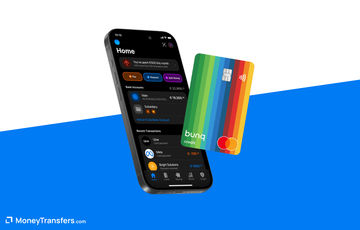
I think bunq is worth considering if you want to keep daily euro banking and a few foreign balances together, especially when you already manage business spending through your phone.
Its foreign-currency accounts support 20 currencies within your plan's account limit, including the EUR account used for your ordinary Dutch payments.
Free Business is restricted to freelancers and includes three accounts, while Core has five and Pro and Elite each include 25 accounts.
AutoSelect can take a card purchase from the matching foreign account, which helps you spend revenue without first converting it back into euros.
You also get Dutch account features, with company cards and additional automation depending on your plan, rather than running a foreign wallet separately from daily banking.
The limitation is that foreign receiving details and transfer fees differ from the EUR account, with Currencycloud handling the foreign-payment service behind the app.
bunq Business account features
Feature | What you get |
|---|---|
Foreign accounts | 20 supported currencies, within your total plan account limit |
EUR banking | Dutch IBAN and daily business banking |
Foreign receiving | UK IBAN for foreign accounts, plus USD ACH details |
Card spending | AutoSelect can use the matching currency account |
Foreign direct debits | Unavailable on Foreign Currency payment accounts |
Access | Netherlands-registered business in an accepted legal form, with director resident in the EEA and verified personal bunq account |
Free plan | Freelancers only |
Account structure | bunq banking, with foreign-payment accounts handled through Currencycloud |
Protection | Eligible bunq bank deposits covered by Dutch deposit insurance up to €100,000 in aggregate |
bunq Business costs
The free plan avoids a subscription, but I'd say include transaction fees when deciding whether it is cheaper for a business collecting frequent invoices.
Cost | Charge |
|---|---|
Monthly plan | Free €0, Core €7.99, Pro €13.99, Elite €23.99 |
Opening a supported foreign account | No separate opening fee, within plan limits |
Converting balances | Currencycloud rate plus 0.5%, with an additional 0.15%–0.5% weekend margin depending on currency |
Foreign local incoming payment | €0.99 |
Foreign local outgoing EUR, USD or GBP payment | €0.99 before applicable plan allowance |
Other supported local outgoing payments | €2, €5 or €10 depending on currency |
Incoming SWIFT or US Fedwire | €5, or €10 under beneficiary-pays handling |
Outgoing SWIFT | €5, or €10 under beneficiary-pays handling |
Paid-plan foreign card conversion | Mastercard rate plus 0.5% currency fluctuation charge |
Free Business foreign card conversion | Same rate and 0.5% charge up to €1,000 yearly, then 1.5% conversion charge |
Extra directors on paid plans | First three free, then €5.99 each monthly |
Pro includes five eligible foreign local outgoing transactions monthly and Elite includes ten, while SWIFT payments sit outside those free transaction allowances.
I'd say use the matching foreign receiving details on invoices, because paying a foreign invoice into the ordinary EUR account can cause rejection or conversion elsewhere.
Foreign Currency payment accounts and foreign-currency savings are different products, so choose the receiving and spending account for invoice money you need to use.
WorldFirst keeps foreign sales ready for your next stock order
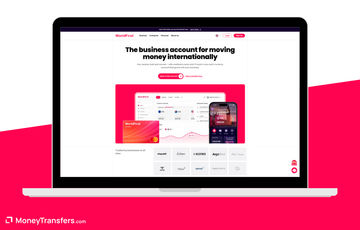
WorldFirst suits a Dutch business selling abroad when foreign receipts will fund more inventory, marketplace expenses or advertising in the same currencies.
You can collect business and marketplace payments, hold the supported currencies and use them for supplier payments without moving every sale through EUR first.
That is helpful for an importer with dollar costs and dollar sales, because the account can keep those two sides of the stock cycle together.
The virtual World Card adds direct spending from 15 supported currency balances, including online advertising and software subscriptions billed in those currencies.
I suggest considering Airwallex instead when employee expenses and wider approval workflows dominate, while WorldFirst is stronger when collection and stock payments are the main task.
The lack of a monthly account fee is attractive, but the payment tariff still applies when money leaves for an external supplier or bank.
WorldFirst account features
Feature | What you get |
|---|---|
Currency receipts | Supported business and marketplace receiving accounts |
Balances | Foreign receipts held until conversion, withdrawal or payment |
Receiving routes | Local details for supported currencies, with coverage varying by currency |
Spending | Virtual World Card using 15 supported matching balances |
Administration | Team permissions, accounting connections and multiple payment tools |
Local operator | WorldFirst Netherlands B.V., DNB-authorised electronic money institution |
Protection | Safeguarded balances, without Dutch deposit insurance |
WorldFirst costs
WorldFirst is attractive when you retain sales income between stock orders, since keeping the balance does not create an ongoing monthly account charge.
Cost | Charge |
|---|---|
Opening and monthly account | €0 |
Supported collection and holding | €0 |
Currency conversion | Up to 0.75% |
External payments | From €0.30, depending on currency |
Payments between World Accounts | €0 |
Xero integration | €0 |
Virtual World Card | Free to create |
Matching-balance spending in its 15 supported currencies | No FX fee |
Keeping USD does not remove every supplier-payment charge, so I'd say include both the account's payment fee and any receiving-bank deductions in your budget.
Rabobank adds foreign balances to your existing trade banking
Rabobank is a bank I suggest considering when foreign currency belongs beside business finance, trade documents and an established relationship with your Dutch bank.
The Vreemde Valutarekening keeps receipts in their original currency and lets you make payments from that balance, with a separate account for each currency.
It uses the same IBAN as your regular business account with the relevant currency code, so the payment instructions must identify the currency correctly.
For example, a dollar receipt can stay available for a later dollar supplier bill, instead of automatically being converted into your main euro account.
I think Wise is worth considering for a handful of small client invoices, because Rabobank's per-currency monthly charge and worldwide-payment fees can outweigh the benefit at low volume.
For a larger trading business, keeping balances alongside the bank's wider facilities can be worth those charges, especially when you need more than an online wallet.
Rabobank foreign-currency account features
Feature | What you get |
|---|---|
Currency structure | A separate account for each supported currency |
Receiving and holding | Foreign receipts remain in the account's currency |
Payments | Worldwide payments from the retained balance |
Account details | Main business IBAN plus the currency code |
Access | Existing Rabobank business account required |
Related facilities | Wider business banking and foreign-exchange services |
Protection | Eligible deposits covered by Dutch deposit insurance, aggregate €100,000 per depositor at Rabobank |
Rabobank costs
I'd say count the number of currencies you need, since the monthly account charge repeats for every separate foreign-currency account you open.
Cost | Charge |
|---|---|
Foreign-currency account | €7 monthly per currency, in addition to main banking costs |
Standard business current account | €5.30 monthly, before online banking, cards and transaction charges |
Customer due-diligence contribution | €0 for eenmanszaak, VOF and maatschap, €8.75 monthly for a BV and several other forms, excluding VAT |
Incoming worldwide payment, SHAR or CRED | €12 |
Incoming worldwide payment, DEBT | No Rabobank receiving charge |
Outgoing worldwide payment, SHAR | €12 |
Outgoing DEBT | €12 plus 0.1%, minimum €8 and maximum €35 surcharge |
Foreign account to EUR account with the same IBAN | €2.25 outgoing Rabo2Rabo fee, plus applicable conversion cost |
Conversion in the main lower-margin currency group | 0.86%, including USD, GBP, CHF and several other currencies |
Other conversion groups | 1.10% or 2.25%, depending on currency |
A BV keeping USD and GBP accounts pays €14 monthly for those foreign accounts alone, before its main banking costs and any payment fees.
An incoming payment with shared charges can also lose correspondent-bank fees, so the final balance may be below the invoice amount even without conversion.
Six months without the foreign-account monthly fee
Eligible business customers opening a new Rabobank foreign-currency account between 1 September and 30 November 2026 get six months without its monthly account fee.
The standard €7 per currency returns after that period, and the offer does not remove your payment fees or other business-banking costs.
Which balances should you keep, and which should become euros?
I suggest keeping the amount needed for confirmed foreign bills, then reviewing the surplus against your euro obligations rather than leaving every foreign receipt unconverted.
Suppose your business receives $8,000 and has a $3,000 supplier invoice due next month, with the remaining revenue needed for Dutch payroll and rent.
Keeping $3,000 available for that invoice avoids an unnecessary EUR-to-USD conversion, while converting the rest leaves money ready for expenses that require euros.
The retained dollars can still rise or fall against EUR, so a currency balance changes when you convert rather than removing exchange risk.
Receiving details need to match your client's payment
A USD balance and US ACH details solve different problems, because you can hold dollars without giving a client a domestic US payment route.
Wise and bunq can provide USD ACH details, while Revolut's Dutch business account uses SWIFT details for its other foreign currencies beyond local GBP and EUR.
If most clients pay through ACH, I'd say prioritise that receiving route before employee cards or a larger advertised number of supported balances.
If customers need to pay by card instead, international payment gateways in the Netherlands provide checkout separately from the account receiving the proceeds.
For EUR clients across SEPA, an eligible foreign EEA IBAN should not be rejected simply because its country code is not NL.
Keep currency records your bookkeeper can reconcile
An account with several balances needs statements showing the original receipt, any deduction, conversion and final payment, rather than only a combined euro total.
I suggest agreeing the export or bank-feed setup with your bookkeeper before moving recurring invoices, especially when you use Moneybird, Exact or another Dutch accounting package.
Keeping money in its original currency does not remove euro reporting requirements, including converting relevant foreign-currency EU purchase invoices for your Dutch VAT return.
Company cards also need clear ownership and receipts, so giving your accountant access should not give every employee permission to convert or withdraw the whole balance.
How to set up the account without disrupting invoices
Check the legal form before choosing your plan
Use your business's registered structure when applying, because freelancer plans, company accounts and director-residency conditions can exclude an otherwise attractive account.
Match receiving details to the invoice currency
Open the required balance and use its correct receiving instructions, including the currency code where the bank shares one IBAN across several accounts.
Separate spending access from payment approval
Give staff the card or account permission they need, then keep large conversions and external payments under the people responsible for the business's cash.
Move one recurring invoice before changing everything
Reconcile its original amount, receiving fee and statement export first, then update the remaining clients once your accountant can follow the payment properly.
How is your business money protected?
The protection depends on the legal account holding your funds, so a Dutch office or an NL IBAN does not automatically mean Dutch deposit insurance.
Wise, Airwallex and WorldFirst safeguard payment balances, while eligible deposits at Rabobank fall under Dutch deposit insurance and Revolut deposits use Lithuania's scheme.
bunq's eligible bank deposits use Dutch protection, with its Foreign Currency payment service and foreign-currency savings operating under different account arrangements.
For an eenmanszaak, eligible business and personal deposits at the same Dutch bank share one €100,000 protection limit, rather than receiving separate business and personal limits.
A BV's eligible deposits are protected separately from your personal money, and partnerships have their own treatment under the Dutch scheme.
I'd say keep essential euro obligations accessible in your main bank account, rather than leaving every available fund in one foreign-currency payment balance.
Before moving retained revenue to another account, compare the transfer cost for the currency your business needs to send.
Compare business transfer costs from the Netherlands
Enter your destination and amount to compare the available rates for moving money from the Netherlands.Frequently asked questions
Do I need a Dutch IBAN for business payments?
A Dutch IBAN can simplify local administration, but eligible SEPA payments and direct debits cannot be rejected solely because the account uses another EEA country's IBAN.
The currency receiving route is a separate question, so your EUR IBAN does not automatically let a US client pay you through ACH.
Can a zzp'er open a business multi-currency account?
Yes, options include Wise, eligible bunq freelancer accounts and Revolut Business for supported eenmanszaak structures, subject to the provider's onboarding and industry rules.
Use the business account for business receipts, because a personal currency account does not automatically permit commercial invoices or payments under your trade name.
Is a foreign-currency bank account enough?
A single foreign-currency bank account can be enough when you receive and spend only one currency alongside the euros used for domestic business.
I suggest choosing a broader account when clients use several currencies, or you need overseas receiving details and cards spending directly from retained balances.
Will keeping currencies reduce every foreign payment cost?
Keeping matching revenue can avoid a conversion, but receiving charges, external payment fees and the recipient bank's deductions can still apply to unchanged-currency transfers.
Start with one month's actual receipts and bills, then choose the account that handles those flows without paying for features your business will not use.
Our methodology & why trust us
We assessed Dutch business eligibility, currency holding and receiving routes, then examined the account charges and tools for using retained business revenue.
Our review process also considers the regulated operator, protection of funds and restrictions that change which account suits your business.
Sources
Best multi-currency accounts
Choose around the currencies you receive, the payer's payment method and whether you need to spend directly from the foreign balance.
Mobile money transfers
A mobile wallet keeps money in an account you access through your phone, with payments and withdrawals depending on that particular service.
Instant money transfers
Pay from your Dutch bank without a separate card
Best money transfer companies
These seven services cover bank payments, family remittances and cash funding from the Netherlands.
Cheapest way to send money abroad
Compare the same euro budget and receiving currency, then confirm the funding method and arrival estimate for your payment.
Contributors

Please share your experience with …