
The Best Multi-Currency Business Accounts in Australia in 2026
Table of Contents

Author: Artiom Pucinskij
Table of Contents
Airwallex is my top pick if overseas sales, supplier bills and employee spending need to work together within your Australian business.
For a smaller service business receiving foreign client payments, I like Wise and its broad currency balances without a monthly subscription.
OFX adds more finance-team controls, WorldFirst suits online sellers buying stock overseas, and Revolut Business offers useful conversion allowances for regular currency spending.
CommBank's foreign-currency accounts are also worth considering if you want to retain revenue within the bank you already use for Australian business operations.
Money Transfer Comparison
Fill in the form and we’ll find you the best rates.
At a glance
Account | Best for | Main trade-off |
|---|---|---|
Airwallex | Connecting foreign sales, bills and company cards | Active users and some receiving currencies add costs |
Wise Business | Foreign client receipts without a monthly plan | Setup fee and route-specific payment charges |
OFX Global Business Account | Currency accounts with bill and approval tools | Full finance features require a paid plan |
WorldFirst | Retaining marketplace revenue for stock purchases | Transfer charges can apply without any conversion |
Revolut Business | Company cards with monthly FX allowances | Foreign receipts use SWIFT rather than overseas local details |
CommBank foreign-currency accounts | Foreign revenue alongside Australian bank accounts | Separate accounts, bank FX rates and wire charges |
Would your business benefit from a multi-currency account?
The biggest benefit is being able to keep revenue in the currency you receive, then use it for expenses in that currency.
For an Australian online store, that could mean keeping dollar sales revenue for its next USD stock order instead of converting everything into Australian dollars first.
A service business might use euro client payments for contractors, while bringing enough money back into AUD to cover wages and tax bills.
You will benefit from one if… | Find alternatives if… |
|---|---|
You collect overseas client or marketplace revenue | Almost every receipt and bill is in AUD |
Your foreign sales can fund stock, contractors or subscriptions | You only need an occasional overseas supplier payment |
Employees need controlled company cards for foreign spending | Your main need is cash handling or a business loan |
Several people prepare, approve or reconcile currency transactions | One simple foreign-currency bank account covers the job |
You want to choose when receipts are converted into AUD | You expect a currency balance to guarantee a better future rate |
If you only need to settle an overseas invoice, international business money transfers can handle the payment without adding another account to manage.
The best business accounts for managing currencies
My suggestion is to choose between these accounts according to how you receive revenue and what you need to do with it afterwards.

"Airwallex offers a comprehensive financial platform for businesses. Make global transfers to 150+ countries, receive funds in 20+ currencies. Connect with popular software for a seamless approach."

"Wise Business is used by 300,000+ businesses each year. Easy integrations with Xero, QuickBooks, FreeAgent and more are available."

"OFX Business offers multi-currency account to hold balances in up to 7 currencies. Make global payments to over 170 countries."

"WorldFirst helps growing businesses control cross-border costs with forward contracts and tailored FX solutions. Manage 40+ currencies and make international payments with specialist support on-hand."


Airwallex brings your foreign balances and company spending together

I'd say consider Airwallex if your growing business needs foreign revenue to fund suppliers, company cards and several people's expenses.
Global Accounts provide receiving details in more than 20 currencies, and supported revenue can stay in your wallet for later spending or conversion.
Its company cards can spend directly from supported currency balances, so a dollar subscription does not need to be funded through AUD every month.
You can also connect bills and expenses to accounting software, which is more useful than simply having several balances sitting in separate accounts.
The trade-off is a more involved fee structure, particularly when you add active spending users or collect revenue in certain currencies.
Airwallex account features
Feature | What you get |
|---|---|
Currency accounts | Global receiving accounts in 20+ currencies with routes varying by account location |
Using retained revenue | Hold supported balances, convert them, pay suppliers and fund cards |
Cards | Company and employee cards, with ten supported direct-spending currencies |
Direct card currencies | AUD, CAD, CHF, EUR, GBP, HKD, JPY, NZD, SGD and USD |
Finance tools | Expenses, bill pay and accounting integrations |
Batch payments | Domestic ABA payments on Explore, international batches on Grow and above |
Sales collection | Separate merchant checkout and payment acceptance products |
Included spending users | Two active spend users, then a per-user monthly charge |
Australian operator | Airwallex Pty Ltd, AFSL487221 |
Main limitation | A payment platform rather than a replacement for every business bank facility |
What does Airwallex cost in Australia?
Cost | Standard charge |
|---|---|
Explore | A$29 per entity monthly, waived with A$5,000 qualifying monthly deposits or A$10,000 balance |
Grow | A$99 per entity monthly |
Accelerate | From A$999 per organisation monthly |
Extra active spending user | A$15 monthly after the first two |
Manual currency conversion | 0.5% above interbank for listed major currencies, 1% for other currencies |
Global Account receipts | 0.6% for KRW, VND, BRL and MYR collections, 0% for other currencies |
Local payout, including BPAY | A$0 |
SWIFT payout | A$10 SHA, A$30 OUR |
CNY transfer | 0.1% |
Automatic card conversion | 1% when the required supported balance is insufficient |
Card-payment sales collection | Separate processing, settlement and conversion charges |
SHA shares bank charges with the recipient, while OUR means you pay the intermediary charges for the international wire.
I suggest funding the relevant card balance before spending, because manually converting a major currency costs less than relying on automatic card conversion.
For five active spending users, Explore costs A$74 monthly before a waiver or transaction charges, while Grow costs A$144 for the same user count.
Grow needs to earn its extra cost through the features your team uses, rather than simply through the number of currencies you hold.
Wise Business keeps several client currencies without a recurring plan
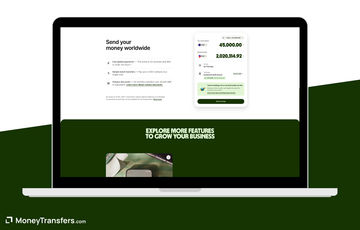
In my opinion, Wise is the simpler account for a consultancy, agency or small business invoicing overseas clients in several currencies.
The account can hold more than 40 currencies, and you can reuse client payments for bills, transfers or business card spending.
Receiving details are available for fewer currencies than you can hold, so the account still needs to match how each client will pay you.
I like the absence of a monthly subscription if your overseas income varies, because you are not paying a plan fee during quieter months.
The Australian business account also supports eligible trusts, which can be an important difference when your business structure is more involved than a sole trader.
Wise Business account features
Feature | What you get |
|---|---|
Currency holding | 40+ currencies |
Receiving | AUD and supported foreign receiving details, with local and SWIFT routes distinguished |
Currency conversion | Mid-market rate plus a separate conversion charge |
Spending | Business debit card and team cards |
Team access | Roles and permissions for account users |
Accounting | Xero and other supported software connections |
Payment batches | File-based batch payments for up to 1,000 contacts |
Business structures | Eligible sole traders, companies and Australian trusts, subject to verification |
Australian operator | Wise Australia Pty Ltd, AFSL513764 and limited purchased-payment-facility authorisation |
Main limitation | No business lending or branch cash-deposit service |
What does Wise Business cost?
Cost | Australian charge |
|---|---|
Full business account setup | A$65 once |
Monthly subscription | None |
Conversion and sending | Variable fees from 0.19%, depending on the transaction |
Local, non-SWIFT receiving | Generally free for supported routes |
USD wire or SWIFT receiving | US$6.11 per payment |
GBP or EUR SWIFT receiving | £2.16 or €2.39 per payment |
Same-currency external bank payout | Currency and route-dependent sending charges |
Additional Australian foreign-currency network fee | A$8 on eligible same-currency domestic-network payouts, unless waived |
Same-currency Wise-to-Wise payment | Free |
First business card | Free |
Team card | A$6 |
ATM withdrawal | A$400 per account monthly allowance, then 2.69% on excess |
The A$8 foreign-network charge is separate from the ordinary payment fee and does not apply to every payment from a Wise balance.
Keeping at least A$10,000 throughout a month qualifies for a waiver the following month, while sending or converting more than A$2,000 qualifies sooner under the waiver rules.
I suggest including that charge when planning to receive foreign revenue and regularly pay it to external accounts without converting it.
If you mainly keep supported client revenue for card spending or Wise-to-Wise payments, the account can be easier to manage without a recurring plan.
OFX adds bill approvals to your currency accounts
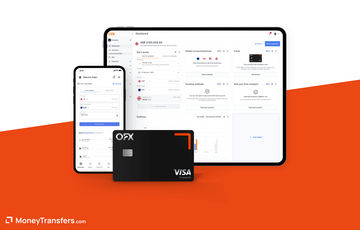
OFX's Global Business Account is useful when your finance team needs more control over bills and spending than a simple currency wallet provides.
You can hold more than 30 currencies and use local receiving details for AUD, GBP, EUR, USD and CAD.
The same platform connects those balances with corporate cards and bill management, so staff can prepare spending while the right person approves it.
I think OFX is worth considering for an importer or services company with regular invoices and several people involved in the payment process.
Its current Australian business platform is broader than the older transfer-only service, so I suggest judging the account using the new business plan charges.
OFX Global Business Account features
Feature | What you get |
|---|---|
Holding | 30+ currencies |
Local receiving details | AUD, GBP, EUR, USD and CAD |
Corporate cards | Physical and virtual cards linked to supported balances |
Spending controls | Employee limits, bills and approval tools according to plan |
Accounting | Xero and QuickBooks integrations |
Local bill support | Australian bill and payment services |
Plans | Standard, Full Suite and negotiated Custom |
Full Suite users | Five included, with extra users charged separately |
Australian operator | OzForex Limited, trading as OFX, AFSL226484 |
Account type | Non-cash payment facility, not a bank deposit account |
What does the OFX business account cost?
Cost | Standard | Full Suite |
|---|---|---|
Monthly plan | A$0 | A$75 including GST |
Included domestic transactions | 20, then A$1 each | 200, then A$1 each |
Extra user | Plan-specific access | A$10 monthly after five included users |
Cross-border local payout | A$0 | A$0 |
Cross-border SWIFT payout | A$10 | A$10 |
Incoming wire or SWIFT | A$5 standard tariff, currently waived in pricing | Same receiving tariff |
Physical corporate card | A$10 | A$10 |
Spending from a matching held balance | No card FX fee | No card FX fee |
Automatic card conversion | 1.5% if conversion is required | 1.5% if conversion is required |
Account currency conversion | Quoted exchange rate and applicable conversion charge | Quoted exchange rate and applicable conversion charge |
I'd say start with Standard if the main job is keeping and paying currency balances, and pay for Full Suite only when its finance tools save enough administration.
The annual subscription alone is A$900 on Full Suite, before extra users, conversion or transaction costs are added to the account.
For foreign company spending, having the right currency already available also avoids the automatic card conversion charge.
WorldFirst makes marketplace revenue easier to reuse for stock
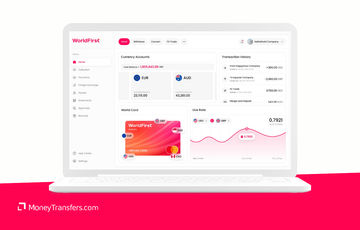
WorldFirst works well if your Australian business receives marketplace sales and needs that money for overseas suppliers or its next stock order.
The World Account can receive and hold more than 20 currencies, with no ongoing account fee for keeping those business balances.
You can collect through supported marketplaces and payment gateways, then use the money for supplier payments or the Australian World Card.
I like it for an online seller whose revenue and purchasing are connected, rather than a business mainly seeking local cash deposits or borrowing.
For Chinese sourcing, its 1688 payment service is another reason to consider it, although that service has a separate charge from ordinary account holding.
WorldFirst World Account features
Feature | What you get |
|---|---|
Receiving and holding | 20+ currencies, with supported local and global receiving accounts |
Sales platforms | Collections from 130+ marketplaces and payment gateways |
Account funding | Supported personal or business bank-account funding |
Team access | User permissions and team management |
Accounting | Xero and NetSuite integrations |
World Card | Australian business card with direct spending from supported currency balances |
Card currency coverage | Supported direct-spending currencies, narrower than all currencies used for payments |
Supplier payments | Bank payments, World Account payments and separate 1688 service |
Australian operator | World First Pty Ltd, AFSL331945 |
Main limitation | Account payments and conversion still have fees despite free holding |
What does WorldFirst cost?
Cost | Charge |
|---|---|
Account opening and ongoing use | Free |
Receiving and holding payments | Free WorldFirst account charge |
AUD and NZD domestic payout | Free |
Other account payouts | From 0.4%, capped at A$15 |
Major-currency conversion | Margin up to 0.6% |
Minor-currency conversion | From 0.67% |
Payment to another World Account | Free |
1688 payment | Up to 0.8% |
Full Value Transfer in USD/GBP/EUR | Free to the US/UK/EEA, A$25 to other destinations |
Spending from an available matching card balance | No card FX charge |
The payment charge is relevant even when you keep and pay the same currency, because avoiding conversion does not automatically make the payout free.
For example, an Australian store retaining dollar sales for a supplier should price the supplier payment as well as any dollars converted back into AUD.
I suggest keeping enough money in the card's supported transaction currency, because unsupported or insufficient balances send the whole payment to the default AUD balance.
Revolut Business offers useful allowances for team spending
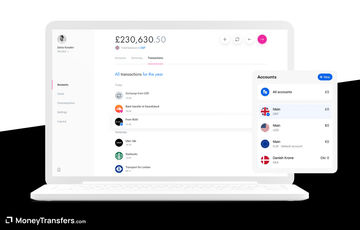
Revolut Business suits an Australian company that wants several currency balances, team cards and a monthly allowance for regular conversion.
Grow includes A$25,000 of monthly currency exchange during market hours, which can cover meaningful business spending without a separate percentage fee within the allowance.
You can spend from supported balances and control staff spending, although the tools available on Basic are more limited than the higher plans.
The main receiving limitation is that Australian business accounts have local AUD details, while other currency receipts use international SWIFT details.
I'd say consider Wise or Airwallex if overseas local receiving instructions are essential for the way your clients pay invoices.
Revolut Business account features
Feature | What you get |
|---|---|
Currencies | Multiple foreign-currency balances and international payments |
Australian receiving | AUD BSB and account number |
Foreign receiving | SWIFT details, without overseas local details for Australian business accounts |
Cards | Physical and virtual team cards with supported-balance spending |
Team membership | Unlimited team members, separate charge for the expense tool |
Grow tools | Custom approvals, bills and international batches |
Local bills | BPAY and supported AUD payments |
Eligibility | Eligible active Australian incorporated businesses, with applicant-residency checks |
Australian operator | Revolut Payments Australia Pty Ltd, trading as Revolut Bank Australia |
Bank status | APRA-authorised bank from 21 July 2026 |
What does Revolut Business cost in Australia?
Cost | Basic | Grow | Scale |
|---|---|---|---|
Monthly plan | A$15 | A$30 | A$150 |
Monthly market-hours conversion allowance | A$2,000 | A$25,000 | A$100,000 |
Exchange above allowance | 0.6% | 0.6% | 0.6% |
Exchange outside market hours | Additional 1% | Additional 1% | Additional 1% |
Included international transfers | None | Five | 25 |
International transfer beyond allowance | A$10 | A$10 | A$10 |
Local AUD monthly allowance | 1,000 | 2,000 | 5,000 |
Local transfer beyond allowance | A$0.20 | A$0.20 | A$0.20 |
Incoming USD, GBP, EUR and CHF | No Revolut receiving fee, outside plan allowances | Same exemption | Same exemption |
ACH payout to a US bank | 0.2%, minimum A$0.88 | Same charge | Same charge |
SWIFT OUR payout | A$35, outside allowance | Same charge | Same charge |
Expense tool | A$8 per person monthly | Same charge | Same charge |
ATM withdrawal | 2% | 2% | 2% |
Receiving and sending international payments in other currencies can share the plan's allowance, so it is worth counting both sides of your business activity.
In my opinion, Grow is worth considering over Basic if you convert several thousand dollars regularly, because its extra A$15 monthly buys a much larger exchange allowance.
At A$10,000 of market-hours conversion, Basic costs A$63 including its subscription and the charge above A$2,000, while Grow costs A$30 before other activity.
CommBank keeps foreign revenue within your existing business banking
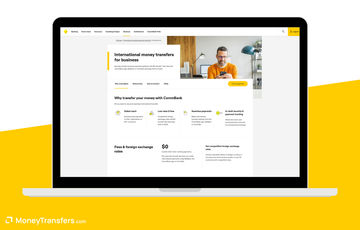
CommBank's Business Foreign Currency Accounts are a good option if you want foreign balances alongside the Australian bank you already use for daily operations.
You open separate currency accounts linked to an eligible AUD account, rather than receiving every currency through one all-in-one wallet.
I'd say consider this if your business receives occasional large foreign invoices and you want to retain that money without changing your wider banking arrangements.
The foreign account itself has no monthly account fee, although the linked AUD account and international payments can still add costs.
It is less suited to a business looking specifically for employee cards that spend directly from several retained foreign balances.
CommBank foreign-currency account features
Feature | What you get |
|---|---|
Account structure | Separate business foreign-currency accounts linked to an eligible AUD account |
Currency choice | Most freely convertible currencies, with some currencies subject to business eligibility |
Account management | CommBiz, NetBank and supported mobile services |
Receiving and paying | International bank payments in the relevant currency |
Eligible business structures | Sole traders, companies and certain partnerships, trusts or SMSFs |
Online ownership control | Any director can operate the account unless the mandate is changed in branch |
Other banking | Separate cash, credit and business banking facilities |
Main limitation | Currency bank accounts, without the same multi-currency card features as specialist platforms |
What do CommBank foreign-currency accounts cost?
Cost | Charge |
|---|---|
Foreign-currency account monthly fee | A$0 |
Linked AUD business account | Separate account charges, if applicable |
Digital international payment from the foreign account | CommBank transfer fee waived on supported digital channels |
Incoming international payment | Up to A$11 |
Currency conversion | Bank's exchange rate |
Same-currency correspondent charges | Can apply, with optional cover on selected currencies |
Branch and foreign-cash services | Separate charges |
I'd say compare the exchange rate and international receiving charges before assuming the account is cheaper because the monthly fee is zero.
For a few larger payments, keeping the currency account alongside existing business banking can still be easier than moving the whole finance process elsewhere.
Getting paid locally and holding a currency are different features
An account can hold US dollars without giving your customer US domestic receiving details, which changes how they pay and what the transfer costs.
Airwallex, Wise, WorldFirst and OFX offer overseas receiving facilities for supported currencies, while Revolut's Australian business foreign receipts use SWIFT details.
A CommBank foreign account also sits within Australian banking, so a dollar balance does not automatically make it a US local account.
How your customer pays | Account detail to check |
|---|---|
Australian invoice in AUD | Australian BSB and account number |
US invoice in USD | US receiving details and whether ACH or domestic wire is supported |
European invoice in EUR | SEPA-capable receiving details |
Marketplace settlement | The account must be accepted by the actual platform and settle without forced conversion |
International wire | SWIFT instructions, receiving fee and possible intermediary deductions |
I suggest confirming the receiving route before changing an invoice template, especially when several smaller client payments arrive every month.
Reusing revenue for cards, suppliers and Australian bills
Foreign balances are most useful when you know which costs they will cover, rather than leaving every receipt unconverted indefinitely.
For example, a store could retain USD sales for its next stock order and convert enough for Australian payroll, rent and tax payments.
An agency might keep euros for European contractors, while a travel business could allocate foreign card spending to the relevant team members.
My suggestion is to use separate permissions and spending limits so staff can use company cards without getting unrestricted access to every currency balance.
Having a foreign balance does not remove exchange-rate exposure, because its AUD value can fall while you still owe Australian dollar bills.
How much will currency management cost your business?
Take one ordinary month and count receipts, conversions, supplier payments and active card users before deciding which subscription is worth paying.
A free account can have higher transaction costs, while a paid account can be better value when its allowances match your activity.
Your business pattern | Cost I suggest examining first |
|---|---|
Few overseas invoices and little company spending | Setup fee, receiving charges and any monthly subscription |
Foreign sales fund stock in the same currency | Receiving and unchanged-currency payout charges |
Several employees use cards | Active-user fees and automatic card conversion |
Regular USD or EUR client receipts | Local receiving details versus international wire deductions |
You convert larger amounts every month | Percentage conversion charge and paid-plan allowances |
I suggest separating sales-processing fees from bank-account receipts, because accepting a customer's card payment is a different service from receiving a transfer.
Airwallex's merchant products, for example, can add card processing and foreign-currency settlement charges even when the currency account's bank-transfer receipt is free.
How are Australian business currency balances protected?
Australia's Financial Claims Scheme covers eligible Australian-dollar deposits up to A$250,000 per account holder at each authorised deposit-taking institution.
Foreign-currency accounts are outside that scheme, including foreign balances held at a bank rather than a specialist payment provider.
Revolut Australia became an APRA-authorised bank in July 2026, but its own business terms distinguish eligible AUD deposits from foreign balances excluded from FCS cover.
Wise's Australian purchased-payment-facility authorisation is also different from an unrestricted bank licence, while Airwallex, WorldFirst and OFX use their own regulated payment-account arrangements.
Before leaving a large reserve, I suggest checking the operator and fund-holding terms rather than treating every business account as the same kind of deposit.
How to set up a business account for your currencies
Match the account to your legal structure
Use your business's actual ABN or ACN and ownership details, checking whether the provider accepts your company, sole trader, partnership or trust arrangement.
Confirm the receiving route with your clients or platform
Check that the account accepts the way your clients pay, including ACH, SEPA or marketplace settlements, before redirecting your income.
Plan the AUD balance you need for local bills
Keep enough available for wages, Australian bills and account charges, then decide which foreign receipts will cover matching overseas expenses.
Set spending and approval permissions before sharing access
Give staff the controls they need for their role, keeping payment approval and unrestricted balance access with the appropriate people.
Compare the cost of your next overseas business payment before deciding how much retained revenue to convert or transfer.
Compare business transfer costs from Australia
Enter your destination and amount to compare the available rates for moving money from Australia.Frequently asked questions
Can an Australian sole trader open a multi-currency business account?
Eligible sole traders can use products such as Wise Business or CommBank's business foreign-currency accounts, subject to the provider's identity and business checks.
Revolut's current Australian application guidance requires an active incorporated business, so my suggestion is to check eligibility before applying as a sole trader.
Do foreign-currency accounts earn interest?
Some bank accounts or separate investment products offer returns, but ordinary currency holding does not automatically come with interest on every balance.
Airwallex Yield and Revolut Business Savings have separate terms, so I suggest assessing those separately from the account used for customer receipts and supplier spending.
Is an account worth opening for one overseas payment?
For a one-off invoice, I suggest starting with the payment service rather than paying an account setup fee or subscription you will rarely use.
A currency account becomes more useful when you receive foreign revenue repeatedly or can reuse it for overseas business costs.
Our methodology & why trust us
I focused on accounts available to Australian businesses, assessing currency holding alongside receiving details, payment routes, card access and finance-team controls.
Our research checked local business product pages, current fees and regulatory information, with account costs separated from personal transfers and merchant-payment processing.
I also considered whether the account helps you reuse foreign revenue, with more detail in how we review money transfer services.
Sources
Business money transfers
Start with the work you need to do regularly, because a low-cost invoice transfer and a complete payment administration system are different purchases.
Best currency brokers
These companies offer the highest receive amounts in our comparison for A$100,000 transfers.
Sending large amounts abroad
A contact you can reach outside Australian working hours
Receiving money from abroad
The sender can pay in pounds, US dollars or another supported currency while a transfer company delivers AUD into your bank account.
Mobile money transfers
When you send abroad, the transfer company quotes the AUD cost, converts the payment and arranges delivery to the chosen wallet.
Contributors

Please share your experience with …