
The Best Multi-Currency Business Accounts in Spain in 2026
Table of Contents

Author: Artiom Pucinskij
Table of Contents
For a Spanish company managing foreign revenue and employee spending, Revolut Business offers a useful combination of currency balances, cards and local tax-payment access.
If you work as an autónomo and mainly invoice overseas clients, I think Wise is worth considering for its broad currency support without a monthly plan.
Airwallex suits a growing team connecting sales and bills, WorldFirst works well for marketplace stock cycles, and Bankinter combines foreign balances with Spanish business banking.
The right account should help you use foreign revenue, while leaving enough euros available for your Spanish payroll, taxes and other domestic bills.
Search Now & Save On Your Transfer
Instantly view live exchange rates, fees & features.
At a glance
Account | Best for | Main trade-off |
|---|---|---|
Revolut Business | Company cards and currency allowances | Sole traders are excluded from Business |
Wise Business | Overseas client income for autónomos and small businesses | Setup and route-specific payment fees |
Airwallex | Connecting foreign sales with bills and team spending | Collection and active-user fees can add up |
WorldFirst | Marketplace receipts used for stock and supplier bills | External payments still carry currency-specific fees |
Bankinter Cuenta Divisa | Foreign balances beside Spanish banking and finance | Account and payment conditions depend on your agreement |
Why would your business need a multi-currency account?
The account lets you keep supported foreign receipts in their original currency, then decide whether to spend that balance or convert it into euros.
For a Spanish travel business, sterling bookings could fund sterling supplier bills, while euro revenue covers expenses that remain payable in Spain.
A consulting business might retain dollars for overseas contractors, rather than exchanging the same income into EUR and back into USD again.
That reduces unnecessary conversions, but retaining a currency still leaves its euro value exposed to exchange-rate movements until the balance is used.
You will benefit from one if… | Find alternatives if… |
|---|---|
Customers or marketplaces pay you in foreign currencies | Your business only receives and pays EUR |
Foreign revenue can cover suppliers or contractors in the same currency | You only need occasional international payments |
Staff need controlled cards for international spending | You mainly need cash deposits or borrowing |
You want to separate receipts by currency before reconciliation | A single foreign-currency bank account is sufficient |
You need overseas local receiving details for clients | You expect holding a currency to eliminate exchange risk |
If you want to hold currencies for your own savings or holidays, consider a personal multi-currency account in Spain instead.
If your main task is paying a supplier once or twice a year, international business money transfers may cover it without an ongoing account subscription.
The best accounts for holding business currencies
These accounts solve different problems, from receiving a freelance invoice to managing a company's foreign revenue alongside employee spending and Spanish banking.


"Wise Business is used by 300,000+ businesses each year. Easy integrations with Xero, QuickBooks, FreeAgent and more are available."
"Airwallex offers a comprehensive financial platform for businesses. Make global transfers to 150+ countries, receive funds in 20+ currencies. Connect with popular software for a seamless approach."

"WorldFirst helps growing businesses control cross-border costs with forward contracts and tailored FX solutions. Manage 40+ currencies and make international payments with specialist support on-hand."
Revolut gives your company more ways to use foreign balances
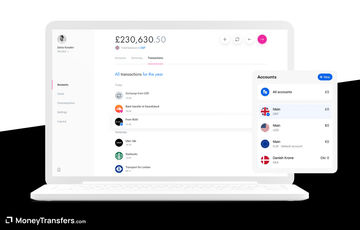
I suggest considering Revolut for a Spanish company whose foreign revenue needs to cover employee travel, subscriptions and regular international supplier payments.
The business account holds up to 30 currencies, and company cards can use a supported balance matching the purchase currency before other funds are converted.
Your team can manage cards, permissions and payment approvals together, instead of sending money to individual employees whenever they need to spend abroad.
Revolut also supports payments to the AEAT through the tax agency's website, including account debit and card payments using the business account.
That helps with Spanish administration, although a missing or mismatched NIF can prevent the tax payment even when enough money is available.
This is a company account, so I'd say choose another option if you operate as an autónomo rather than an eligible incorporated business.
Revolut Business account features
Feature | What you get |
|---|---|
Currency holding | Up to 30 currencies |
EUR receiving | EUR IBAN, with local details after migration to the Spanish branch |
GBP receiving | UK sort code and account number |
Other currency receiving | SWIFT account details |
Spending | Company cards using supported balances, team permissions and expense tools |
Spanish administration | Supported AEAT account-debit and card payments |
Eligibility | Supported incorporated companies, not sole traders |
Operator | Revolut Bank UAB, Spanish branch |
Protection | Eligible deposits covered by Lithuanian deposit insurance, aggregate €100,000 per depositor at the bank |
Revolut Business costs
The monthly plan can be worthwhile when you regularly use its allowances, but receiving money and making payments are charged under different rules.
Cost | Basic | Grow | Scale |
|---|---|---|---|
Monthly plan | €10 | €35 | €125 |
Monthly conversion allowance | €1,000 | €15,000 | €60,000 |
Conversion above allowance | 0.6% | 0.6% | 0.6% |
Conversion outside market hours | Additional 1% | Additional 1% | Additional 1% |
Included local transfers | 10 | 100 | 1,000 |
Included international transfers | 0 | 5 | 25 |
Extra local transfer | €0.20 | €0.20 | €0.20 |
Extra international transfer | €5 | €5 | €5 |
Incoming USD, GBP, EUR and CHF transfers are free and excluded from allowances, while ACH payouts and guaranteed OUR transfers have separate charges.
Expenses costs €8 per active submitting team member, so I'd say include that charge before choosing Revolut for a larger group of employees.
Wise suits foreign invoices without a monthly subscription
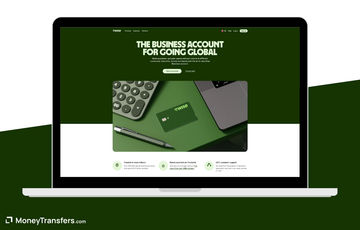
Wise is a strong option if you are an autónomo working with international clients and want to keep their payments in the currencies they use.
You can retain more than 40 currencies, receive through supported local or SWIFT details and pay contractors directly from the relevant balance.
For example, a US client can pay your supported USD details, with dollar revenue retained for dollar expenses rather than automatically arriving as euros.
The business card can also spend supported balances, which helps if recurring foreign subscriptions are a bigger part of your costs than employee expenses.
I think Wise suits for this simpler workflow, while a Spanish business bank can remain useful for services such as lending and cash deposits.
Wise Business account features
Feature | What you get |
|---|---|
Currency balances | Hold 40+ currencies |
Receiving | Details for 22 currencies through supported local or SWIFT methods |
Spending | Business debit card and team cards |
Business access | Eligible Spanish companies, freelancers and sole traders |
Administration | Permissions, batch payments and accounting integrations |
Spanish operator | Wise Europe SA, operating through its Spanish branch |
Protection | Safeguarded payment funds, rather than Spanish bank deposits |
Wise Business costs
Wise charges once for full account features, then separately for conversions and payment routes rather than through a monthly business plan.
Cost | Spanish business pricing |
|---|---|
Full account setup | €60 |
Monthly account and holding | Free |
Sending and conversion | From 0.2%, currency and route dependent |
Supported local receipts | Free |
USD wire or SWIFT receipt | USD6.11 |
GBP or EUR SWIFT receipt | GBP2.16 or EUR2.39 |
External same-currency payout | Currency- and route-specific fee |
Same-currency Wise-to-Wise payment | Free |
Business card | First card free, extra team cards €4 each |
ATM withdrawals | First €250 monthly free, then 2.69% |
A same-currency external bank payment can still have a payout charge, even though keeping the balance and moving it between Wise accounts is free.
Spain does not have the additional foreign domestic-network cross-border charge applied to business accounts registered in some other countries.
Airwallex connects sales receipts, supplier bills and spending controls
.png)
Airwallex works well if your Spanish company has enough foreign activity to justify connecting its collection, bill-payment and spending processes within one platform.
You can collect supported foreign currencies, retain the balances and use them for supplier payments or company cards without withdrawing every receipt into EUR first.
For an online retailer, that could mean keeping sales revenue available for advertising, logistics and the next supplier invoice in the same currency.
The finance team can control employee cards and approve bills, which is useful when several people need access without sharing the account owner's permissions.
I suggest considering it for the connected workflow, while a smaller business collecting only a handful of foreign invoices may find Wise easier to manage.
Airwallex account features
Feature | What you get |
|---|---|
Receiving accounts | Global Accounts covering 20+ currencies, through supported networks |
Retained money | Hold, convert, pay suppliers and fund cards |
Direct card currencies | AUD, CAD, CHF, EUR, GBP, HKD, JPY, NZD, SGD and USD |
Spending controls | Employee cards, expense workflows and approvals |
Finance tools | Bill Pay, batch payments and accounting connections |
Separate sales services | Merchant checkout and payment acceptance |
Business eligibility | Supported Spanish registered companies |
Operator | Airwallex Netherlands BV, regulated by DNB as an electronic money institution |
Protection | Safeguarded funds, without Dutch bank deposit insurance |
Airwallex costs
The account subscription sits alongside collection, conversion and user charges, so the best plan depends on how your business actually uses retained revenue.
Cost | Spanish pricing, excluding applicable VAT |
|---|---|
Explore | €19 monthly, waived with €10,000 qualifying monthly deposits or cycle-end wallet balance |
Grow | €49 monthly |
Manual FX | 0.5% major currencies, 1% other currencies |
Automatic card FX | 1% if a supported spending-currency balance is insufficient |
Receipts | 0.6% KRW, VND, BRL and MYR collections, USD15 US Fedwire, other currencies 0% |
EUR SEPA, local GBP and local CHF payments | Free |
SWIFT payment | €10 SHA or €20 OUR |
Active spending users | Five included, then €6 monthly Explore or €12 Grow |
Explore international local-network payouts from 12 October 2026 | Generally €1–€7, with percentage charges on certain CNY routes |
Grow waives the international local-network payout charges, but the other transaction charges remain separate, so frequent payments can change which plan costs less.
WorldFirst keeps marketplace revenue available for your next order
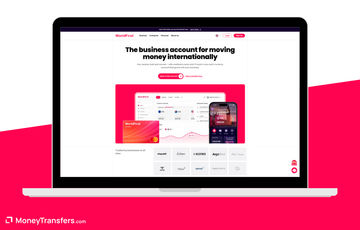
WorldFirst is worth considering if your Spanish business earns revenue through marketplaces and needs to reuse it for inventory, shipping or other overseas business expenses.
Instead of converting each payout into euros, you can collect supported currencies and retain the money until the next stock order needs paying.
The account also connects to supported marketplaces and Xero, with team access for managing receiving accounts and payments across the business.
Its virtual World Card provides direct spending from balances in 15 supported currencies, which can cover advertising and subscriptions alongside bank-paid supplier invoices.
I'd say choose WorldFirst around that revenue cycle, rather than treating it as a replacement for every service offered by your Spanish business bank.
WorldFirst account features
Feature | What you get |
|---|---|
Receiving accounts | EU tariff covers account details in up to 19 currencies, including 10+ local-account currencies |
Currency use | Hold supported receipts, convert or make business payments |
Collection | Marketplace and direct business receipts |
Spending | Virtual World Card, with 15 direct-spending currencies for EEA businesses |
Bookkeeping | Xero connection and currency statements |
Supplier tools | International payments and 1688 purchasing |
Spanish access | Spanish companies supported through country-specific onboarding |
Operator and protection | WorldFirst Netherlands BV, DNB-regulated EMI with safeguarding |
WorldFirst costs
The account has no ongoing subscription charge, but the payment currency determines what you pay when retained money leaves for an external account.
Cost | EU pricing |
|---|---|
Opening, monthly account and holding | Free |
Supported receiving payments | Free |
Currency conversion | Up to 0.75% |
External payments | From €0.30, currency dependent |
Payments between World Accounts | Free |
Xero connection | Free |
Creating a virtual card | Free |
Spending sufficient balances in 15 supported card currencies | No FX fee |
If the card lacks enough money in the purchase currency, it uses the default EUR balance instead, and currency-conversion charges can apply.
Bankinter combines a foreign balance with Spanish business banking
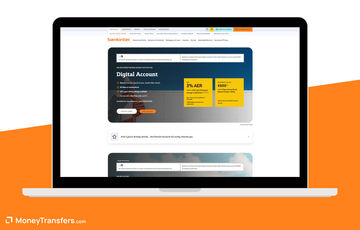
Bankinter is an option I suggest considering when your foreign account needs to sit beside Spanish banking, a relationship manager and wider financing services.
Cuenta Divisa holds a balance denominated in the selected foreign currency, allowing receipts and payments without an automatic conversion into EUR each time.
Its business banking also supports foreign-exchange tools and account exports, so a manufacturer can manage retained revenue alongside its wider banking relationship.
The account is different from an app wallet containing dozens of balances, and the terms are agreed individually rather than through one universal subscription price.
I suggest using the bank relationship where those services help, while keeping specialist receiving accounts available if they reduce the cost of frequent smaller foreign invoices.
Bankinter Cuenta Divisa features
Feature | What you get |
|---|---|
Account structure | Balance denominated in the chosen foreign currency |
Currency use | Receive and pay foreign currency, with full liquidity |
Spanish access | Business banking for companies and autónomos |
Administration | Web, mobile and telephone banking, account exports including Norma 43 |
Wider facilities | Trade services, foreign-exchange tools and separately approved financing |
PLAN Empresas | Maintenance of one currency account included across Plan 0, 10 and 20 |
Protection | Eligible deposits under Spain's FGD, up to €100,000 per depositor at Bankinter |
Bankinter costs
Your account agreement determines the payment charges, while PLAN Empresas can include maintenance of one currency account within its wider business banking package.
Cost | Business account terms |
|---|---|
PLAN Empresas current account | €0, €10 or €20 monthly, depending on qualifying activity |
One currency account under those plans | €0 maintenance |
Foreign receipts and payments | Individually agreed business charges |
Currency conversion | Bank rate, with individually agreed terms |
Standard rate disclosure | Bankinter may add up to 2.51% to its published reference rate, unless another rate is agreed |
Additional currency accounts or credit facilities | Separate agreed terms |
One route to Plan 0 requires at least €15,000 of qualifying international activity per quarter plus three qualifying payment activities, with other qualification routes also available.
I'd say ask for the foreign receipt and payout prices in writing, because free account maintenance does not mean those transactions or conversions are free.
Keep foreign receipts useful without complicating Spanish administration
The account should improve how you receive and use currencies, rather than forcing your accountant to untangle a new set of statements every month.
For example, a sterling customer receipt can cover a sterling supplier bill, while a separate euro balance remains available for wages and Spanish tax payments.
What your business needs | Account feature to check |
|---|---|
Foreign clients paying invoices | Correct local receiving network and payment reference |
Marketplace sales | Platform accepts the account details and business name |
Employees spending abroad | Card debits the retained currency, rather than converting EUR unnecessarily |
Spanish tax payments | Account supports your payment method and the business NIF matches |
Gestor reconciliation | Currency statements, fee records and reliable accounting exports |
Revolut supports AEAT payments directly, but I suggest checking the specific domestic payment services you use before closing your existing Spanish business account.
For managing several currencies, a separate wallet and Spanish bank account can be easier than asking one provider to cover every banking task.
How to choose which currencies to retain
Match foreign income to upcoming expenses
Retain the part of a foreign receipt needed for bills in that currency, rather than collecting balances solely because you expect the exchange rate to improve.
Reserve enough euros for your domestic obligations
Keep EUR available for payroll, taxes and domestic suppliers, then decide how much foreign revenue can remain outside your normal euro spending account.
Check the receiving and spending route together
Confirm that clients can use the account's receiving method and that retained money can fund the payments or cards your business actually needs.
Agree the reconciliation process with your gestor
Use statements and exports that show foreign receipts, fees and conversions separately, so the new account does not create more bookkeeping work than it saves.
How is the money protected?
Bankinter's eligible deposits have Spanish bank deposit protection, while eligible Revolut deposits are covered by the Lithuanian scheme through its Spanish branch.
Both schemes have a €100,000 aggregate limit per depositor at the relevant bank, rather than a separate allowance for each currency balance.
Wise, Airwallex and WorldFirst safeguard payment funds, which is a different arrangement from keeping an insured deposit at a Spanish bank.
Investment or yield products have their own terms and risks, so I'd say keep the money needed for imminent bills separate from longer-term investment decisions.
Before moving retained revenue to another account, compare the transfer cost for the currency your business needs to send.
Compare business transfer costs from Spain
Enter your destination and amount to compare the available rates for moving money from Spain.Frequently asked questions
Which account is best if I am an autónomo?
Wise is my first pick for foreign client receipts and spending, while Bankinter can support a wider Spanish business banking relationship alongside a currency account.
Revolut Business is for eligible companies, and its sole-trader restrictions mean it should not be presented as the default account for an autónomo.
Does a foreign receiving account mean opening a company abroad?
No, an eligible Spanish business can use overseas receiving details through a specialist account without forming another company simply to receive foreign client payments.
You still need the account in the correct business name and payment instructions that match the supported currency and receiving network.
Is a multi-currency account useful for selling elsewhere in the eurozone?
A euro account is enough if your customers, suppliers and other costs all use EUR, even when the businesses involved are based in different eurozone countries.
Extra currency balances become useful when revenue or expenses move beyond EUR, rather than because a payment crosses the Spanish border.
Our methodology & why trust us
We assessed Spanish business eligibility, retained currencies, receiving networks, cards, account charges and fund protection, alongside local banking and administration needs.
My choices reflect how each account helps you use foreign revenue, with company accounts and autónomo eligibility considered separately throughout the page.
Our review process explains how we assess financial services against the ways businesses need to move and manage money.
Sources
Best money transfer apps
The strongest app is the one that fits your funding method and gives the recipient a way to use the money.
Cheapest way to send money abroad
These examples compare available companies for €500 and €2,000 payments from Spain to eight destinations, using the final amount received after fees and conversion.
Best money transfer companies
These companies cover bank payments, family transfers and cash services, with the right choice depending on how your recipient can receive money.
Mobile money transfers
A mobile wallet gives you a balance or payment account accessed through your phone, with features that depend on the account behind it.
Receiving money from abroad
Your receiving account and the service your sender uses are separate choices, so you can often keep your existing bank.
Contributors

Please share your experience with …