
The Best Multi-Currency Business Accounts in the UK in 2026
Table of Contents

Author: Artiom Pucinskij
Table of Contents
Wise Business is my top pick if you receive overseas client payments and want to hold or spend those currencies without a monthly subscription.
Airwallex offers more connected tools for collecting sales and managing employee spending, while WorldFirst works well for keeping marketplace revenue available for overseas stock purchases.
Equals Money combines named currency accounts with departmental and project budgets, making it worth considering when several teams share foreign-currency revenue.
If you mainly work in euros, Starling's business euro account can give you the currency account you need alongside your sterling banking.
Search Now & Save On Your Transfer
Instantly view live exchange rates, fees & features.
At a glance
Account | Why I'd consider it |
|---|---|
Wise Business | Client receipts and currency balances without a monthly plan |
Airwallex | Foreign sales, employee cards and spending controls together |
Equals Money | Named currency accounts with granular budgeting |
WorldFirst | Marketplace revenue reused for stock and supplier payments |
Revolut Business | Team cards and currency budgets with plan allowances |
OFX Global Business Account | Currency balances connected to bill approvals and accounting |
Starling business euro account | A focused EUR account alongside your GBP banking |
HSBC Global Wallet | Managing foreign balances through HSBC business banking |
What does a multi-currency business account do?
A multi-currency business account lets you keep business money in several currencies, receive payments and use those balances without converting everything into pounds immediately.
For example, you could receive dollars from a US client and keep some for dollar software bills, converting the rest for your UK expenses.
You decide which balances to keep, while the account's receiving details, payment tools and cards determine how you can use that money.
I suggest starting with your actual receipts and expenses before paying for features your business is unlikely to use.
You will benefit from one if… | Find alternatives if… |
|---|---|
You regularly receive client or marketplace payments in foreign currencies | Your income and expenses are almost entirely in pounds |
You can reuse foreign revenue for stock, contractors or subscriptions | You only need an occasional overseas payment |
You need separate currency balances and access for your finance team | You need lending, cash deposits or a branch as your main requirement |
Your team spends abroad and needs controlled company cards | You only need one foreign currency and a simple currency bank account covers it |
You want to control when revenue is converted into pounds | You expect holding currency alone to remove exchange-rate risk |
For occasional payments, international business money transfers may cover the job without changing where you keep your company's money.
The best multi-currency business accounts
These are the accounts I suggest considering for a UK business managing foreign-currency revenue.

"Wise Business is used by 300,000+ businesses each year. Easy integrations with Xero, QuickBooks, FreeAgent and more are available."

"Airwallex offers a comprehensive financial platform for businesses. Make global transfers to 150+ countries, receive funds in 20+ currencies. Connect with popular software for a seamless approach."

“Equals Money equips teams with a multi-currency account and spending platform. Manage expenses, issue cards, and move money worldwide in 38 currencies, all coordinated through one connected system.”

"WorldFirst helps growing businesses control cross-border costs with forward contracts and tailored FX solutions. Manage 40+ currencies and make international payments with specialist support on-hand."


"OFX Business offers multi-currency account to hold balances in up to 7 currencies. Make global payments to over 170 countries."


Wise Business has broad currency balances without a monthly plan
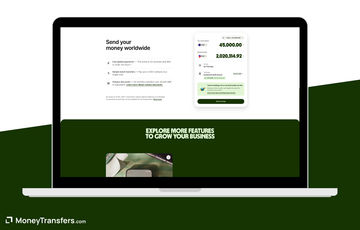
Wise lets you hold more than 40 currencies, so your account can cover several revenue sources without adding a subscription for each balance.
In my opinion, it suits a small consultancy, agency or online business receiving foreign client payments and paying some expenses in those currencies.
You can receive euros through euro account details and dollars through US details, then keep the money available for bills or business card spending.
The limitation is that the currencies you can hold outnumber those with local receiving details, and some receipts arrive through SWIFT instead.
SWIFT is the international bank messaging network, and its receiving fees can make frequent small payments more expensive than local bank receipts.
Wise Business account features
Feature | What you get |
|---|---|
Business access | Companies, sole traders and other supported business structures, with sector and ownership checks |
Currencies held | 40+ currencies |
Receiving details | Receiving in 22 currencies, including local GBP, EUR and USD routes plus SWIFT-only currencies |
Team access | Custom permissions, payment approvals and team spending controls |
Cards | Physical and digital business debit cards, spending from available currency balances |
Payments | Individual transfers and up to 1,000 payments per uploaded batch file |
Accounting | Xero, QuickBooks and FreeAgent connections, with currency transactions and balances |
UK operator | Wise Payments Limited, authorised electronic money institution |
Wise uses the mid-market exchange rate with a separate conversion fee, and ordinary currency balances have no holding charge.
Cost | Wise Business |
|---|---|
Account setup | £50 one-off for receiving details and full account features |
Monthly subscription | £0 |
Currency conversion | Currency-dependent fees from 0.24%, funding and payment route affect the total |
Same-currency payouts | Wise-to-Wise free, external-bank payments have currency/route-dependent fees, non-local SWIFT routes can cost more |
Local receipts | Eligible non-SWIFT/non-wire receipts free |
USD wire or SWIFT receipts | $6.11 per payment |
GBP and EUR SWIFT receipts | £2.16 or €2.39 per payment respectively |
Business cards | First account card included, extra team cards £3 each |
Same-currency card purchases | Free, conversion charged when required |
For a business receiving several currencies but needing fairly simple permissions, I think this is a good balance between account coverage and ongoing cost.
If spending policies and bill approvals take up more of your team's time, Airwallex or OFX deserves a closer look.
Airwallex connects foreign sales with company spending
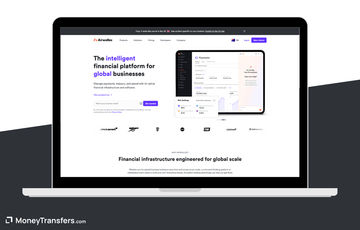
Airwallex makes more sense when foreign revenue needs to move through several parts of your business, from collections to stock purchases and employee expenses.
Its Global Accounts provide currency receiving details, while the wallet holds the money you can convert, transfer or use for approved company spending.
A UK online retailer can keep dollar sales for dollar advertising bills, instead of returning everything to pounds between collection and payment.
I like that connection, but the monthly plan, receiving method and spending users all need to fit your operation before it becomes good value.
Airwallex account features
Feature | What you get |
|---|---|
Business access | Eligible UK incorporated businesses, with business and owner verification |
Currency accounts | Collect and hold 20+ currencies through the account and wallet |
Receiving details | Dedicated local bank details in supported markets, country/currency capabilities vary |
Cards | Multi-currency company and employee cards, with spending controls |
Team administration | Transfer approvals, Grow adds custom expense/vendor approval rules |
Accounting | Xero and QuickBooks feeds, expenses and bills |
Sales collections | Bank receipts plus separate checkout, payment-link and subscription products |
UK operator | Airwallex (UK) Limited, authorised electronic money institution |
Explore costs £19 monthly, waived with qualifying £10,000 monthly deposits or a £10,000 combined wallet balance at the end of the subscription period.
My suggestion is to avoid leaving money you need elsewhere in the wallet purely to save £19, especially if that balance earns nothing for your business.
Cost | Airwallex UK accounts |
|---|---|
Monthly plan | Explore £19 or waived, Grow £49, Accelerate custom |
Conversion | 0.50% above interbank for major currencies, 1% for other currencies |
Receiving bank collections | 0.60% for KRW/VND/BRL/MYR, 0.30% for PHP, 0% for other currencies under current schedule |
Local outgoing payments | £0 under current schedule, CNY transfers 0.10% |
SWIFT payouts | £10 shared charges, £20 sender pays charges |
Active spend users | Five included, then £5/user/month on Explore or £12 on Grow |
Company cards | Ten included on Explore, 50 on Grow |
Automatic card conversion | 1% when using the home-currency automatic conversion facility |
Customer card collections | Separate processing fees, non-GBP same-currency card settlement adds 1% |
These standard charges exclude VAT where applicable, and checkout costs belong alongside your account costs if you collect customer card payments.
From 17 October 2026, Explore adds destination-specific local international payment fees, while Grow and Accelerate waive those particular fees.
Keeping enough currency for planned card spending can avoid automatic conversion, giving you more control over the rate and fee you accept.
Equals Money combines own-named currency accounts with team budgets
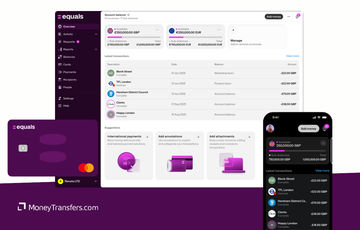
Equals Money suits a business that wants to keep foreign revenue in its own name and allocate spending across departments or projects.
You can receive and manage more than 35 currencies without immediately converting receipts, keeping money available for expenses in the same currency.
Its multi-currency IBAN uses one set of account details, so this does not mean you receive separate local banking details in every currency.
I like the combination of currency balances and budget controls, but the bespoke annual account fee makes it harder to compare costs before speaking to Equals.
Equals Money account features
Feature | What you get |
|---|---|
Business access | UK business applications, subject to onboarding and compliance checks |
Currency balances | Receive and manage 35+ currencies, including GBP, EUR and USD |
Receiving details | Own-named multi-currency IBAN, separate from local-detail coverage |
Team controls | Department/project balances, user roles and tiered funds approvals |
Cards | Separate expense-card platform, 21 supported card currencies |
Spending controls | Individual limits, merchant restrictions and ATM blocks |
Accounting | Daily Xero statement feeds and SAP Concur card-transaction integration |
UK operator | Equals Money PLC, authorised payment institution, FCA 488396 |
Card issuer | Equals Money International Limited, authorised electronic money institution, FCA 900493 |
The account's annual membership is quoted individually, and the separate card-platform subscription should not be mistaken for the price of the multi-currency account.
Cost | Equals Money |
|---|---|
Multi-currency account membership | Bespoke annual fee, setup and receiving charges confirmed in your quote |
Currency conversion and same-currency payments | Volume-based pricing, confirm exchange-rate margin and payment charges |
Separate Business card platform | £25/month (£300/year) or £250 billed annually, up to 20 physical and 50 virtual cards |
Separate Business Plus card platform | £35/month (£420/year) or £350 billed annually, up to 50 physical and 100 virtual cards |
Physical card issuance | £10 plus VAT per card on Business and Business Plus |
Card spending | No transaction fee in 21 supported currencies, 1.50% outside them, conversion can still apply |
Cash withdrawals | £1.50 each, ATM operator charges can apply |
If you add expense cards, transfer money into the linked spending balance and fund the required currency to avoid automatic conversion.
- Keeping foreign revenue in an own-named account
- Allocating money to departments or project budgets
- A fixed published account price before contacting sales
- Local receiving details for every currency held
In my opinion, Equals is worth considering when your finance team needs currency balances and spending budgets together, provided the complete account-and-card quote justifies the cost.
WorldFirst suits marketplace revenue and overseas stock purchases
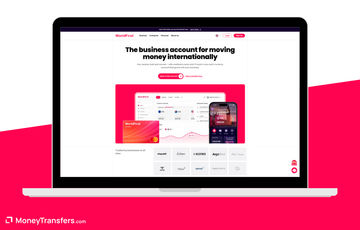
WorldFirst is a strong choice if your business collects overseas marketplace revenue and needs to keep some of it for buying stock abroad.
You can hold more than 20 currencies without an account subscription, then convert or pay suppliers as your stock orders fall due.
For a UK seller collecting US marketplace payouts, keeping dollars for a later dollar supplier invoice can remove two otherwise unnecessary conversions.
I think it is a good fit for that collections-to-stock workflow, rather than paying for a team expense platform you do not need.
WorldFirst account features
Feature | What you get |
|---|---|
Business access | UK companies and sole traders, subject to onboarding and permitted payment sources |
Currency balances | Hold 20+ currencies |
Receiving details | Receiving accounts in 20+ currencies, availability depends on registration and currency |
Collections | Marketplace/payment-platform receipts, eligible business receipts and own-account funding |
Account management | User roles, payment authorisation rules and scheduled payments |
Payments | Up to 200 payments per batch, wider payout coverage than holding currencies |
Accounting | Xero bank feeds, appropriate multi-currency Xero plan required |
UK operator | World First UK Limited, authorised electronic money institution |
The ongoing account cost is low, but supplier-payment charges and conversion fees still affect how much of your sales revenue you keep.
Cost | WorldFirst World Account |
|---|---|
Opening and account subscription | £0 |
Holding and receiving funds | Free |
Currency conversion | Up to 0.50% for major currencies, eligible new-customer rate 0.30% for six months |
Paying USD to the US | £0.77 per payment |
Paying EUR through SEPA in Europe | £0.27 per payment |
Paying GBP within the UK | £0.31 per payment |
Other payouts | Currency/destination dependent, other-currency payments £4.62–£23 |
Receiving-account permission depends on the payer and source of money, with additional verification possible for direct third-party receipts.
If client invoices are your main income source, settle that receiving arrangement before changing the account details on your invoices.
For a business primarily choosing employee cards and expense controls, my suggestion is to consider Airwallex or Revolut over selecting WorldFirst for marketplace collections alone.
Revolut Business works well for team cards and currency budgets
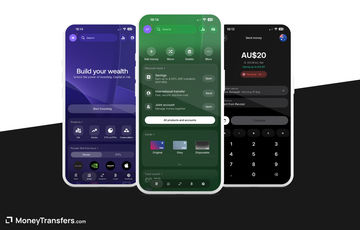
Revolut combines more than 25 currency balances with team cards, making it a good option when several people spend from the business account.
You can keep money in the currencies your team needs, while plan-based permissions help control who can spend, prepare payments or approve them.
I’d say Grow deserves a closer look if you need custom approvals, bulk payments or local US dollar receiving details, because those benefits go beyond Basic.
The drawback is that your monthly conversion and payment allowances can run out, adding charges even though you are already paying for the plan.
Revolut Business account features
Feature | What you get |
|---|---|
Business access | UK companies and eligible partnerships, separate Revolut Pro product for solo-business use |
Currencies held | 25+ currencies |
Local receiving | GBP sort code/account number, local USD ACH/wire details on Grow and above |
Euro receiving | EUR payments through SEPA using your euro account details |
Other receiving details | SWIFT details for supported currencies, local account details are not available for every balance |
Team cards | Physical and virtual cards, account permissions and spending controls |
Advanced controls | Custom approvals and bulk payments on Grow and above |
Accounting | Accounting connections, with available features dependent on the plan |
UK operator and protection | Revolut Bank UK Ltd for migrated bank accounts, Revolut Ltd for accounts awaiting migration |
Match the subscription to the amount you convert each month, alongside your payment count and any separately charged expense users.
Monthly-billed cost or allowance | Basic | Grow | Scale |
|---|---|---|---|
Subscription | £10 | £35 | £125 |
Monthly conversion allowance | £1,000 | £15,000 | £60,000 |
Conversion above allowance | 0.60% | 0.60% | 0.60% |
Conversion outside market hours | Additional 1% | Additional 1% | Additional 1% |
International payments | £5 each | Five included, then £5 | 25 included, then £5 |
UK domestic payments | Ten included, then £0.20 | 100 included, then £0.20 | 1,000 included, then £0.20 |
Expense management | £8/active user/month | £8/active user/month | £8/active user/month |
Annual billing reduces Grow to £360 yearly and Scale to £1,080 yearly, so compare the commitment with your likely account usage.
Inbound GBP, USD, EUR and CHF are excluded from transfer allowances, but US domestic wire receipts cost £8 and other receiving routes have separate terms.
ACH payments, the US domestic payment network, cost 0.20% with a £0.50 minimum, while sender-pays SWIFT payments cost £20.
The first plastic card per authorised person is free, with delivery or additional-card charges shown when ordering and a 2% ATM withdrawal fee.
If your account has moved to Revolut Bank UK Ltd, eligible deposits have FSCS protection, while accounts awaiting migration retain the electronic-money arrangement.
OFX adds finance-team controls to currency accounts
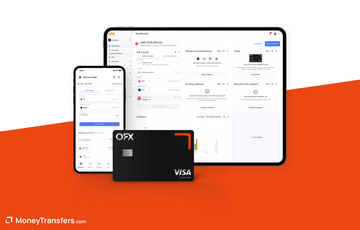
OFX's Global Business Account lets you receive, hold and pay in more than 30 currencies, with a free Standard plan and a paid Full Suite.
I think Full Suite is worth considering when currency balances need to sit alongside invoice approvals and two-way accounting records, rather than being managed in a separate payment dashboard.
For a growing UK business, that can connect the finance team's bill preparation with the balances available to pay those bills.
Standard is enough if your main requirement is holding currencies and importing transactions into your accounting software, without the wider approval workflow.
OFX account features
Feature | What you get |
|---|---|
Business access | UK business onboarding under UKForex Limited, subject to activity and ownership checks |
Currencies held | 30+ currencies |
Local receiving details | GBP, EUR, USD and CAD, separate from wider currency-balance coverage |
Cards | Corporate physical and digital cards connected to the business account |
Standard accounting | Xero and QuickBooks Online bank feeds |
Full Suite controls | Approval policies, budgets, invoice capture and bill automation |
Full Suite accounting | Two-way Xero and QuickBooks Online synchronisation |
UK operator | UKForex Limited, authorised electronic money institution |
The account subscription and currency-conversion cost are separate, so a free Standard account does not make every exchange free.
Cost | OFX Global Business Account |
|---|---|
Monthly subscription | Standard £0, Full Suite £75 including five users |
Extra Full Suite users | £10/month each, view-only and approver-only access free |
Manual conversion | Margin included in the quoted exchange rate |
Automatic conversion | 1.50% under the fee schedule |
GBP/EUR local payments | 50/month Standard or 150/month Full Suite, then £0.20 each |
SWIFT and CHAPS payments | Standard charge £5, included SWIFT allowance depends on your agreement |
Local receipts | Faster Payments and SEPA receipts free |
SWIFT receipts | £5 fee currently waived for Standard and Full Suite |
Physical/digital cards | First issuance free, physical replacement £10 |
My suggestion is to convert deliberately when you need another currency, rather than letting automatic conversion become an unnoticed part of regular spending.
Full Suite costs £900 over a year before extra users and transactions, so it should replace enough manual finance work to justify the subscription.
Starling offers a focused euro business bank account
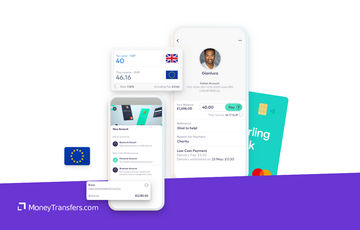
Starling's euro account is worth considering if you mainly receive and spend euros, and already use or want its sterling business banking.
It gives you a separate euro balance and unique IBAN for £2 monthly, with no Starling fee for ordinary euro payments.
You can use the same debit card for your sterling and euro accounts, making euro expenses easier to manage alongside UK spending.
The account is narrower than Wise or Airwallex, but I would not pay for a bigger platform just to collect a few euro invoices.
Starling euro account features
Feature | What you get |
|---|---|
Required account | Eligible Starling GBP business or sole trader account |
Currency held | EUR alongside your separate GBP account |
Receiving details | Unique euro IBAN |
Euro payments | Payments through SEPA, the euro payment network |
Card spending | Same card linked to GBP and EUR accounts |
Application | In the app after opening the GBP account, EUR eligibility assessed separately |
USD availability | Closed to new business USD applications |
UK operator | Starling Bank Limited, eligible bank deposits protected by FSCS |
Conversion between Starling currency accounts costs 0.40% in addition to the exchange rate, with an exchange-rate margin at weekends and bank holidays.
Cost | Starling business euro account |
|---|---|
Euro account subscription | £2/month |
Conversion between currency accounts | 0.40% plus exchange rate, weekend/bank-holiday margin applies |
Starling EUR sending/receiving fee | £0, recipient-bank charges can apply outside the EEA |
Balance interest | None on the EUR balance |
The account is an add-on to eligible Starling banking, and new USD applications remain closed, so I suggest choosing another option for collecting dollars.
HSBC Global Wallet keeps currencies within your business banking
HSBC Global Wallet lets you hold nine foreign currencies alongside your HSBC sterling business account, using Business Internet Banking to manage them.
In my opinion, it is worth considering if you want foreign receipts and payments within the banking relationship your finance team already uses.
The Business Internet Banking version supports local receipts in six of those currencies, so its holding coverage is wider than its local receiving coverage.
There is no wallet debit card or interest on its balances, making it better suited to managing receipts and bank payments than employee spending.
HSBC Global Wallet account features
Feature | Business Internet Banking version |
|---|---|
Required banking | HSBC sterling Business Current Account and Business Internet Banking access |
Currencies held | AUD, CAD, CNY, EUR, HKD, JPY, SGD, CHF and USD |
Local receiving | AUD, CNY, EUR, HKD, SGD and USD |
Local paying | The nine holding currencies, using supported currency/country combinations |
Account use | Desktop Business Internet Banking, payment-user limits apply |
Cards/cash/cheques | No wallet debit card, cash or cheque facility |
Interest | None on wallet balances |
UK operator | HSBC UK Bank plc, eligible deposits protected by FSCS |
Its payment charges and bank exchange rate need to be considered alongside the cost of your underlying HSBC business account.
Cost | HSBC Global Wallet |
|---|---|
Underlying account | HSBC sterling business-account tariff applies |
Local receiving | £5 per transaction under current tariff |
Local outgoing payment | £5 per transaction |
Outgoing SWIFT | £17 per transaction |
Currency conversion | HSBC exchange rate, rather than a separate universal fixed conversion percentage |
Holding returns | No interest |
Twenty local receipts would cost £100 in receiving charges, so this is less appealing if you collect many small overseas invoices.
The incoming beneficiary name must include HSBC UK and your business name, so use the wallet's exact instructions when giving payment details to a client.
From 14 December 2026, HSBC's revised terms clarify a £5 charge for all incoming Global Wallet transactions, extending beyond the current receive-local tariff wording.
How holding currencies can reduce unnecessary conversion
The biggest benefit is reusing money in its original currency when your business has income and expenses that match.
Suppose your UK business receives $10,000 and needs $6,000 for upcoming dollar bills, with the rest available for sterling expenses.
How you manage the receipt | What happens |
|---|---|
Convert the full receipt to GBP immediately | The $6,000 needed later must be bought back, creating another conversion |
Retain $6,000 and convert only the remainder | The matching dollar expenses can be paid from the retained balance |
This avoids converting the matched amount twice, although receiving fees and the cost of paying the dollar bills can still apply.
My suggestion is to retain currency against expected business expenses, with enough pounds available separately for salaries, tax and other UK commitments.
Keeping dollars does not protect their sterling value, and a favourable conversion date is never guaranteed simply because you can wait.
If a future payment requires a fixed sterling budget, currency brokers can offer contractual tools such as forwards, with separate deposits and settlement obligations.
Receiving details and currency balances are different
Holding a currency means you can retain that balance, while receiving details determine how a client or marketplace can pay it into the account.
A GBP sort code and account number supports UK payment routes, while euro details typically use an IBAN, an international bank account identifier.
US dollar details can support local ACH payments, but receiving dollars through SWIFT is a different route with different charges.
Wise's 22 receiving currencies include SWIFT-only currencies, and Revolut's local US details require Grow or a higher Business plan.
Equals Money uses a multi-currency IBAN for 35+ currencies, so confirm the payment network your client can use before replacing invoice details.
My suggestion is to match the details to how your client pays, rather than choosing an account solely because it can hold the currency.
For marketplace income, check that the platform accepts the receiving account and that the account permits receipts from that particular source.
Bank receiving details also do not create a website checkout, because customer card payments need a separate payment-acceptance product and processing tariff.
If checkout is a major part of your business, international payment gateways deserve their own cost and feature assessment.
Compare the cost of a normal business month
A monthly subscription can be good value when it replaces repeated conversion charges or paid finance work, but the cheapest account fee alone tells you very little.
Build the calculation around your normal income, expenses and users, including the receiving method your clients or platforms use.
Cost to include | What to calculate |
|---|---|
Account | Setup fee, monthly or annual membership and any qualifying balance requirement |
Receiving | Number of local, wire or SWIFT receipts and their charges |
Conversion | Amount that needs changing after matching revenue with expenses |
Outgoing payments | Payment count, destinations and charges beyond allowances |
Cards and people | Additional cards, spend users and expense-management subscriptions |
Collections | Checkout processing and foreign-currency settlement fees if you accept cards |
Accounting | Any software upgrade required for foreign-currency reconciliation |
For Equals Money, include the bespoke annual account membership alongside any separate card subscription, then add the quoted conversion, receiving and payment charges.
For example, Revolut Basic charges £54 for converting £9,000 above its monthly allowance, bringing the cost of a £10,000 market-hours conversion to £64 including its subscription.
Grow's £35 monthly subscription covers that conversion within its £15,000 allowance, before payments, extra features or other activity are counted.
That calculation explains when the higher plan can cost less, without establishing Revolut as the cheapest account for every business.
I suggest checking the cost of sending an unchanged currency balance elsewhere, because avoiding conversion does not automatically make a withdrawal free.
Intermediary and receiving-bank charges can add deductions on international routes, even after you have paid the account provider’s fee.
Bank protection and access to your money
Starling and HSBC provide bank accounts, with FSCS protection up to £120,000 per eligible depositor across accounts sharing the same banking licence.
That limit is shared across your eligible currency and sterling deposits, rather than being repeated for every currency account you open.
A limited company is a separate legal entity, while a sole trader's eligible business and personal deposits at the same bank are combined.
Wise, Airwallex, WorldFirst and OFX use electronic-money arrangements with safeguarding, which keeps relevant customer funds separate under the applicable rules.
Equals Money uses a payment-institution account with safeguarding, and its separately issued cards also sit outside FSCS deposit protection.
Safeguarding does not provide the same FSCS deposit guarantee, and recovering funds after a provider fails can take time or involve administration costs.
Revolut Business protection depends on whether your account has transitioned to Revolut Bank UK Ltd, so check the entity named in your own agreement.
My suggestion is to keep an alternative way to pay important bills and export account records, especially when one currency account handles most of your operating cash.
How to open a multi-currency business account
Check your business and currency requirements
Confirm that your legal business structure, ownership and sector qualify, then match your required holding currencies and receiving methods to the account.
Prepare the ownership and trading documents
Have company registration, owner identification and evidence of business activity ready, including invoices or contracts that explain where incoming money comes from.
Set up receiving details and team access
Use the correct currency-specific invoice details, then assign separate permissions for preparing payments, approving them and reviewing the accounting records.
With Equals Money, shared balances let you allocate departmental or project budgets, while tiered funds requests control how spending balances receive additional money.
Move the account into your business workflow
Connect your accounting software and try a small permitted payment before moving an important client receipt, marketplace payout or supplier deadline onto the new account.
I suggest comparing the cost of moving your business funds before converting retained revenue for your next overseas payment.
Compare business transfer costs from the UK
Enter your destination and amount to compare the available rates for moving money from the UK.Questions about business currency accounts
Can you use a personal multi-currency account for your company?
Keep company finances separate and use an account that permits the business activity, rather than using personal multi-currency accounts for company receipts.
Can a sole trader open one?
Wise and WorldFirst support sole-trader applications, while Starling offers its euro account alongside an eligible sole trader account.
Revolut Pro is a separate solo-business product, so do not assume the Business plan tables above describe the account available for your application.
Do local receiving details mean you have opened a foreign company?
Currency receiving details let someone pay you through the supported account route, without automatically creating an overseas company or removing your UK accounting obligations.
The account's onboarding still needs to accept your UK business and the types of payments you plan to receive.
Can it replace your sterling business bank account?
That depends on the UK payment services, credit facilities and cash handling your business needs, alongside how the account protects operating balances.
HSBC Global Wallet and Starling's euro account require their sterling banking, while a specialist currency account can sit alongside another bank you already use.
I suggest keeping the combination that covers your daily UK bills and foreign-currency workflow, rather than closing a working bank account merely to use one dashboard.
Do you still need to record currency movements for tax?
Your limited company's records must include money received and spent, supporting invoices and account statements, even when the money remains in a foreign-currency balance.
Keep conversion and fee records alongside those transactions, and agree the treatment of exchange gains and losses with your accountant.
Do these balances earn interest?
Holding a currency does not automatically earn interest, and Starling's euro account and HSBC Global Wallet pay none on these balances.
Wise offers a separate Interest investment option for eligible business balances, with fees and investment risk that differ from keeping ordinary payment money.
I suggest assessing any return product separately from the account features you need for collecting revenue and paying business expenses.
Our methodology & why trust us
We assessed UK business access, currencies held, receiving routes, costs, account controls and the protection of money kept between payments.
The selection includes specialist currency accounts and bank options, with each choice assessed against the business tasks its account can cover.
Account features and fees come from official business product information and tariffs, including receiving charges and plan restrictions.
Our review process explains how we assess providers and the evidence behind our account choices.
Sources
Sending large amounts abroad
Account-manager help with app transfers and tracking
Business money transfers
These services cover different business tasks, so my suggestion is to shortlist by the payments you need before comparing the monthly fee or exchange rate.
International payment gateways
Airwallex provides card checkout, foreign-currency balances and local receiving details in one account.
Mobile money transfers
A mobile wallet holds a balance your recipient can spend or move using the services attached to that account.

Best currency brokers in 2026
Before diving deeper into the exchange brokers, here’s a quick overview of who will benefit from using a currency broker.
Contributors

Please share your experience with …